
Posted on

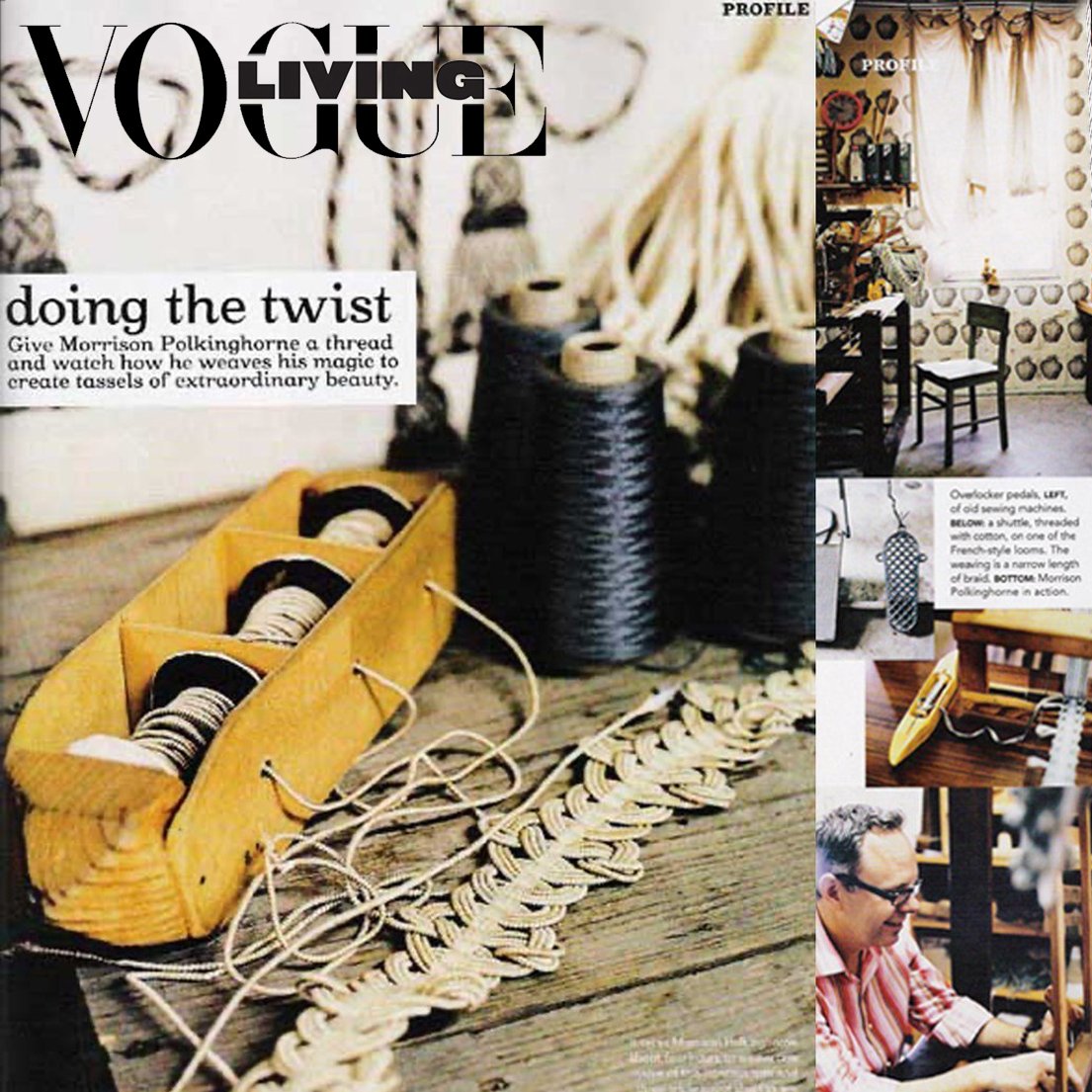
Vogue Living article – an oldie, but a goodie.
Vogue Living article

VOGUE LIVING : Australia 1998
WRITER:JULIE SIMPKIN
PHOTO:GEORGIE COLE PRODUCER:JANET JAMES


USING HANDMADE TOOLS AND LUXURIOUS FIBERS, A SYDNEY CRAFTSMAN PAINSTAKINGLY WEAVES A DESIGNER’S PALETTE OF TASSELS AND TRIMMINGS.

Beyond a doorway swagged with rope and giant tassels is a timeless world of manual looms and simple, ancient looking tools. A series of wooden boxes packed with antique linen yarn, form the steps to studio level, where Morrison Polkinghorne, sydney-based extarodinaire of tassels and trims, practices his art. Under a loom sits ‘Cilla’, his Tibetan terrier, whose silky coat is rather like the clutch of tassels that are piled on a nearby workbench.

Despite the accomplishment of his work, it was during a Christmas visit to France in 1990, that Polkinghorne realised his vocation. “I sensed there was something around the corner,” he says. “I was looking at fabric shops when it suddenly struck me. This is it. This is what I want to do. I want to make tassels.

Undeterred by the fact that he had no real notion of how to make a tassel or weave a braid, he returned to Sydney fired with ideas for his debut collection. And so Passementeries, the collective term for trimmings of braids, cords, beads and the like, became his newly found passion – and his company name.

“The Naturals – jutes and so on – were all the rage in Europe at the time and it was these that inspired my first collection, which I released in August 1991.”

It is hard to believe, looking at the immaculate detail of every strand of his work, that Polkinghorne is entirely self-taught. “I have always made things. As a kid I used to pull apart cassette radios and reassemble them. L learnt from my mistakes – when something fell apart, I’d look at why.

“I learnt how to make a rope from Leonardo da Vinci,” he laughs, referring to a technical extract by the 15th century artist found in a design book. “And knot-tying I learnt as a boy scout.”

Polkinghorne’s early work was produced in his kitchen before expanding into the warehouse space downstairs. The ‘hallway’ section of the workshop provides length to hand-twist 10 meters of rope. “Anything longer and I have to open the garage door and and step out into the street.”

Such is the specialisation of his craft that Polkinghorne has to design and make many of the tools and looms. “Mechanisation is not a love of mine. I love the hand-made, the painstaking approach to work.” He points to a three-centimetre section of a $600 a meter trim: “That’s an hour and a half'” he says. And of another six-meter length: “It took me two weeks just to cover the beads.” Today, Polkinghorne employs a staff of 12, including specialist weavers, wood turners (who make the tassel moulds) and rope-makers. A team of two people working on a bullion fringe – can produce an average of seven meters a day. And developing a new tassel design can take anything up to three months.

In matching a trimming to a piece of cloth, Polkinghorne blends his yarns, using several shades of a single colour to reflect the depth of the original design. he prefers to work with natural fibres: silks, linen, mercerised cottons, jutes, metallics. “Real metallic thread is cold to the touch,” he says as he presses a skein to his cheek.

One has to incorporate the particular physical character of the yarn into the tassels – you work with it, let it guide you.” most of the yarn is sourced from Europe: Belgium, Germany, Sweden and France.

Working with the trade only, through interior designers and architects, Polkinghorne has assignments ranging from the creation of a single tassel to a full-scale retail fit-out. For a chain of clothing shops, he produced one kilometre of hand twisted rope and 600 pendulums tassels in natural jute and mercerised cotton (:I think I bought all the thread in the world!”); and for Melbourne’s Crown entertainment Complex, 110 meters of rope with a diamater of 12cm, and 80 meters of 12-colour bullion fringe at 45 centermetre height.

The jute tassles he created for Queensland resort were threaded with tiny seed pods as a reference to its bushland setting, “bringing the forest over the river and into the furniture”. His simplest pieces are probably the small turk’s head tassel he makes as a regular commission for a blind company producing canvas blinds.

From tiny acorns at Passementeries, spun and knotted in burnished gold, Polkinghorne has nurtured an industry, now of international acclaim. Perhaps the ultimate was when his “mentor company”, Scalamandré, asked to represent some of his work in the USA. And in perfect symbiosis, Scalamandré’s range is displayed in the Passementeries showroom alongside Polkinghorne’s own tassels and trims.

Posted on — Leave a comment

I wrapped up Hong Kong

TRENDING

November 12, 2026

I wrapped up Hong Kong

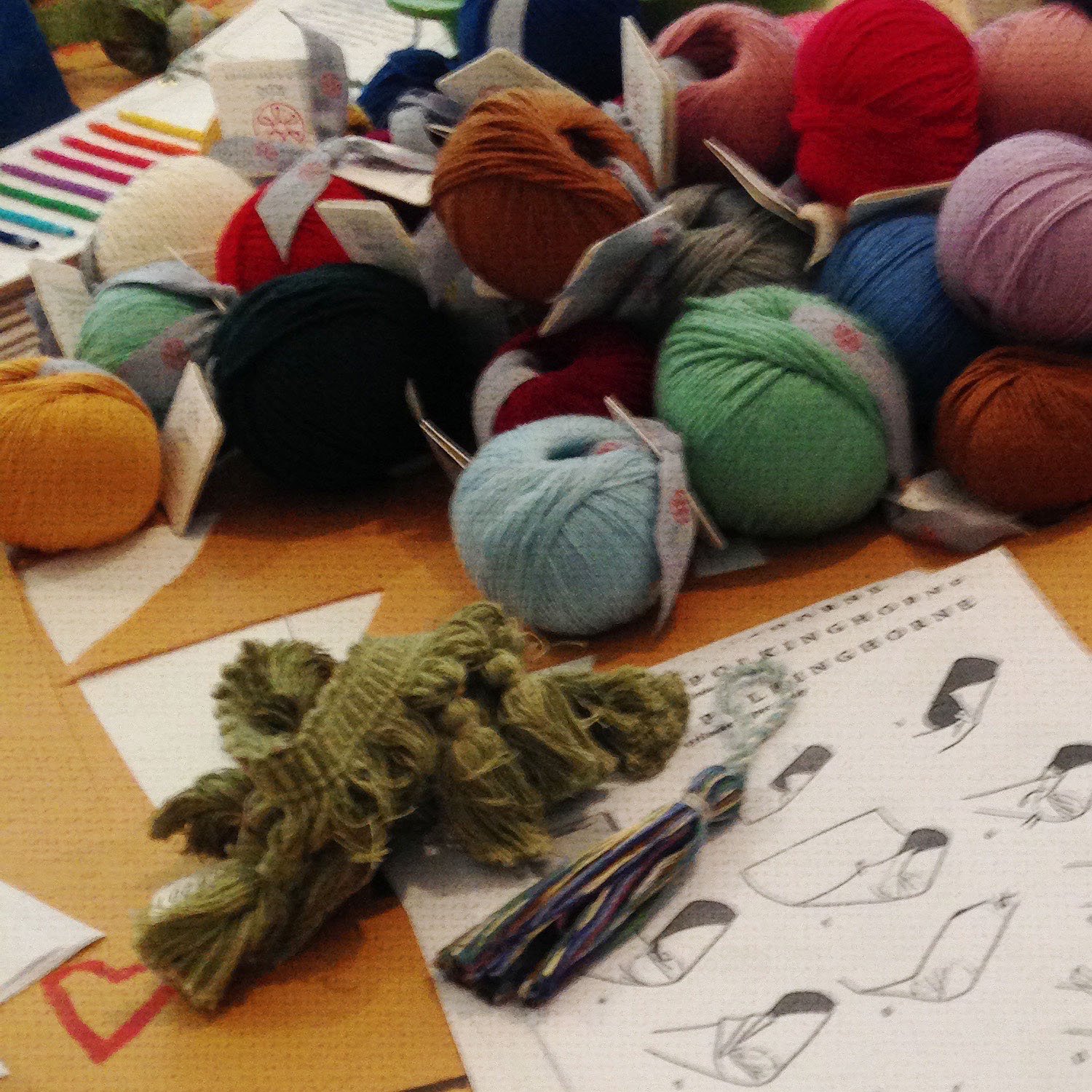
I have to admit, the last time I was in Hong Kong was when the English were in rule. But this time with no more English, I fell in love with the Island City and planning another return next year. The three hour workshop included European and Japanese wrapping techniques, rope making, the finer art of potato stamps, tassel making and finally finishing with wrapped bangle making. The attendees were so easy to teach, soaking up allot of the techniques and making allot of tassels.    

latest posts

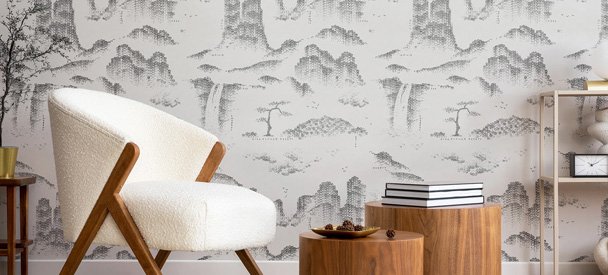
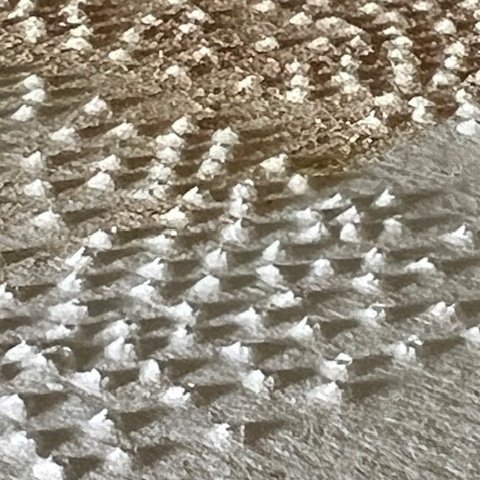
Three artworks by Morrison Polkinghorne are now available as wallpaper from Studio Printworks in New Your.

Phnom Penh Exhibition

A How to make a turks head knot.

Posted on

Wrapping Julie’s Christmas cookies for Westinghouse

Christmas wrapping for Julie Goodwin

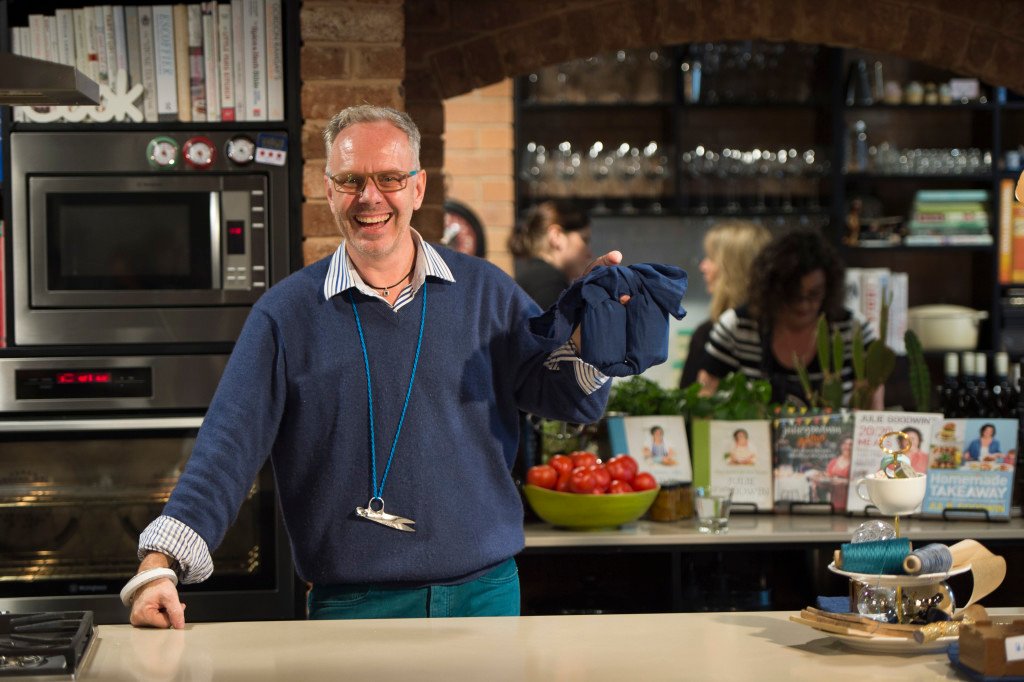
Westinghouse and Julie Goodwin owner of Julie’s Place cooking school has teamed up with stylist, Morrison Polkinghorne.

Julie Goodwin made a batch of Christmas chill mango chutney and some Ginger cookies but I was in Myanmar at the time, so Westinghouse especially flew me from Rangoon to Sydney to teach how to wrap the jars in fabric.

www.juliegoodwin.com.au

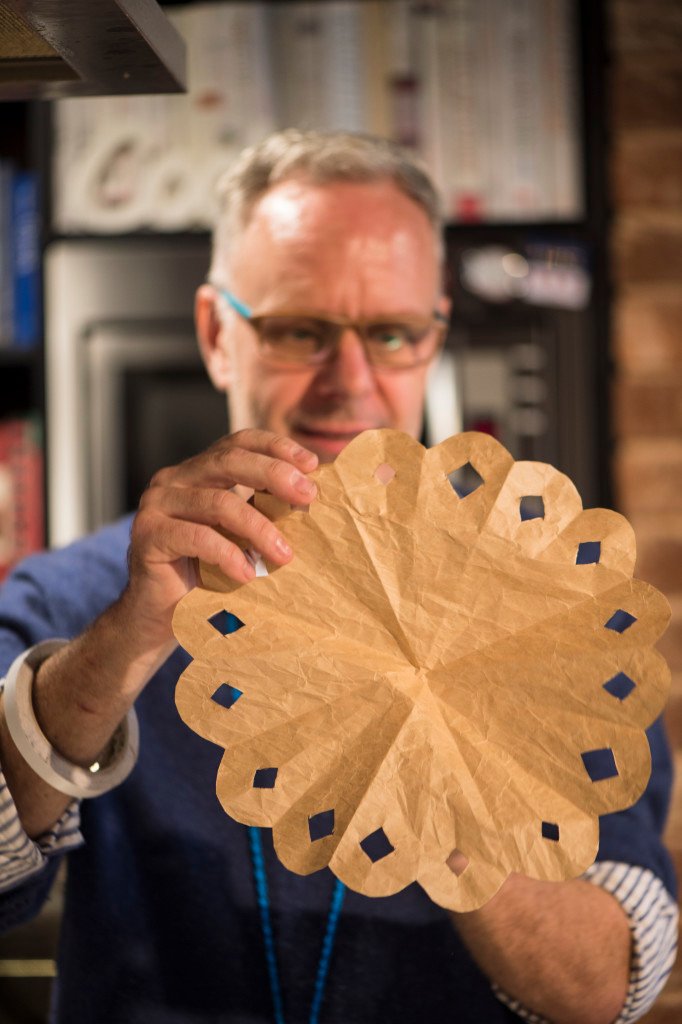
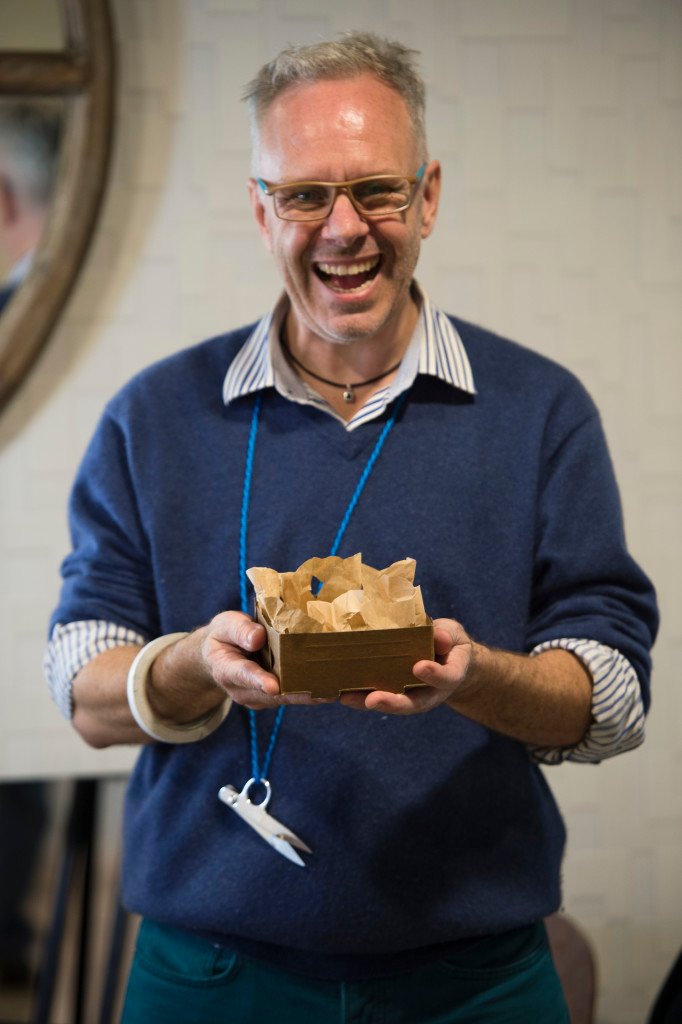
With Julie’s Ginger Christmas cookies I packaged them in a small waxed box, lined in a handmade crepe paper and trimmed with an origami paper strip. Topped with a heart cut from a local Myanmar newspaper that I had in my suitcase.

Master the art of gift wrapping with Morrison Polkinghorne.

1. Embrace imperfection.
When it comes to wrapping use what you have, says Morrison. If your paper is crushed, crush it some more and enhance the distressed nature. Keep it very “wabi-sabi”; this is a Japanese term centered on the acceptance of imperfection. Alternatively you can iron crushed paper to give it distinct pleats but please don’t try to make it perfect and new, let it age.
2. The world is your wrapper.
If you’re not one for tradition and you are after a more cosmopolitan feel, bring back a local newspaper when you’re travelling overseas to wrap your gifts.
3. DIY
. The finishing touches really make a beautifully wrapped present stand out. If you can’t find any ribbon, make your own decorative string by twisting colourful twines together. These little handmade touches stand out a mile and creating something bespoke is the most generous and beautiful gift you can give.

latest posts

Three artworks by Morrison Polkinghorne are now available as wallpaper from Studio Printworks in New Your.

Phnom Penh Exhibition

A How to make a turks head knot.

Posted on

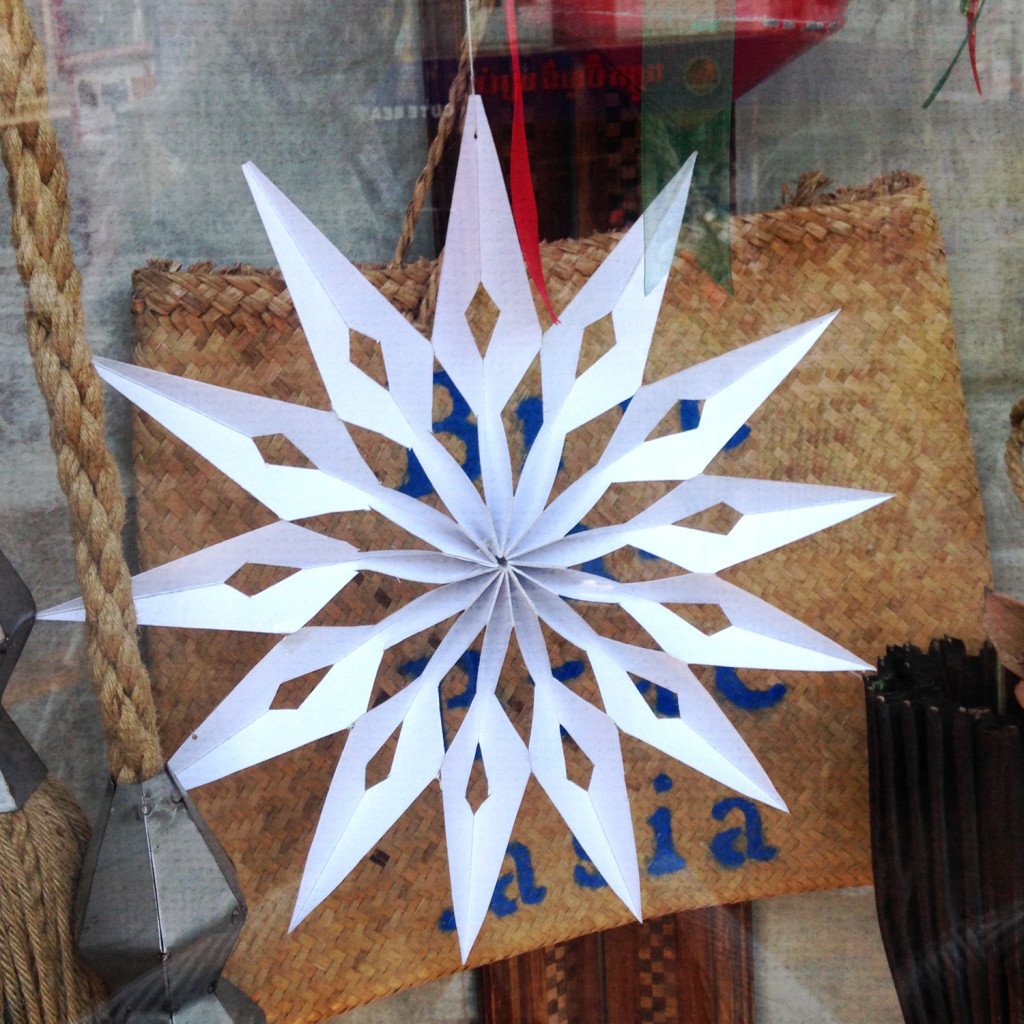
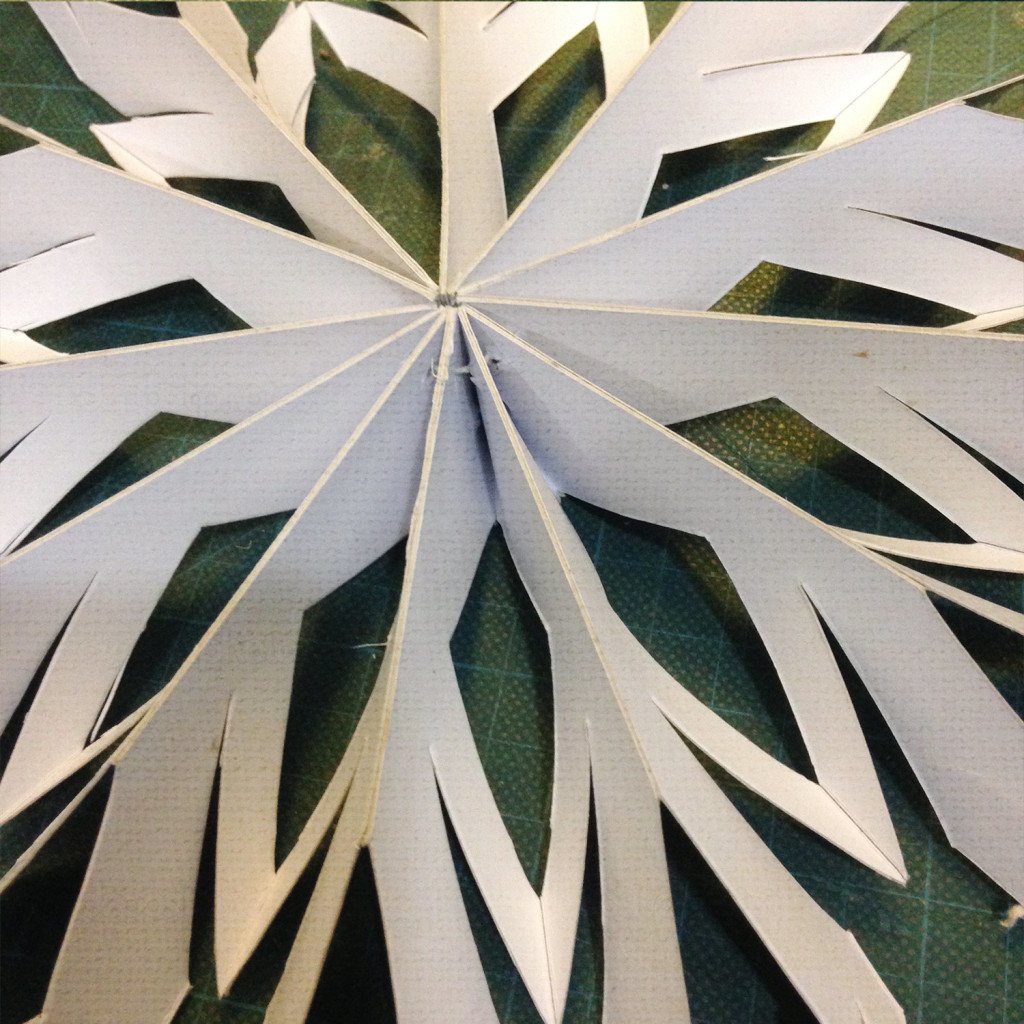
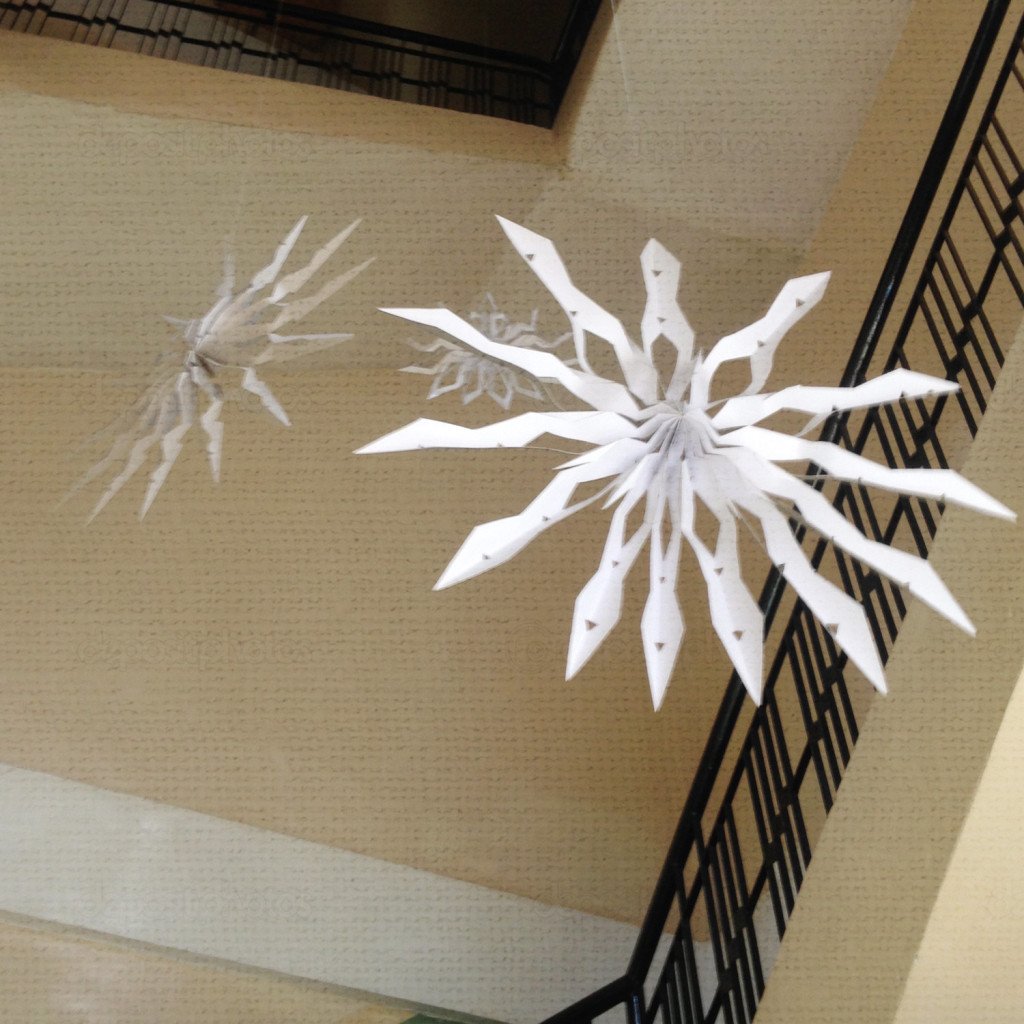
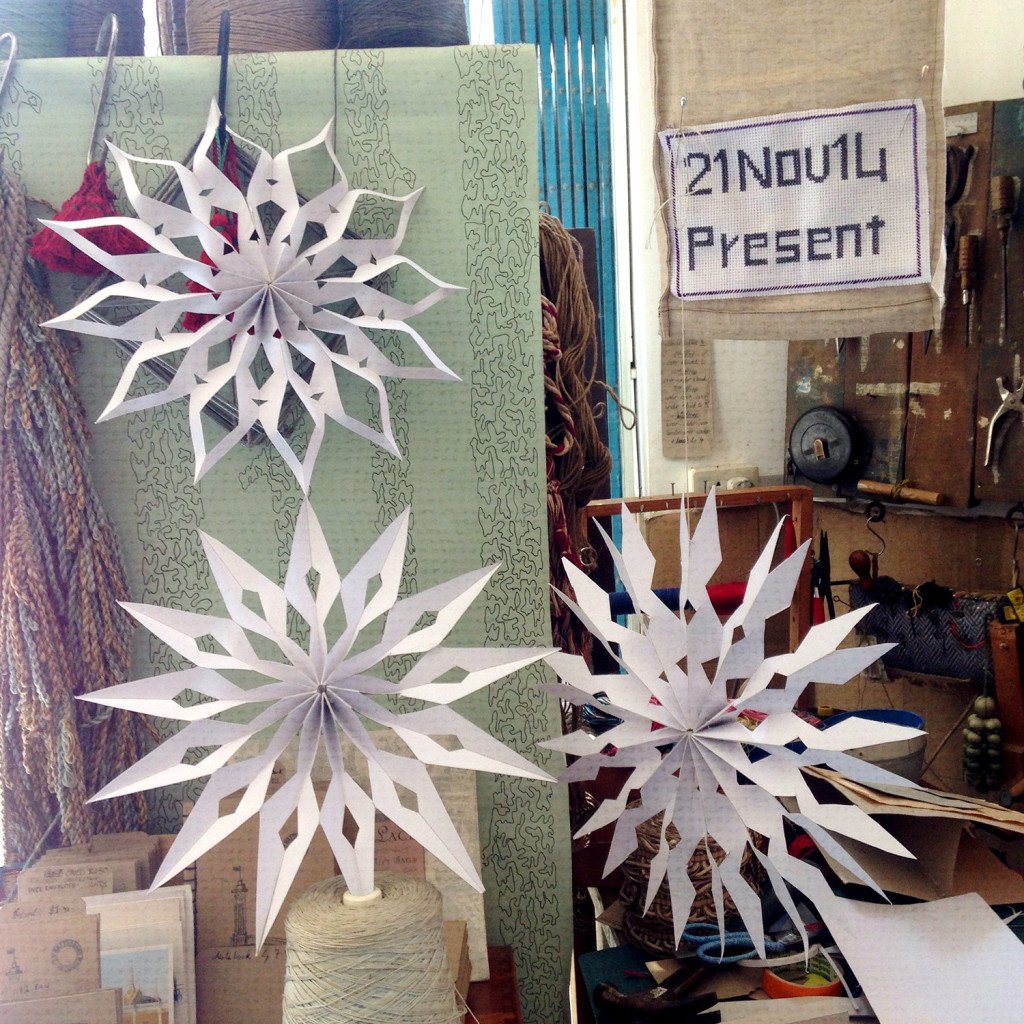
How to make Paper Snowflakes

How to make Paper Snowflakes

I decided this year to make Paper Snowflakes for our Christmas decorations. Simple and fun, but watch out for that dangerous blade.

Items required:
 – Card
 – Sharp Knife
 – Metal Ruler
 – Cutting Board
 – Double Sided Tape
 – Scissors
 – Needle and Thread

Cut a rectangle piece of card, two thirds longer than the width. The width should be half the total finished snowflake diameter.

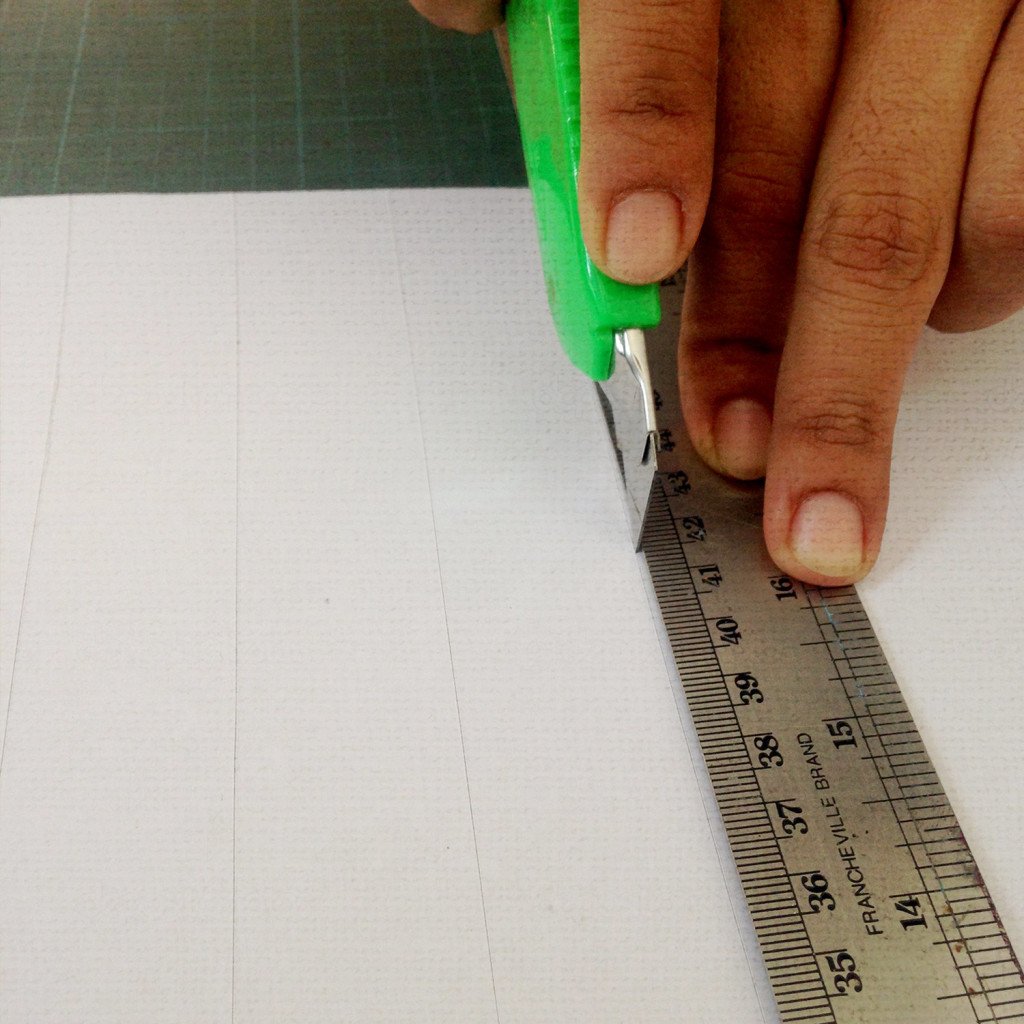
Score the card along the width with equally spaced score lines. Here, we make the score lines 4-5cm apart. DO NOT cut through the paper. These are only minimal score lines that only cut slightly into the card.

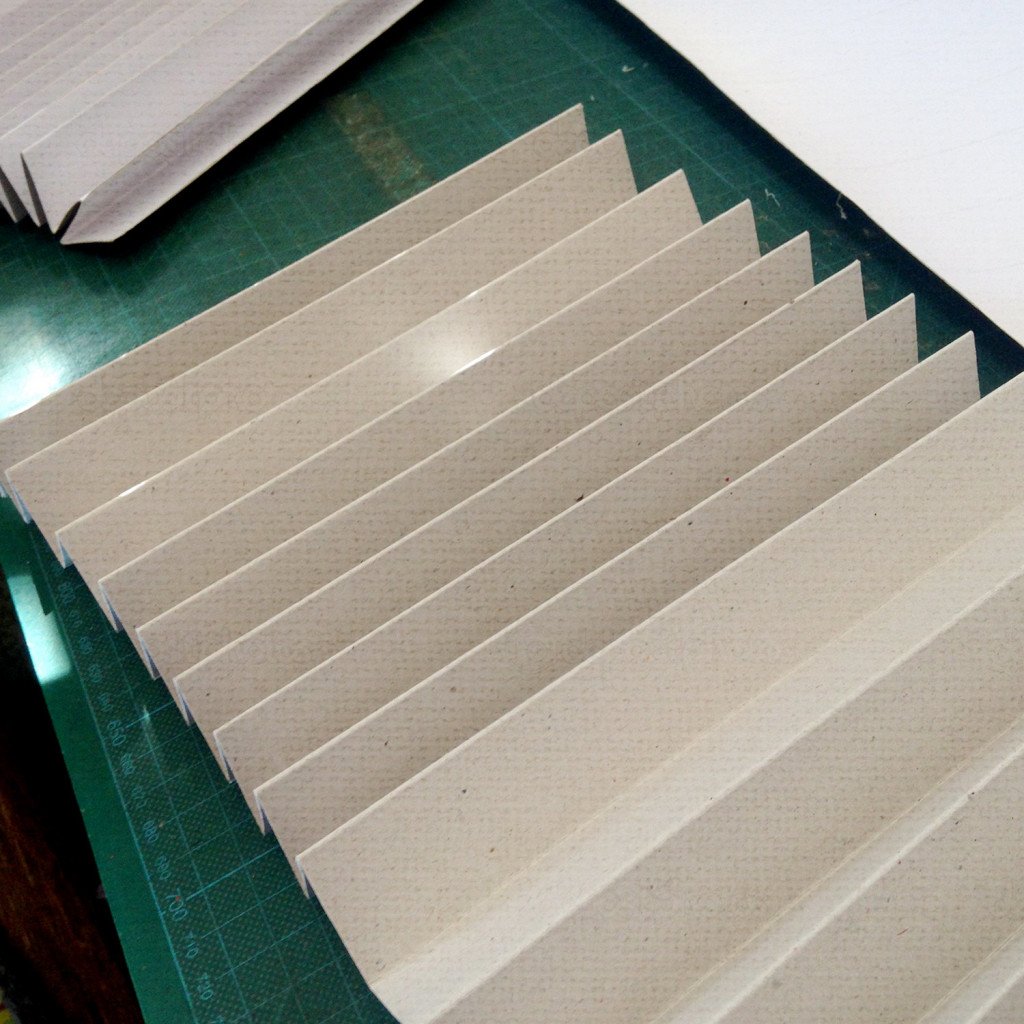
Using the score lines, fold the card into a concertina.

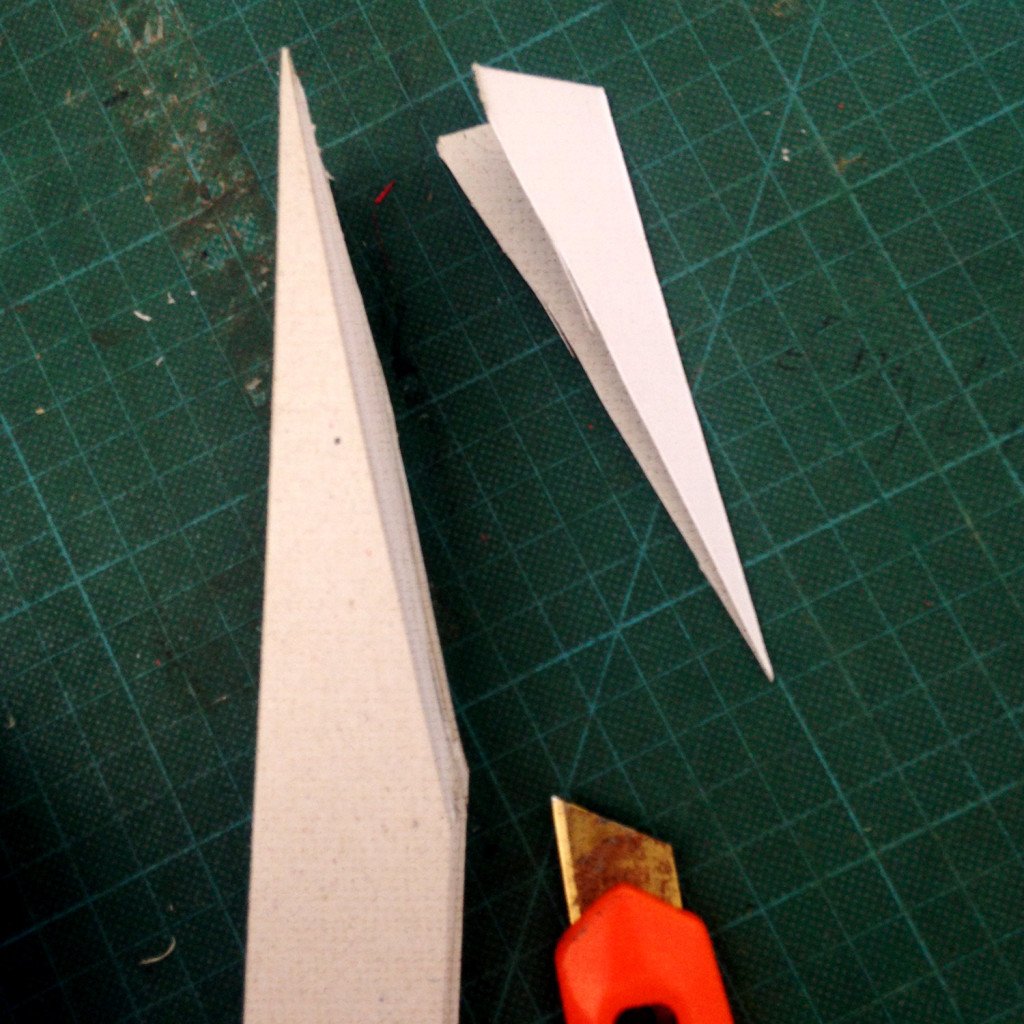
Cut the tip off the end of the fold, cutting all the layers of the concertina folded card.

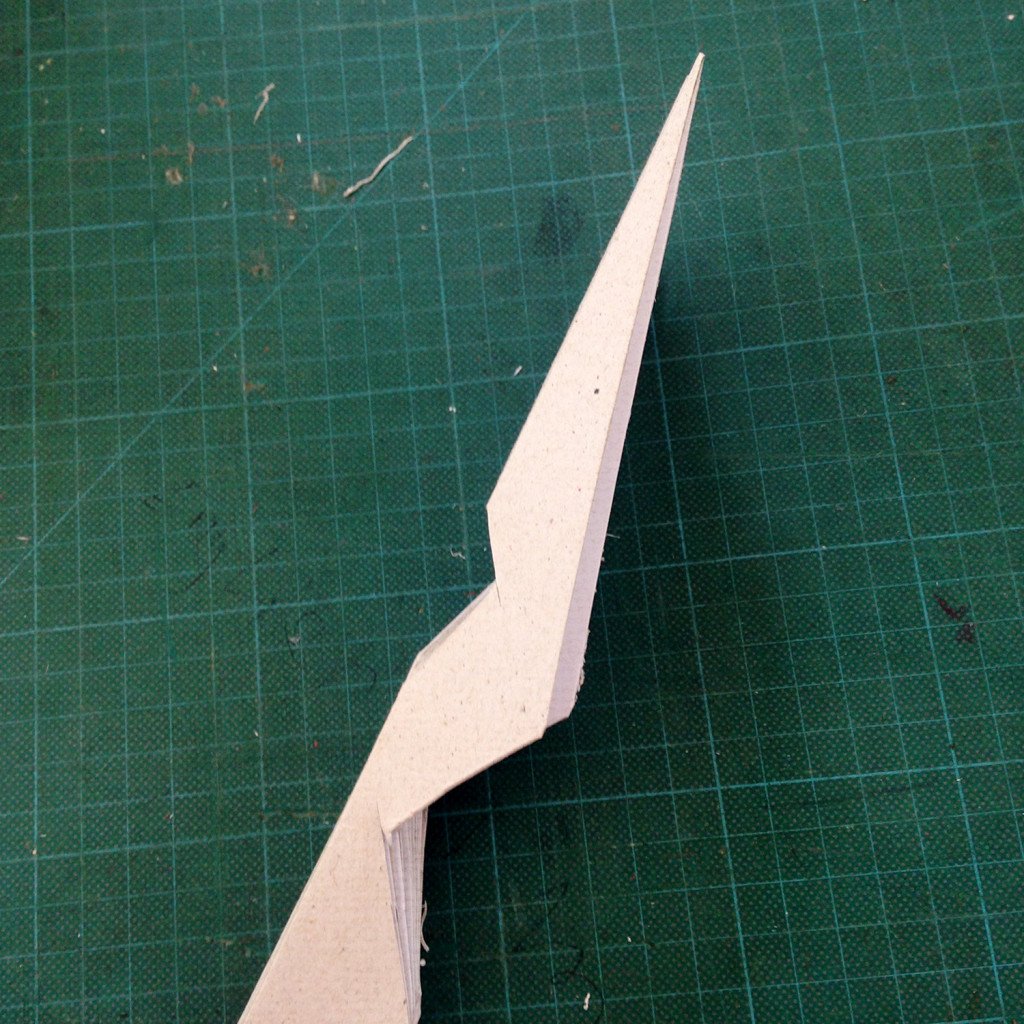
Down the length of the folded card, cut into the layers to make more groves.

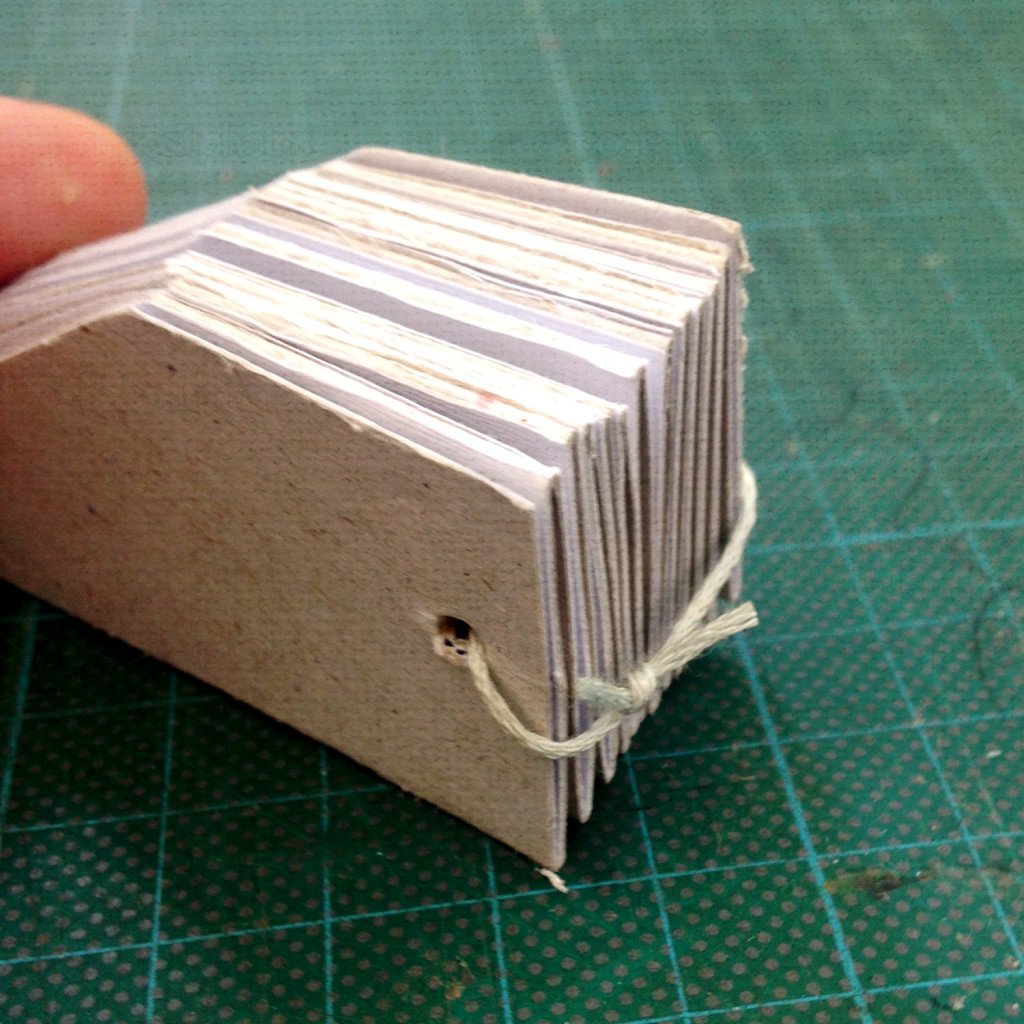
On the opposite end to your original cut tip, tie the layers together. You do not want this to be a tight tie, but you do not want it too loose. Upon completion of your paper snowflake, if  it is not flat, and it buckles, come back to this step and make this tie tighter. Likewise, if it is too tight, you will not be able to open the concertina folds to form a fully opened round paper snowflake.
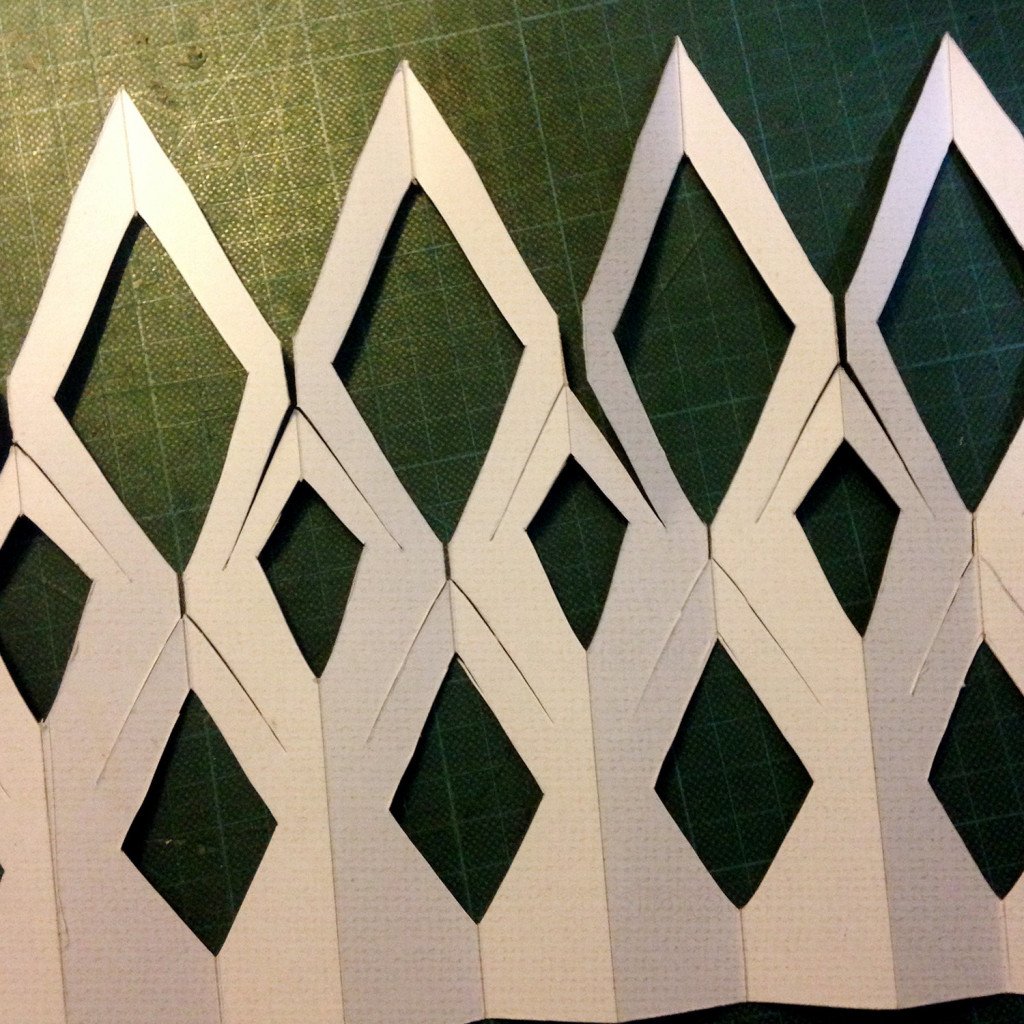
Unfold the paper snowflake and attach the two ends of the card by using the double sided tape.

This image shows the unfolded concertina, prior to the stitching in the pervious step.

Posted on

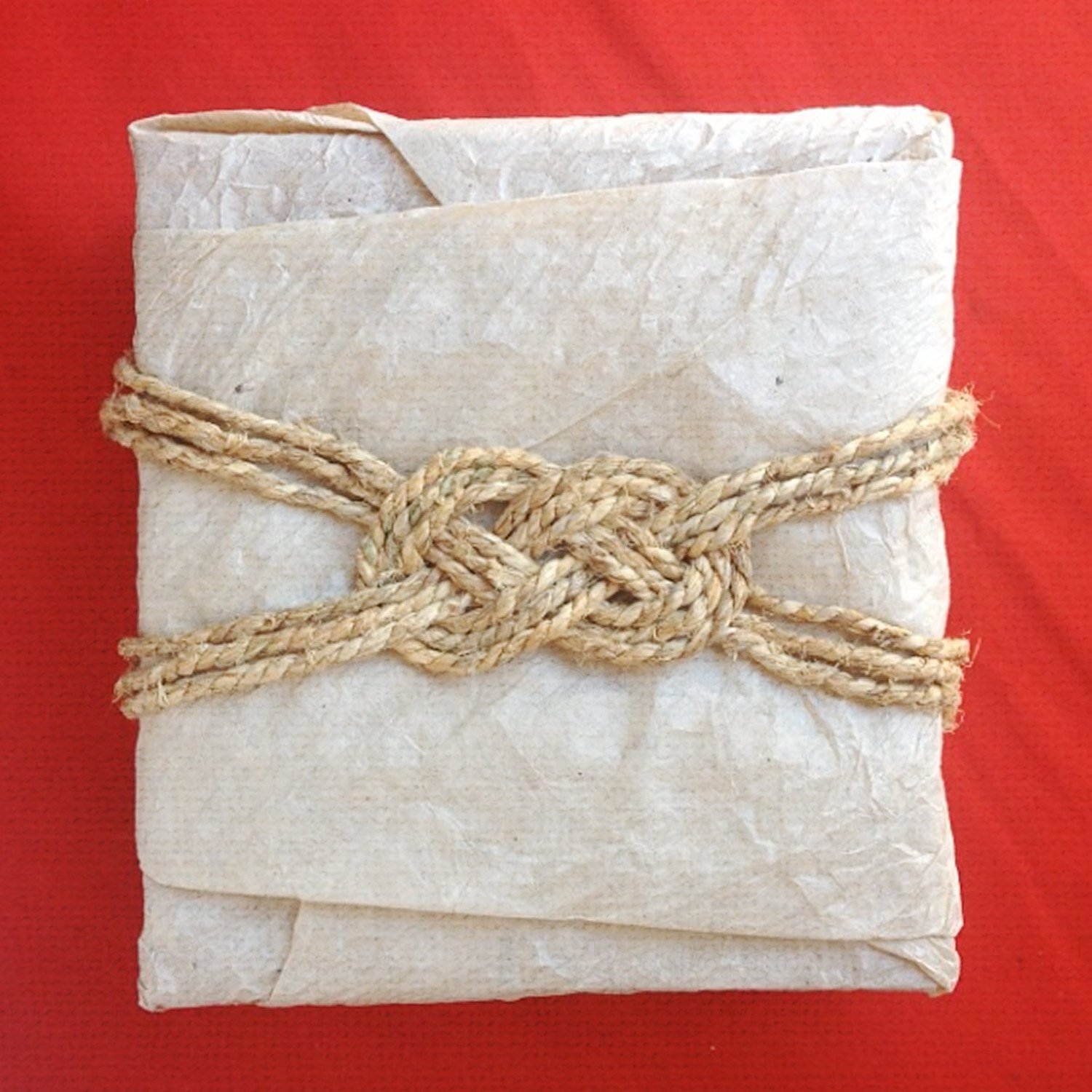
Wrap a present and finish it with a decorative knot.

Wrap a present and finish it with a decorative knot.

To estimate the length of cord:
To make a single layer knot, measure the circumference of the box + 30cm of cord
To make a triple layer knot, triple the above

Step 1
Fold the cord in half and start with this point.
Pull the bottom cord under and up to the top right

Step 2
Pull the bottom cord under the package and then over the loop then under this top cord

Step 3
Bring this cord down and over it at the original point then under.
Pull the top cord under the box and to the top left of the package.

Step 4
The cord will then go under, over and then under where the other cord ends.
Then with a mother cord, the same length, repeat  this process two or three times.,
or simply stitch the two ends together  and died it with the original cord.

Posted on

Tassel and Wrapping workshop in Hong Kong

Wrapping and tassel workshop in Hong Kong.

Join me in a three-hour workshop at Mirth, Wong Chuk Hang, Hong Kong. 18th November 2015.

Its the beauty of wrapping that can be the true gift to our friends and family. This workshop is all about the presentation of gift giving. Discover Japanese techniques where gifts are perfectly wrapped in paper or fabric. No sticky-tape to be seen.

Learn to embellish gifts, by making thin, S-Twist & Z-Twist cords, which are ended with  simple tassels on each end. Monogram wrapping paper with the receiver’s initials. Plus much much more.

Morrison Polkinghorne, of Passementeries, makers of the finest tassles, fringes, braids and cords, will be in Hong Kong on November 18, 2015, for one workshop only demonstrating and teaching the intricacies of his splendid hand-crafted ornamental decorative trimmings and tassels. The textile designer and authority of Asian antiques is a true artist who has single-handedly reinvigorated and driven the passementerie story into the 21st century. His work has involved collaborations with international designers for private and public spaces, restaurants, and his pieces have graced the rooms of iconic buildings including the National Gallery of Victoria as well as Sydney’s Kirribilli House. Now based in Battambang, Cambodia, where Polkinghorne owns and runs the boutique hotel bric-a-brac with his partner chef and author Robert Carmack, the self-described ‘tassel maker’ has spent the past few years training and overseeing a talented team of local artisans who continue to help create the passementerie which is all hand-crafted from natural fibres or jute.

In this three-hour workshop at Mirth, Wong Chuk Hang, you will learn tassel making skills from the best in the biz, Morrison Polkinghorne of Passementeries, while using KPC’s beautiful wool and cotton yarns. Polkinghorne will also pass on his knowledge of Japanese gift wrapping so all your future Christmas and birthday presents are guaranteed to look more beautiful and inspired. 

There will be a glass of bubbles and refreshments provided for all guests taking part.

For more information or to book please visit stylebrief.bigcartel or call 9186 2094 for more information. 

Posted on

Custom cushion fringe – Bullion Fringe

Custom cushion fringe - Bullion Fringe

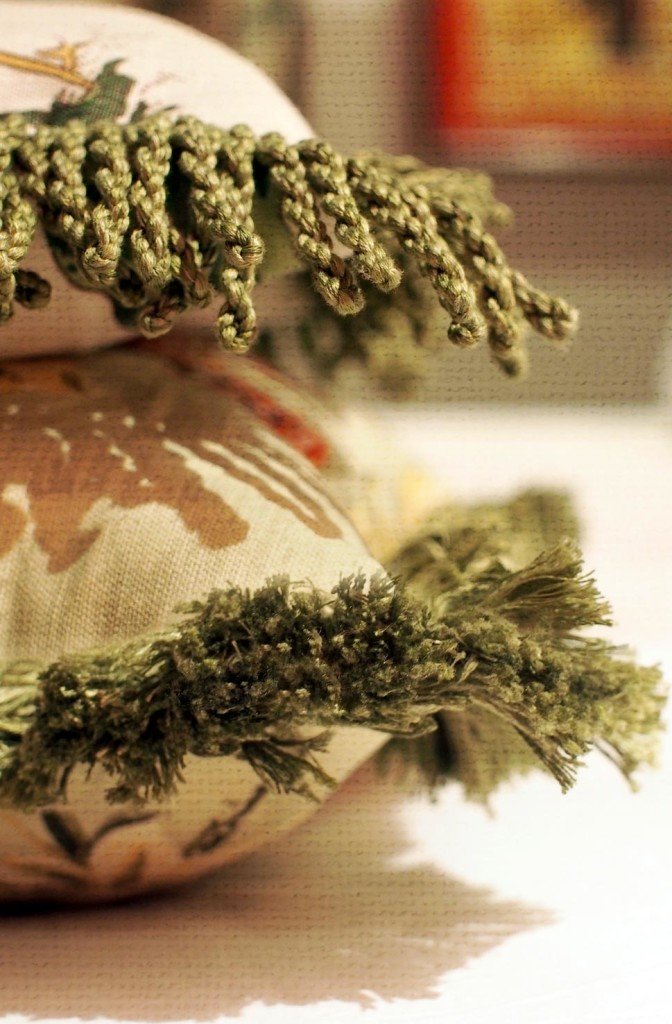
Weaving twisted threads with a loom turns into bullion fringe. The term originates from the thick metallic gold or silver fringe epaulettes and cording used on military uniforms.

Here at Passementeries® we make our bullion fringe with  high-grade mercerised cotton from a collection of some 600 colors.

The Bullion Fringe featured on this page is typically made for use in, say,  cushions or along the edge of curtains. Greater depth fringe, or tags, is  appropriate to furniture, such as along upholstered chairs or on the base of a sofa. The latter can be made longer and also fatter in girth, akin to cigars.  Ask us for more bespoke creations….

With two people working on the same fringe,
we are able to make 5 – 7 meters / 5.5 – 7.5 yards a day.

Posted on — Leave a comment

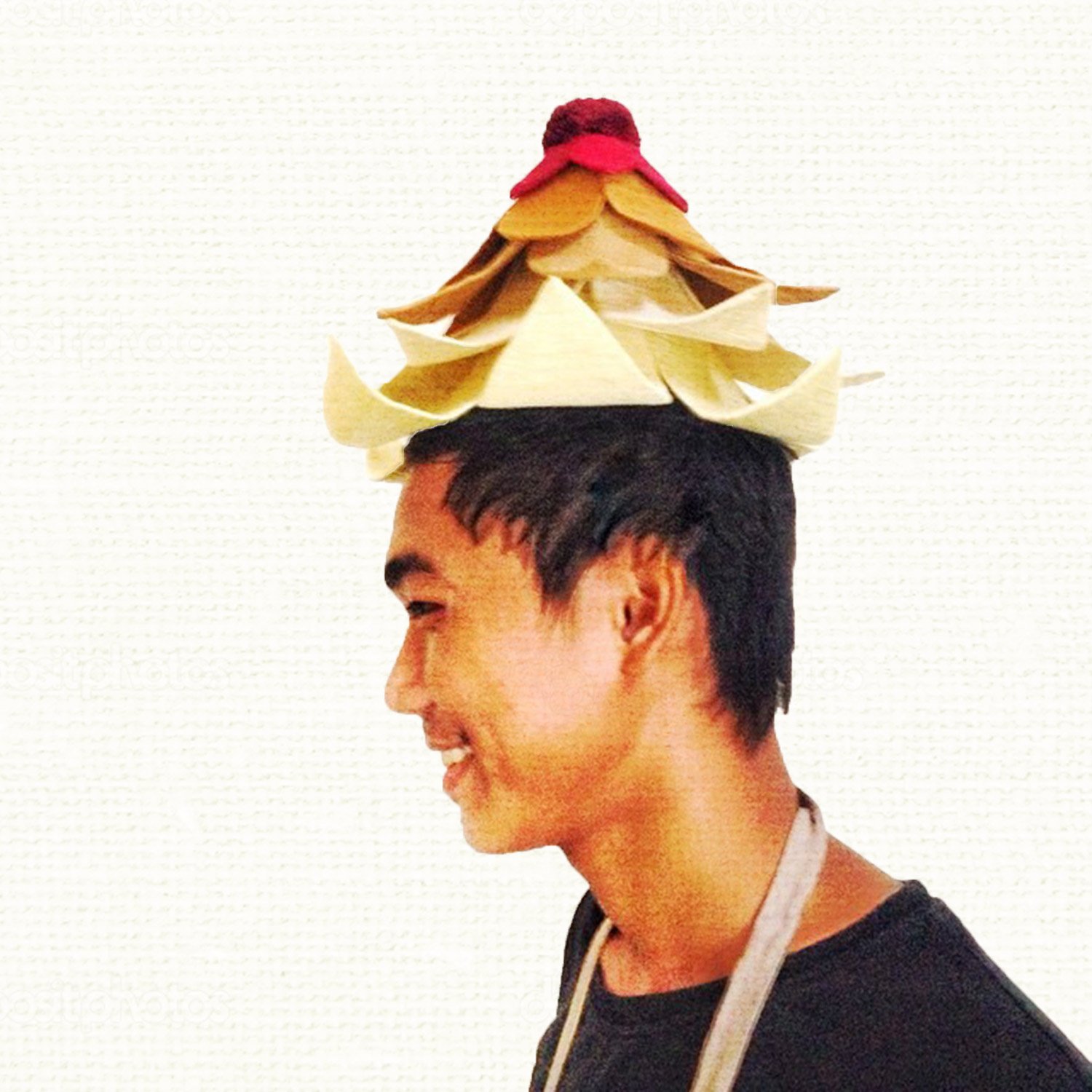
Two weeks it took to make this ceiling rosette and it took just 10 seconds for my staff to turn it into a hat!

TRENDING

November 12, 2026

Two weeks it took to make this ceiling rosette
and it took just 10 seconds for my staff to turn it into a hat!

This ceiling rosette took a laborious two weeks to construct. When it was finally completed, before it has time to be used as a ceiling rosette, my staff grabbed it as a decorative hat.

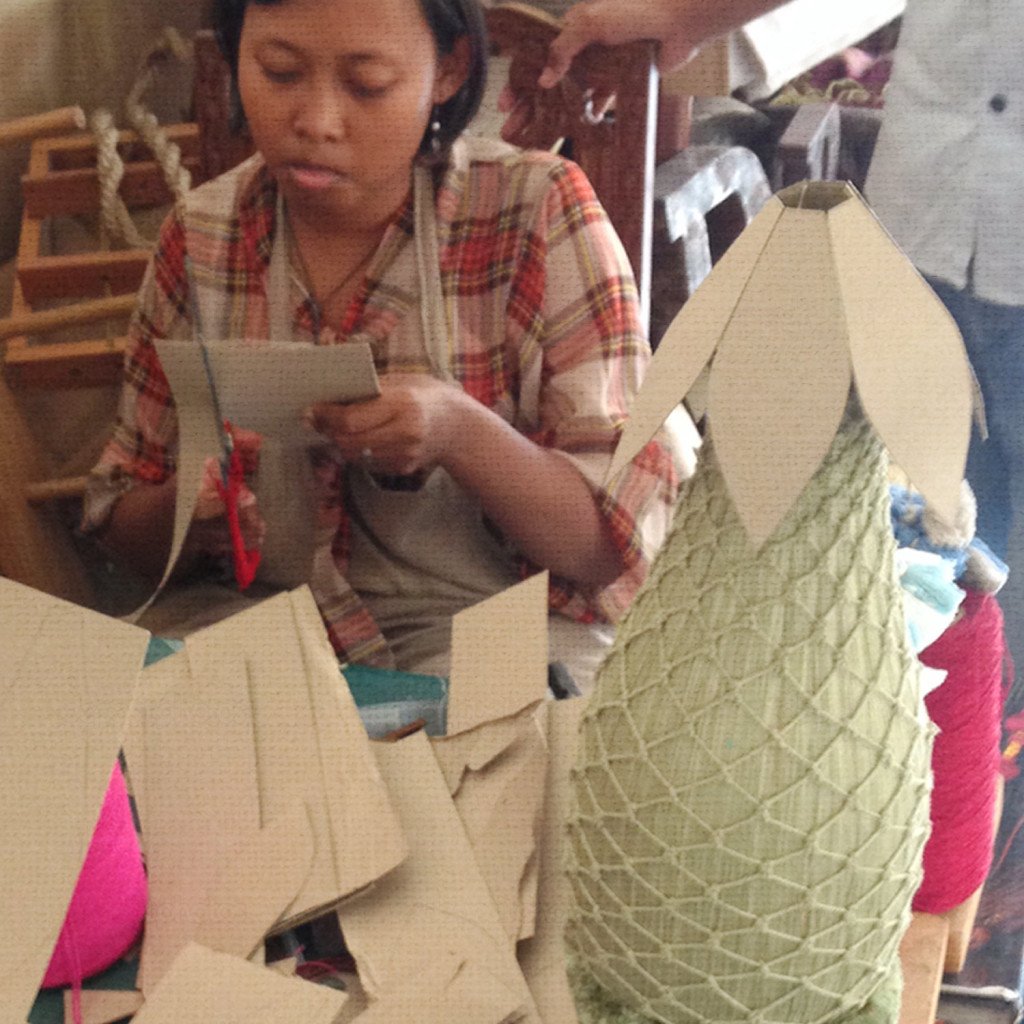
This learnt this technique when I visited Versailles where in the hall of mirrors they have many chandeliers with stunning ceiling rosettes. The basic technique is you cut a card into a shape and then wrap it in a thread. It’s not easy to do, but the end results are worth all the effort.

It ended up being used for our mosquito net at home.

latest posts

Three artworks by Morrison Polkinghorne are now available as wallpaper from Studio Printworks in New Your.

Phnom Penh Exhibition

A How to make a turks head knot.

Posted on

dried lotus, silk embellishments & hand forged nails

dried lotus, silk embellishments & hand forged nails

There are myriad reasons why I find a special of joy in living and working in Battambang, a city known for its creativity, musicians, artists and craftsmen. Here are some examples:

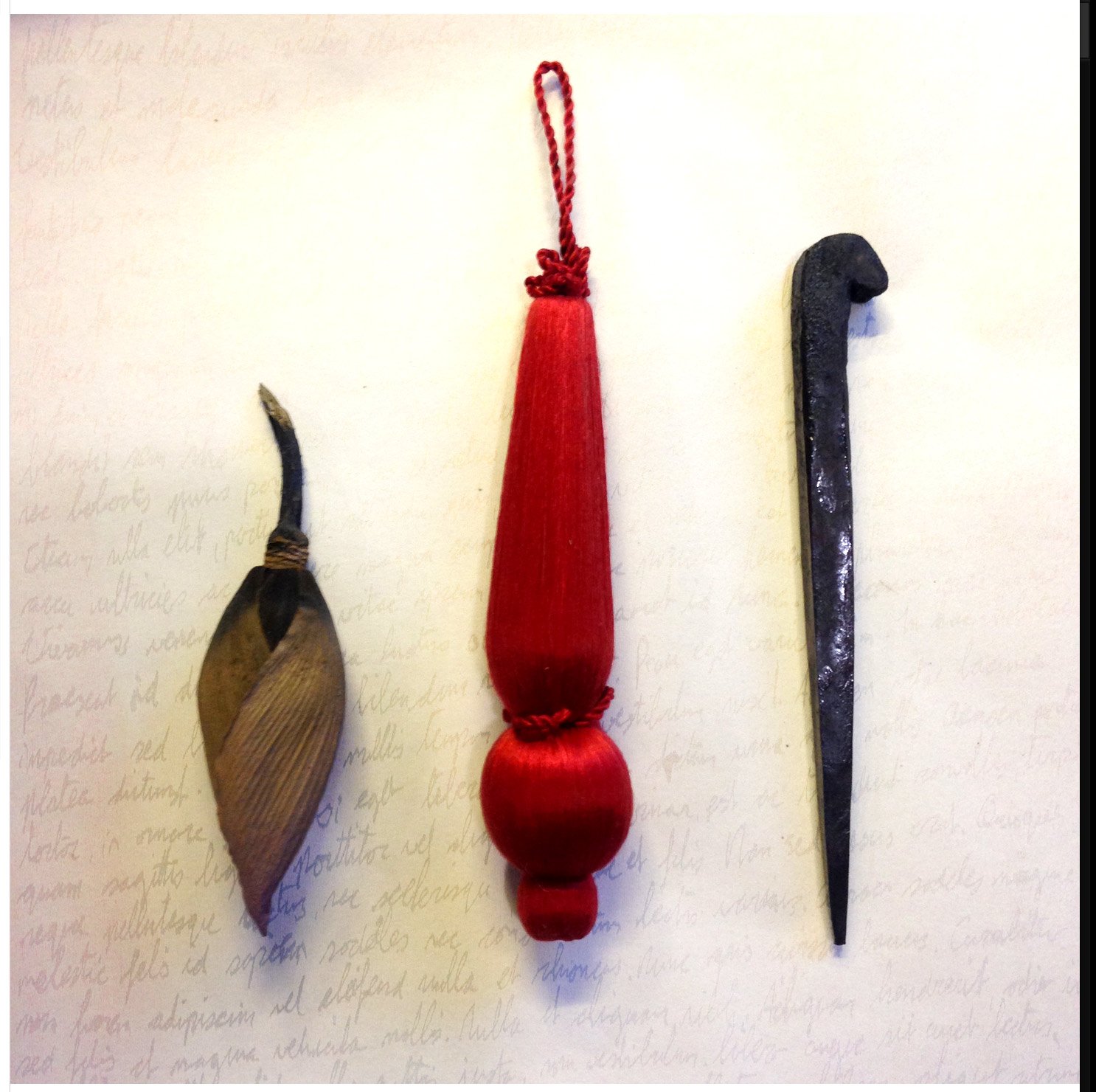
Dried Lotus:

Everyday we go to the market and buy a bunch of closed lotus flowers. We then fold the pedals back to reveal the flower, and when they die we just let them dry and  hang them in our Boutique. Their colours become a subdued ashes to rose hue.  We’re  slowly instructing our staff to appreciate the exquisite beauty of natural transition.

Silk Embellishment:

For many years Passementeries (R) has been making similar embellishments, from hi-grade mercerised cotton, available in hundreds of colours. These are then attached to the sides of tassels, or spaced along  bullion fringe. I’m excited by this development, and seeking a quality Khmer or Thai silk suppler, instead of relying on Chinese imports. This is the first embellishment made from silk threads.

Hand Forged Nails:

I commissioned these artisanal nails, the originals fossicked a few years back at a small northern Vietnamese market along the Sino border.  They were reminiscent of Medieval European studs, and my Sydney designer clients almost immediately bought out my original supply.  Depleted, but we wanted to decoratively hang paintings in our new home in Battambang.  We worked with our local black smith to recreate these nails. Now we have a large supply, and in three lengths. Custom sizes are also available.

Posted on

Massive Jute Tassels for Rangoon

Massive Jute Tassels for Rangoon

I have always loved natural fibres such as jute, linen, sisal, cottons and silks and when I started making tassels three decades ago they were orignally made from these same rustic materials. My latest overseas commission project is for over-sized tassels, ropes and large light shades for a faithfully restored Edwardian commercial building in downtown Rangoon,Yangon. Can’t wait to see the actual installation going in next week!

I was designing a new tassel, first by commissioning a local blacksmith to make the metal head of the tassel. But the design needs to be oversized, plus painted red and white to incorporate the logo colours of the client. The rope was exhausting to make. 

Thankfully I had a new staff member, Mr Channa,  who was a god-send. I taught him how to make rope using by Captain Cook rope twister installed on our roof, and he excelled in twisting the threads.

When I teach a workshop, I have people make a thin simple cord about a few millimetres thick (fraction of an inch) and that takes just a few minutes to make. By contrast, this 14 metre/18 yard rope weighs in at  20kg, is about 10 cm/4 inch diameter and took 4 hours to pull out all the threads and an entire day to complete one rope. We needed to make four ropes for the job.

Here, Miss Channa (no relation) is carefully trimming the tassels, while painstakingly attaching  decorative embellished cable cords.

Now they are all completed and hanging in Bric-à-Brac Battambang, waiting to be installed next week in Myanmar. So for 2 days only, we’re having our own art installation hanging from our 3 storey atrium.