Posted on

new tools for Vaucluse House

new tools for Vaucluse House

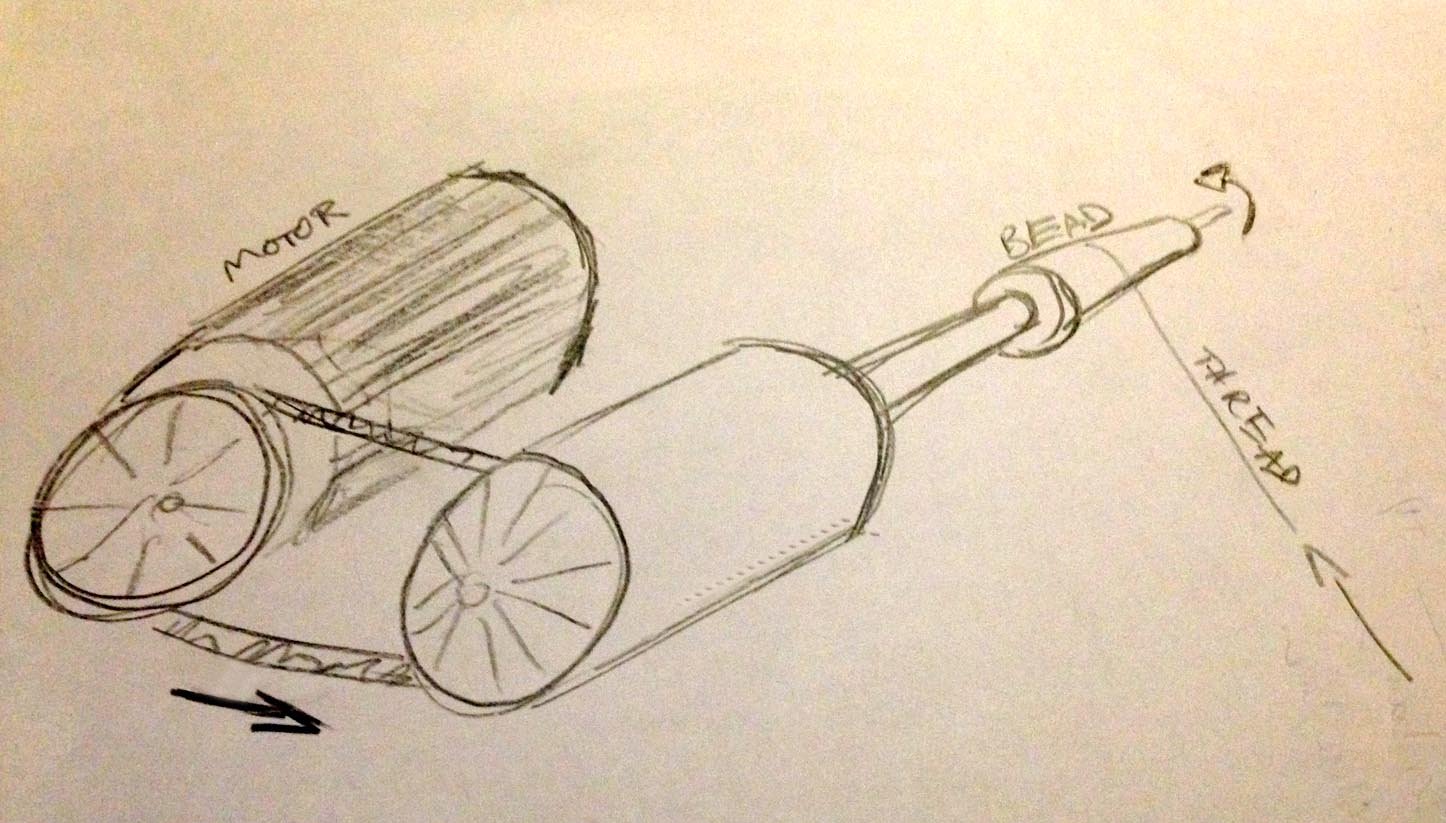
When I got the go ahead to work on the new Vaucluse house renovations, the first thing we needed to do was to make some new tools.

Part of making tassels incorporates wrapping beads which can either be wrapped horizontally or vertically. Wrapping vertically is done by hand, but horizontally it is virtually impossible to hand wrap the threads straight. The use of a spinning machine, allows a single thread to be wrapped horizontally — and straight — on to the bead. So, first I needed to to source a local machinist who could help me make the tools.

Posted on

revamping jute trimmings

revamping jute trimmings

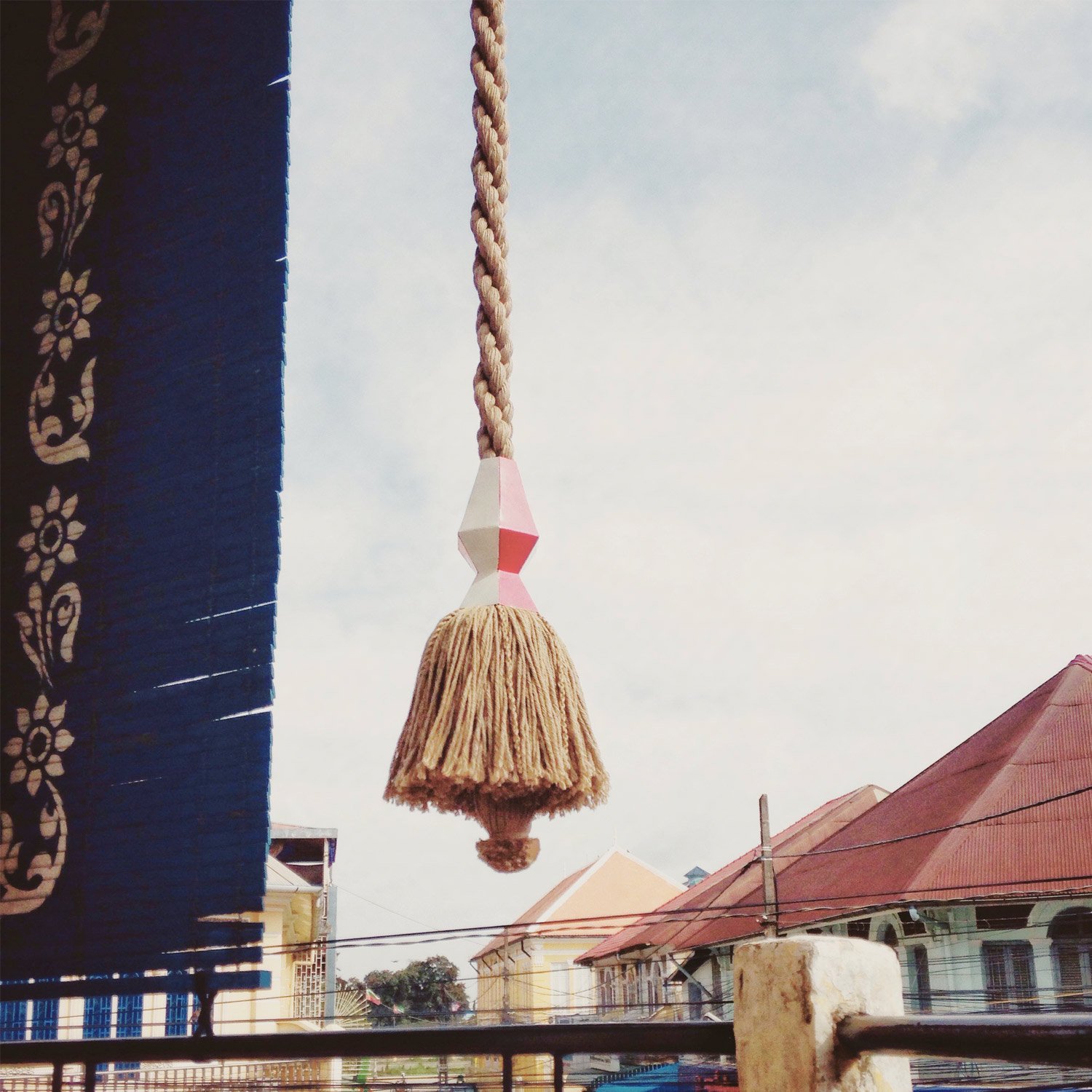
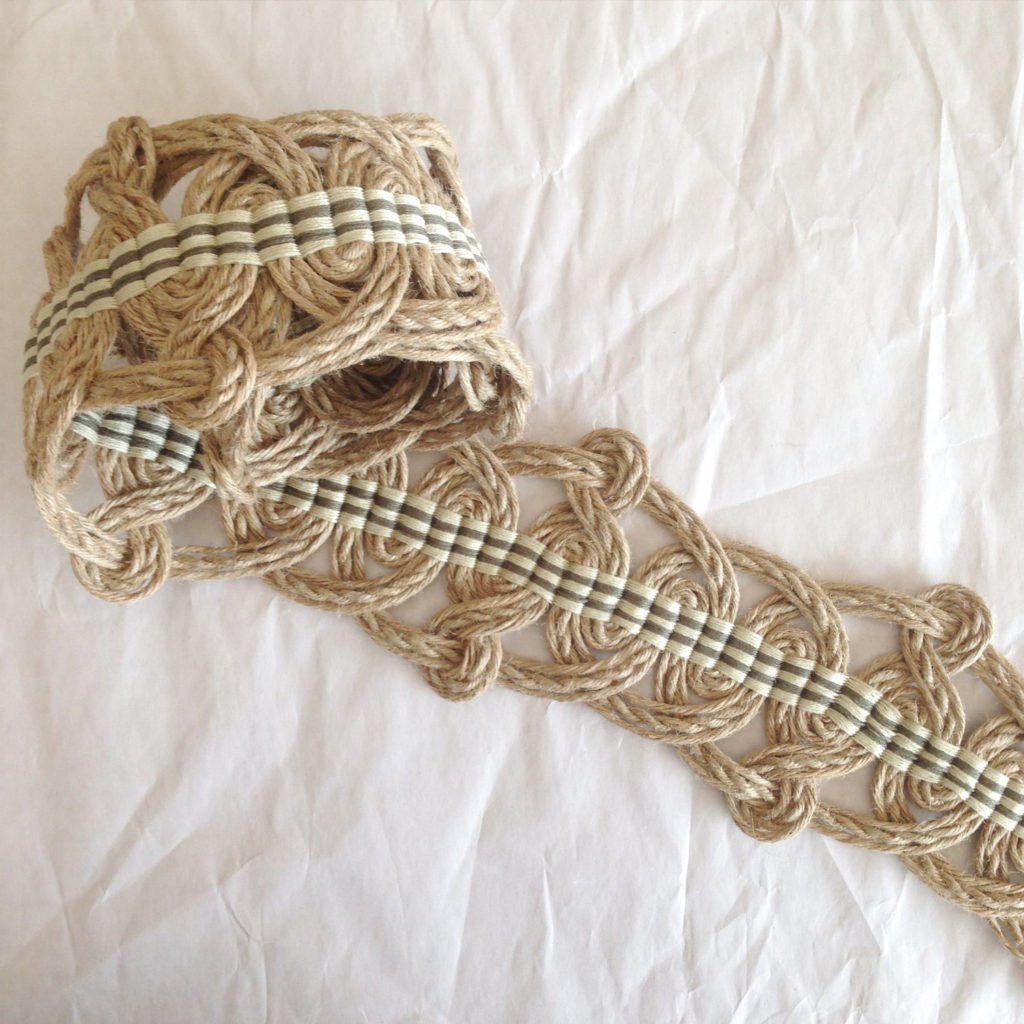
In the early 90’s I started my tassel career making trendy, contemporary jute trimmings, tassels braids fringes and cords. Then the fad faded, but not totally. This past year Passementeries has been approached to create new and exciting contemporary jute projects. In the process we’ve developed stunningly new creations. Natural fiber has always had a special love, not just jute: I’ve been “m orgigamically” wrapping packages in newspaper, making chandeliers from cardboard and working with metal forgers to produce heads of tassels. Here are a few images to wet your appetite.

A classic 18th century woven crete. This border suits being attached to the leading edge of a curtain, Four shuttles with three cords are hand woven, lopped an ties to create the intricate braid. This is impossible to machine make, thus only skilled artisanal weavers can create this. A cotton warp is chosen from 600 colours.

A metal frame is made to create the head of this tassel. The jute cord is hand twisted and the skirt is embellished with a bullion twisted fringe.

A simple jute fringe. This fringe can be adorned many ways, small tassels, embellished with jute pom pons or a simple cord relief woven into the warp. There are 600 colours that you can choose from the create the warp.

A simple jute fringe. This fringe can be adorned many ways, small tassels, embellished with jute pom pons or a simple cord relief woven into the warp. There are 600 colours that you can choose from the create the warp.

Posted on

Myanmar basket weaving

Myanmar basket weaving

Coming from Australia, I always thought my self as green and one that recycles, reuses and rehashes.  But after travelling to Myanmar I realise how little we actually do in the West. One example is how they reuse everything. I met a man last week who makes flip-flops from old car tiers, I almost bought a pair, but decided not to. Now I wish i did. I guess I’ll get pick up a pair next time were back to Mandalay to skid around town.
 
These bags are made from the plastic packing tape. I first saw them here in Myanmar/Burma over a decade ago, then they became popular across SE Asia. In the West we use this tape to tie and tighten up a cardboard box, then banded or heat sealed to make it tight and secure. Here in Myanmar locals use this same packing tape to weave the bags. Better yet, the metallic inner band of car tires are used to strengthen them. The color combinations are endless, the sizes, shapes and sizes all vary. If you need a specific size, shape or colour, it only takes a day or two to get one ordered, and sometimes custom made while you wait.

Posted on

Lotus weaving in Myanmar

Lotus weaving in Myanmar

Lotus weaving on Inle lake in Myanmar. Fabrics derived from lotus fibre are strong, soft and to put it succinctly, it takes a long long time to make one simple scarf.

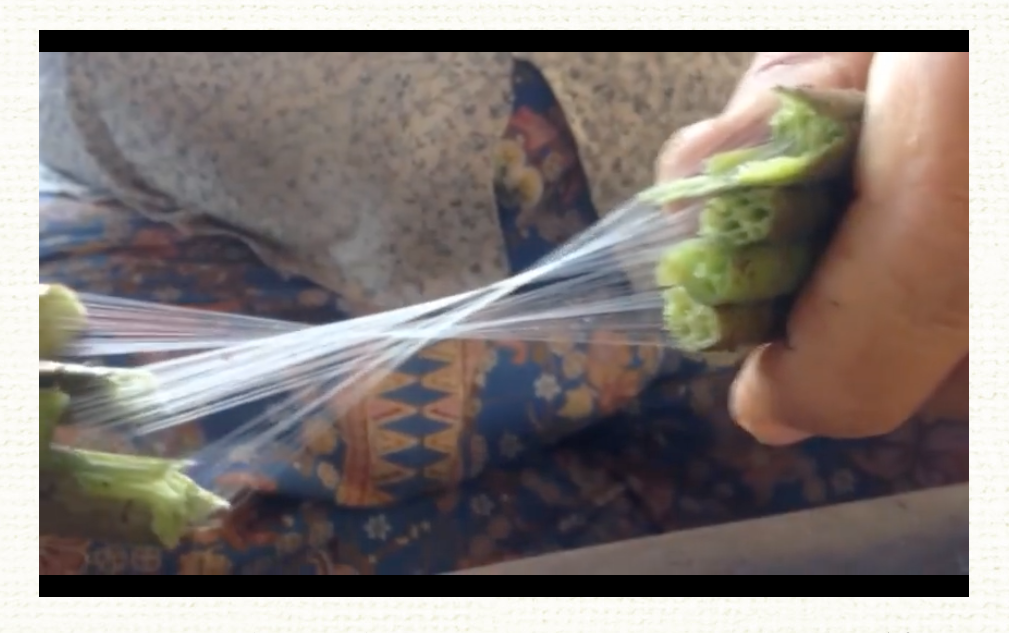
The fabric is a simple weave, either a plane or a twill weave. But it is the thread that is the time consuming aspect of this fabric. The actual thread is made from the slimy stalk of the lotus leaf. It is is broken and then pulled, the fiber is then hand twisted into a thread. One simple scarf will take about 20 days to produce enough thread and will set you back about US$100.


Lotus weaving is just one of many delightfully unexpected experiences to encounter on Inle lake. in Myanmar/s Shan State..

Join us on a tour in South East Asia. 

Posted on

Shopping in Bangkok

Shopping in Bangkok

Thank you Bangkok for the wonderful shopping items. Many things I can not get at home.

Springs for my Jacquard loom were the highest on my list and with the spring shop I found I was able to cross all my spring requirements off my list. I spent two hours in a haberdashery shop where I put many more items on my list and crossed them off. Needles, bias tape makers, threads, pliers with plastic pincers, dress making rulers, small wooden pegs and numerous sizes and shapes of spools.

Posted on

Gold leaf making in Myanmar

Gold leaf making in Myanmar

Head to Mandalay for gold leaf making. Here, you will find numerous noisy, sweaty and glistening locations. Myanmar gold leaf is handmade in time-honored fashion from 24k gold. In one day a worker at this factory will painstakingly turn 32 grams of gold into about 750 layers of finished sheets of gold leaf.

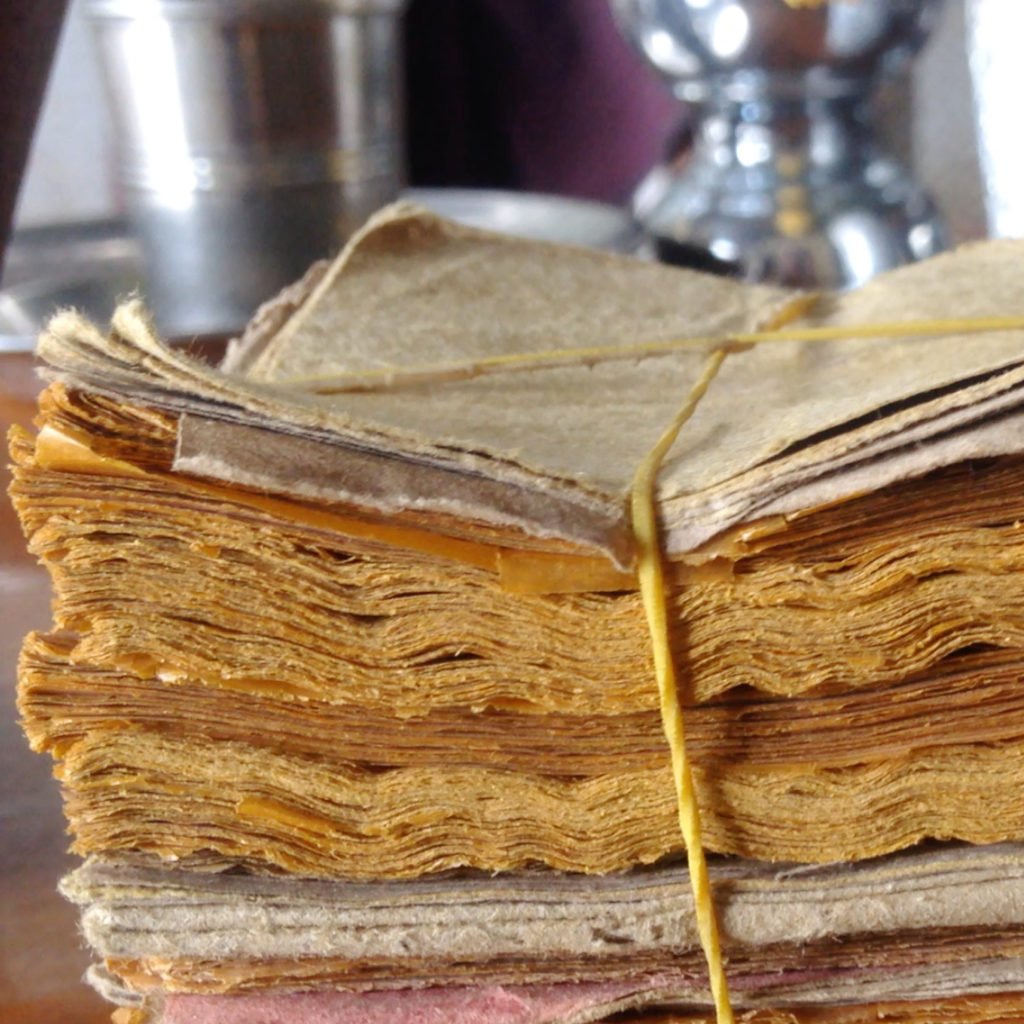
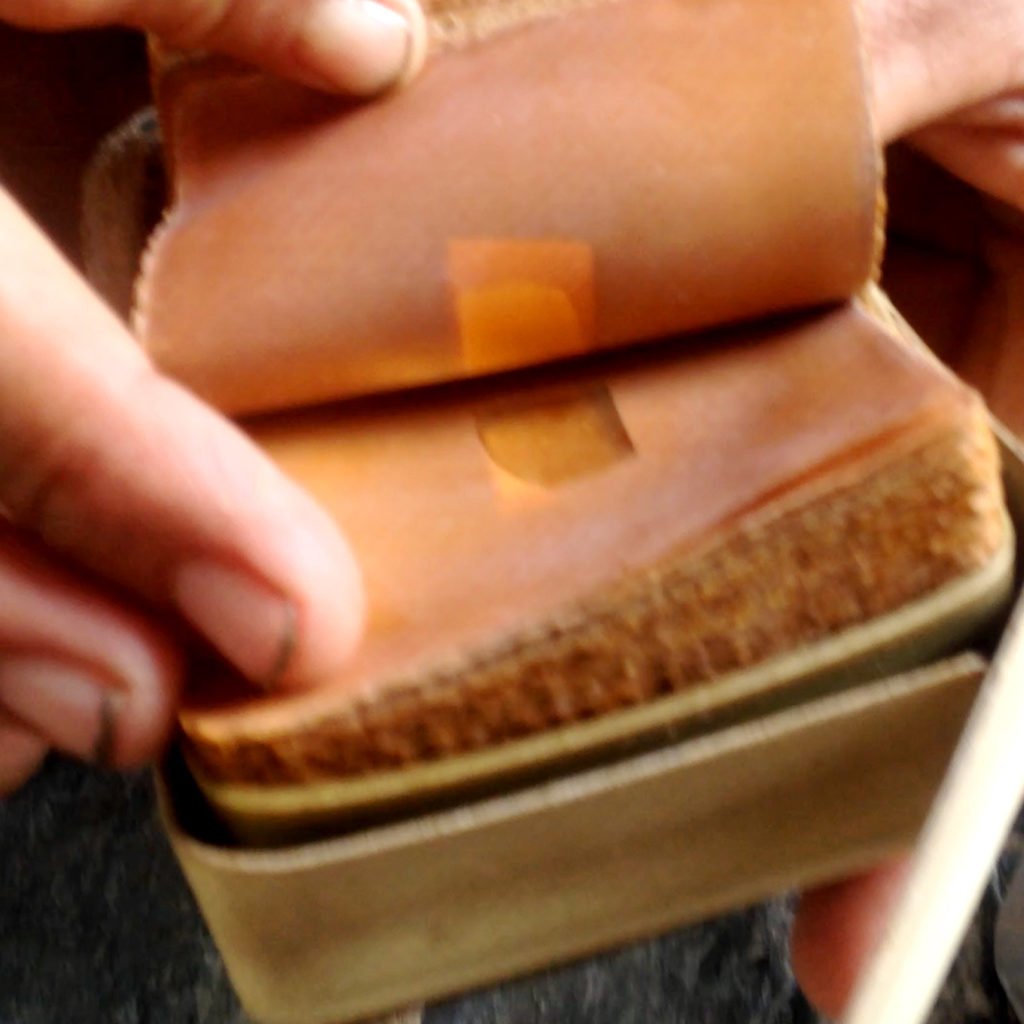
Between the layers of gold is handmade bamboo paper. A special local bamboo with a solid core is shredded and soaked for three years to make a paper which is very strong and incredibly smooth. A speck of gold is placed between each sheet of the bamboo paper, and then layered with many others. All of this is then wrapped in deer hide and then pounded. Normal cow hide is not strong enough to withstand the continuous beating, nor as flexible.

The gold leaf bamboo stack is initially pounded for about 30 minutes twice and then it is beaten again for another 6 hours.

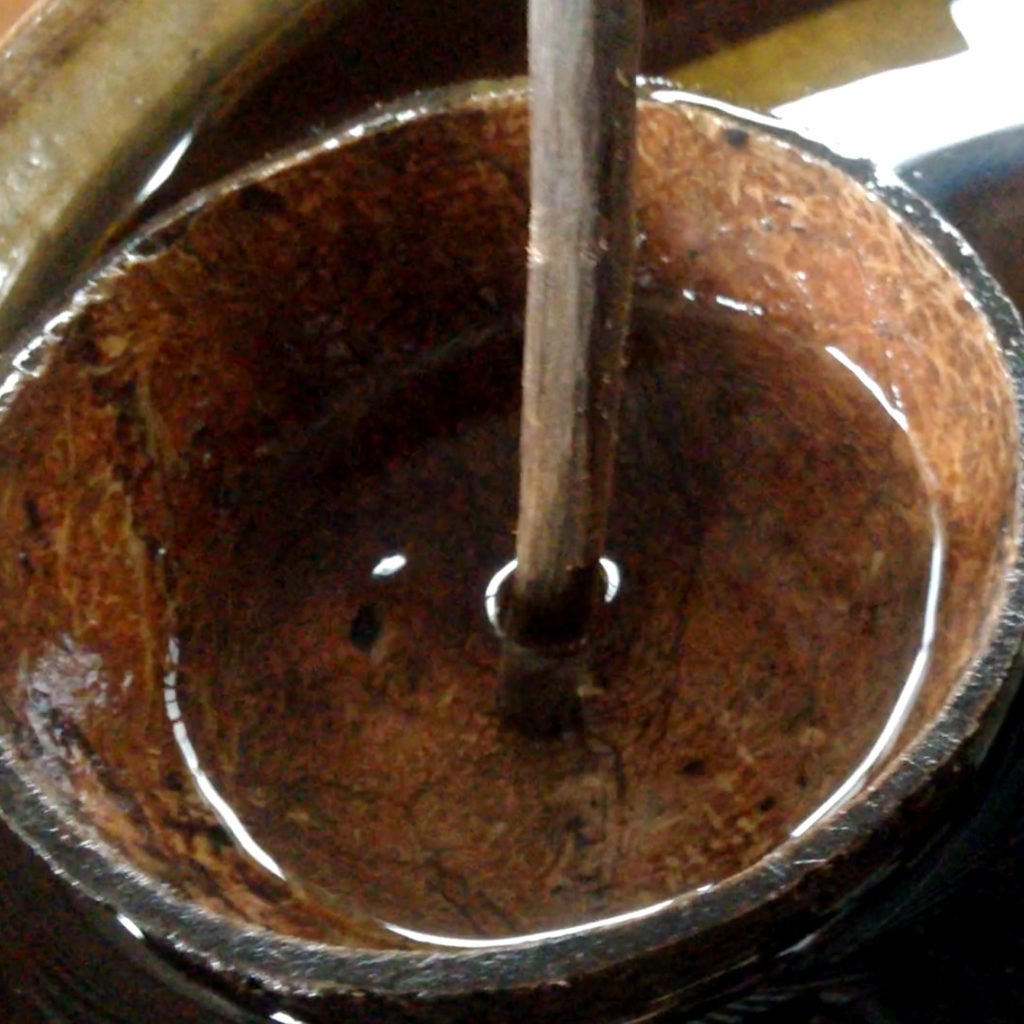
A coconut water clock is used for the timing, with a small hole in the coconut shell that slowly allows water to fill the shell. When it has been filled 80 times, the pounding process is completed.


In Myanmar there are more than 20 workshops and more than 100,000 workers producing gold leaf for the country’s temples and pagodas. Sadly, the nation’s most symbolic symbol, Shwedagon Pagoda, is set to be re-gilded with machine-made leaf.

Posted on

designing a new braid

designing a new braid

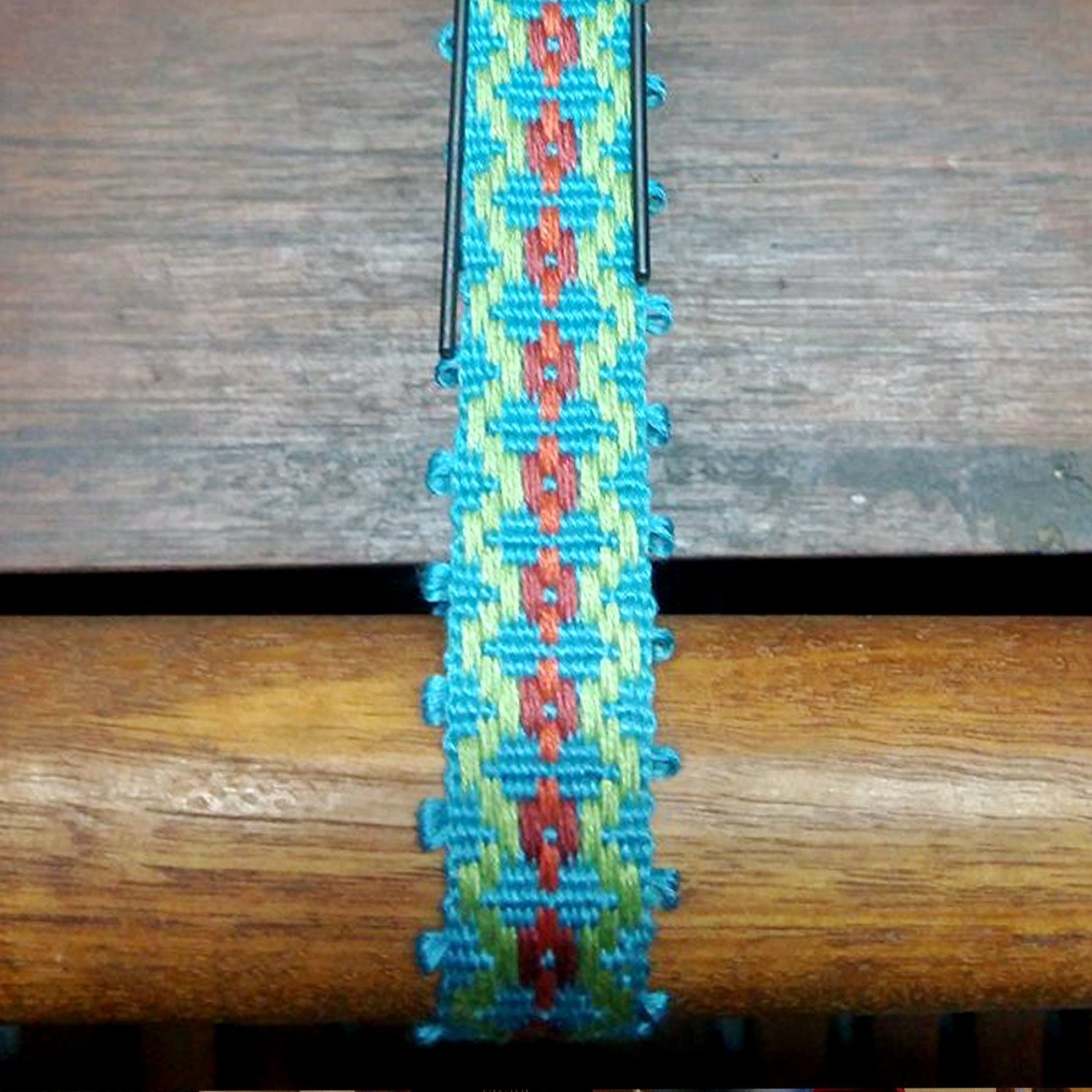
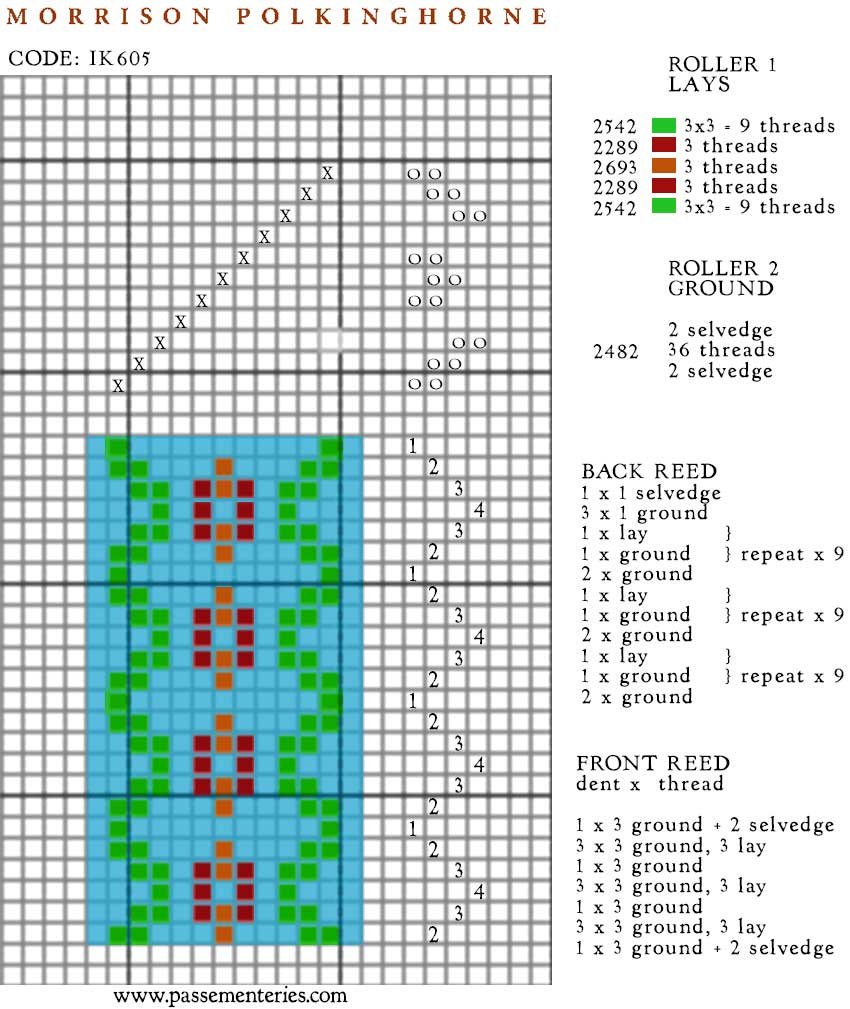
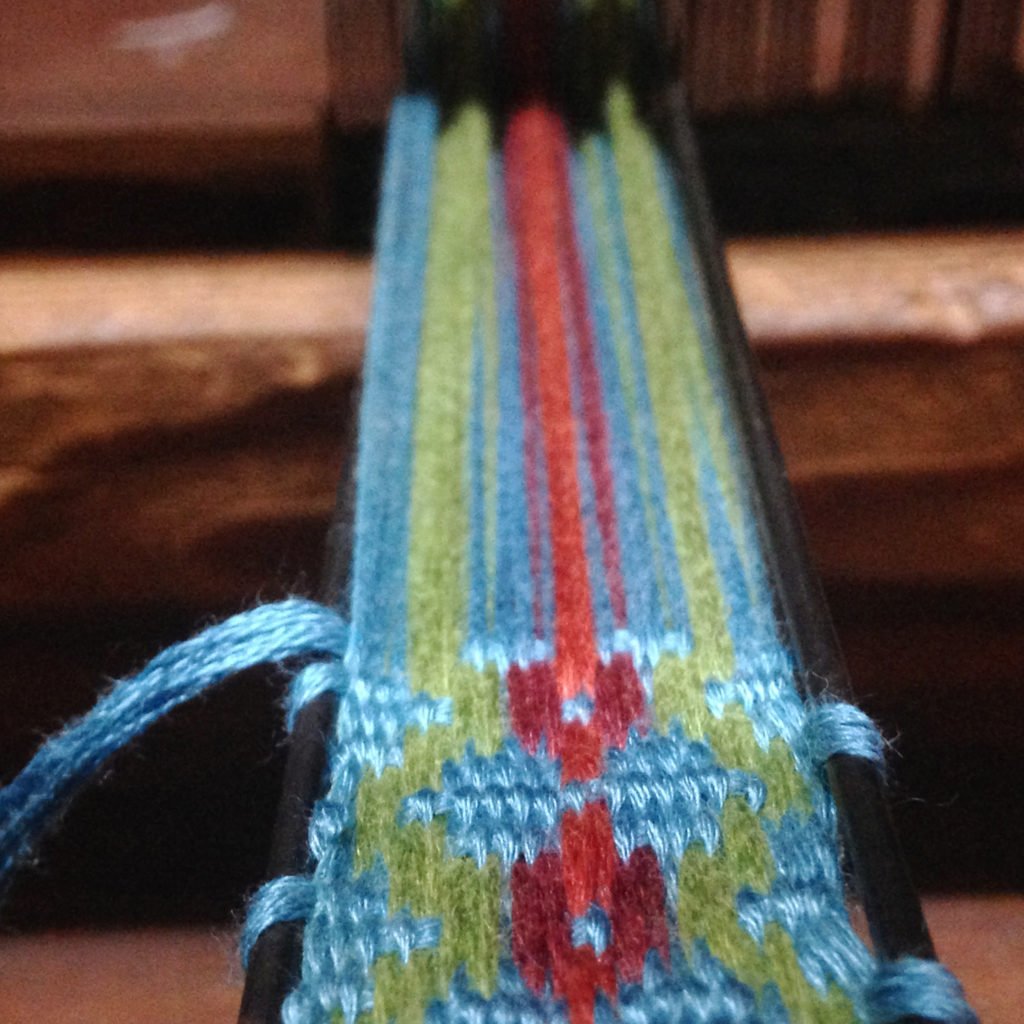
Normally, when I weave a braid I bulk the weft up with a minimum of 4+ threads. But this time I wanted to see the results using two weft threads. So I warped up the trimming loom with a myriad of blue, lime green, russet red and a burnt orange. Look at the fab results!!! I’m so ecstatic with just the first few centimeters.

Posted on — 2 Comments

building My Jacquard Loom

building My Jacquard Loom

While traveling to Lyon in July ’16, I was able to copy plans, and trace, a 19th century Jacquard loom. It has long been a dream of mine to make a Jacquard — arguably one of the world’s first mechanised computers — and now, finally, I can construct make a Jacquard loom. Ive already made several specialist  French trimming looms based on 200 year old designs, so how much harder should it be to make a late 19th century year old loom with computer cards?

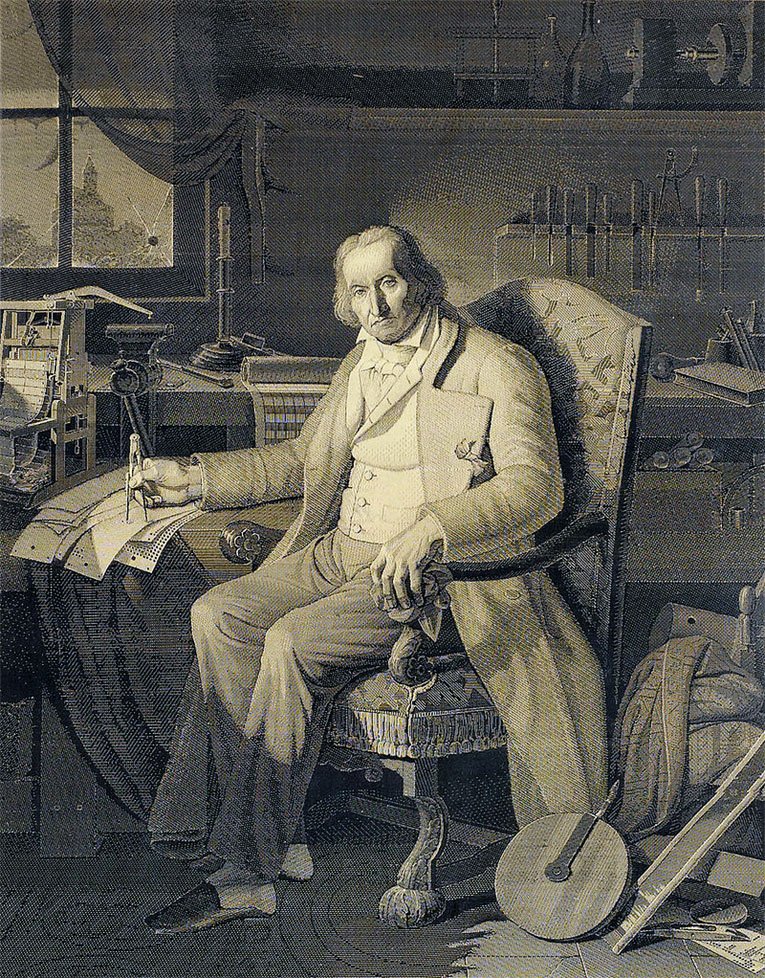
This portrait of Jacquard was woven in silk on a Jacquard loom and required 24,000 punched cards to create (1839)

The Jacquard loom was invented by Joseph Marie Jacquard and first used in 1801. Prior to this intricate patterns, such as brocade,  damask and matelasse were created on a draw loom, where a minimum of two people were required to create the fabric where individual strings were pulled to manipulate the patterns. Jacquard revolutionised this by using a punch card system — similar to early computers —  allowing just one person to weave intricately patterned fabrics. This was part of the development into the computer age.

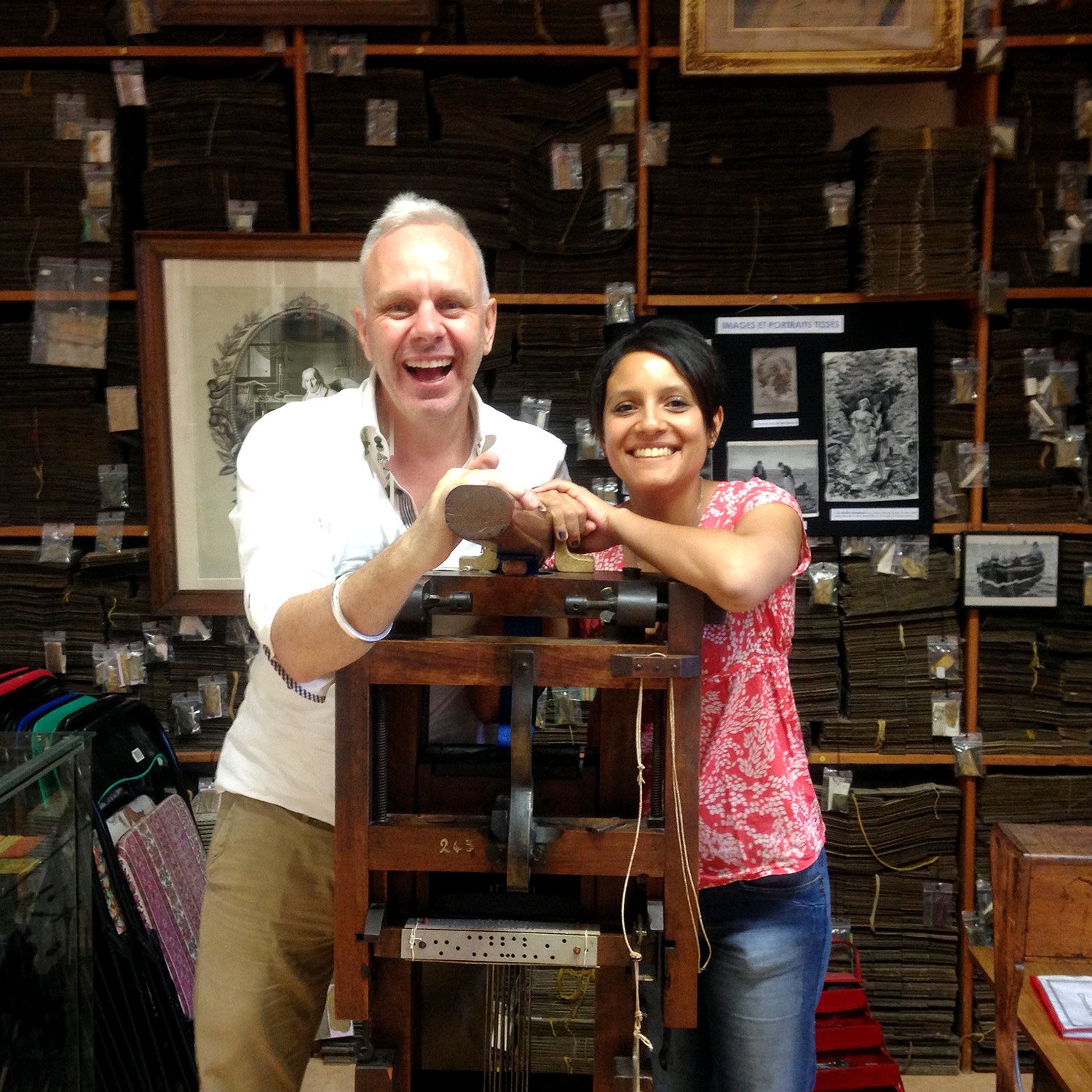
Morison Polkinghorne with Hélène Carleschi from Soierie Vivante and the Jacquard mechanism I was able to work with.

In Lyon’s specialist workshops and museums,  I was able to sit with paper, pens and  ruler to trace and make notations of the Jacquard mechanisms. I discovered the intricate workings of the mechanism: So many tiny springs, the engineering of the lifting movements, the keys that pull the punch cards on to the next card. Everything I needed to know about how to create a Jacquard loom.

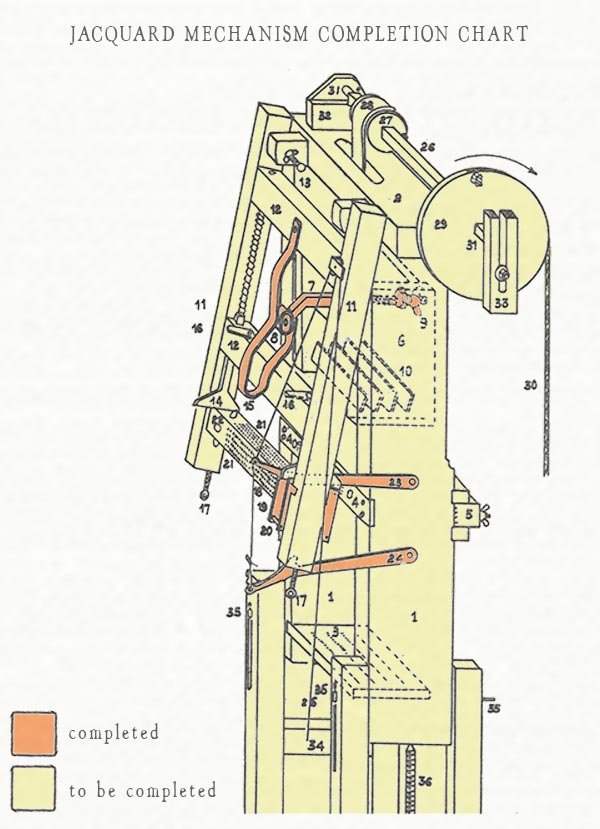
Since arriving back home in Battambang, I have been working with locals helping me with this project. My metal workers have re-created some of the intricate parts. (see below) I’m still  looking for 150 small springs, however, as  I can not find them in town. Likewise, it is not easy to find old aged wood that won’t bend and twist. That is the next step for me.

SECTIONS COMPLETED
#7. Pulley arm
#8. Pulley
#15. ‘S’ bar
#20. Cylinder – metal
#23. Hook
#24.  Hook

Posted on

how we make 350 identical Pom Pon’s

how we make 350 identical Pom Pon's

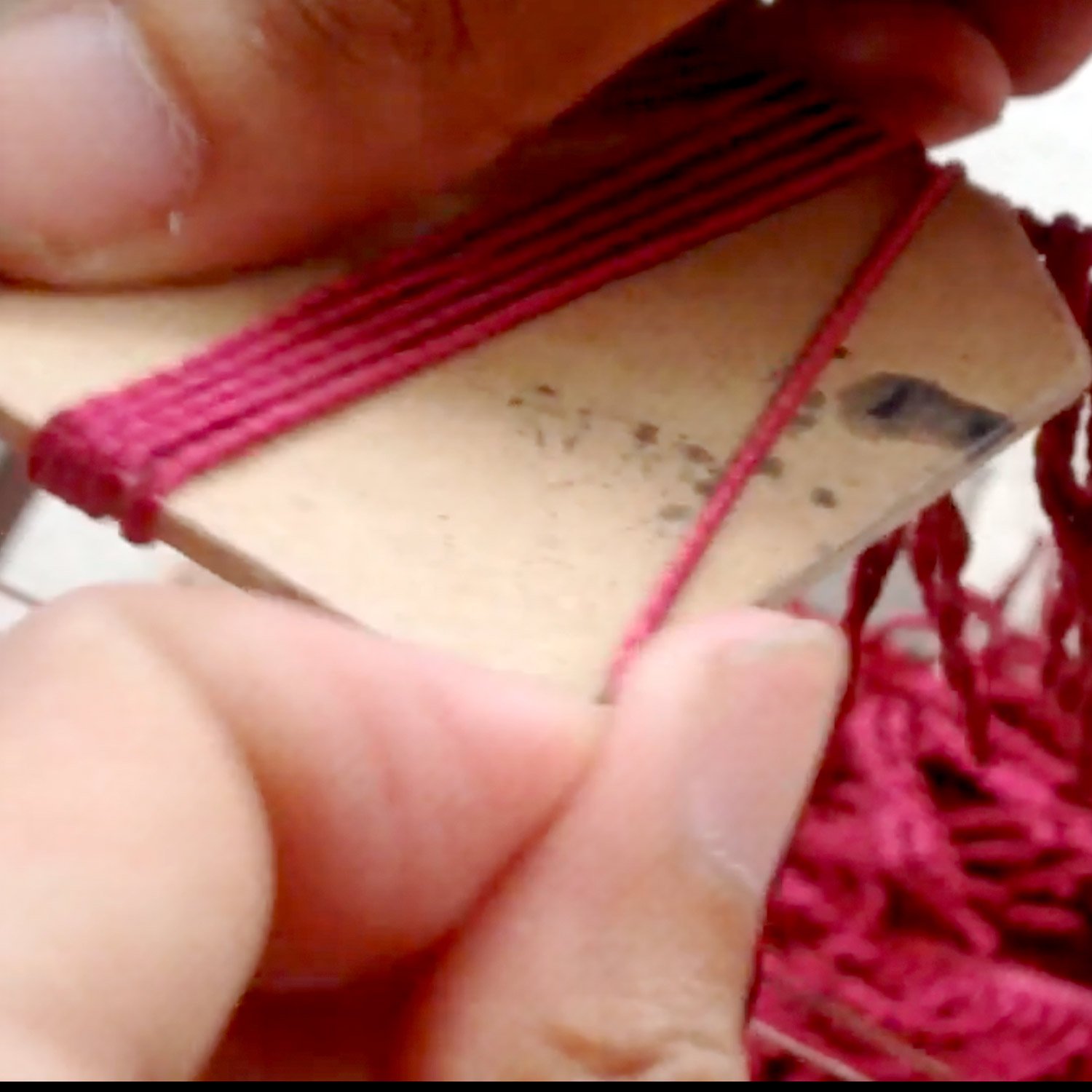
It’s very easy to make a pom pon, or so I thought when I was taught by my mother at an early age. She began by cutting two donut shaped pieces of cardboard, then had me wrap them with threads. Wool was the easiest textile to use, as as it effortlessly made the pom pons more voluptuous.

The difficulty arises when one makes 350 pom pons — each one identical.  With this donut cardboard technique it is virtually impossible to make a second pom pon exactly the same as the first. One needs to wrap the exact same number of threads around the donut while maintaining the same taught consistency,  and you pray it ends up the same size as the first exemplar made. If the threads or variegated, it’s even harder to achieve color consistency. 

Forget this technique when making 350 pom pons!

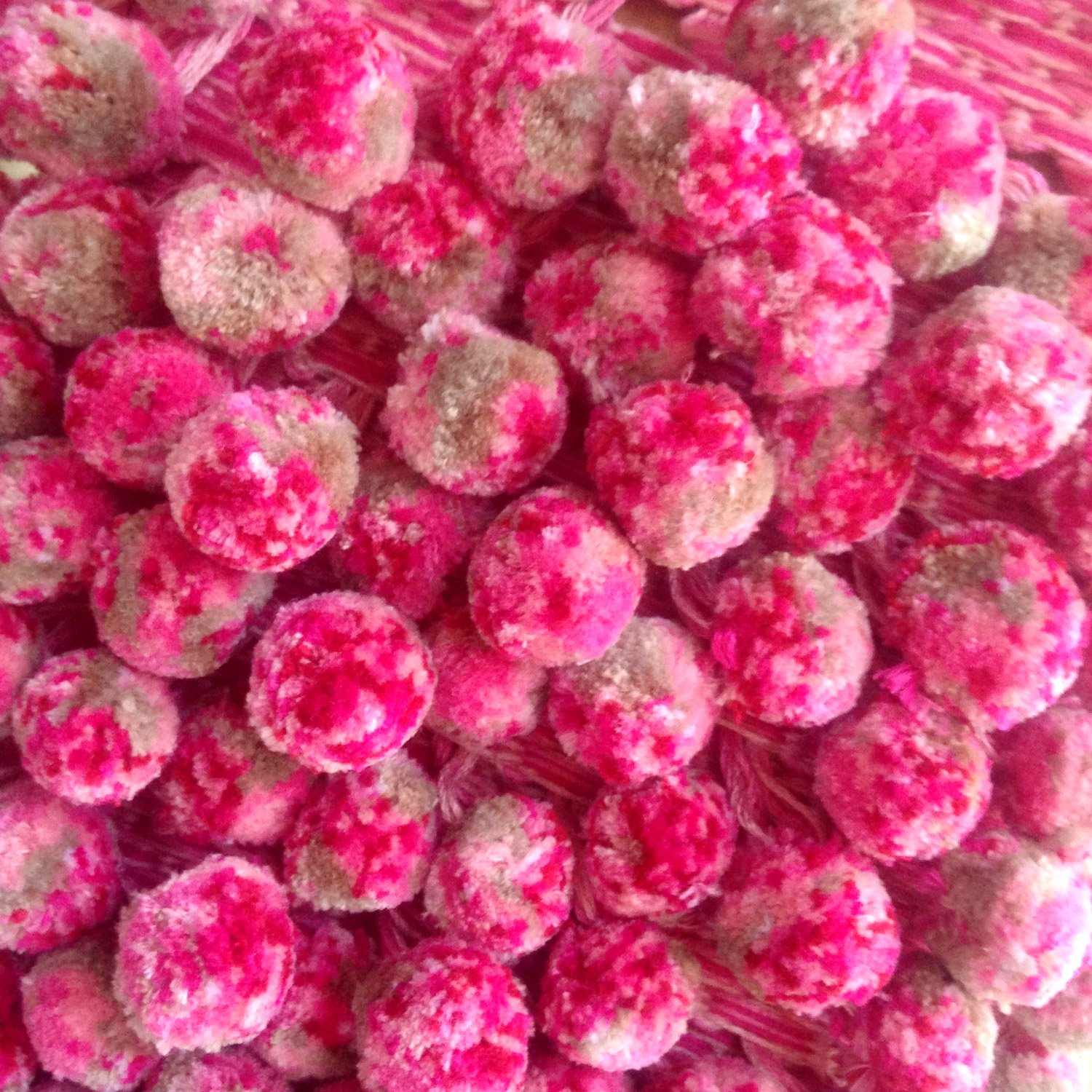
Nowadays when I ask my staff to make pom pons for a fringe, or for the ends of embellishments or tassels, we start by pulling out hundreds of threads in a variety of colours, bunching  them into an inconsistent rainbow. For 350 pom pons one requires about 3.5 meters bunched variegated threads.

The trick to making the pom pons is to tie this bunch of threads very tightly, and at a consistence distance apart. Once tied and cut, trim them into the perfect pom pon shaped ball, consistent balls in size and shape. Sharp scissors are essential, but even more so, this tour de main is a hard-learned skill.

After a fringe is woven on the loom, we attach a pom pon to each individual loop. Alternatively, use pom pons at the base of a beaded tassel.

Pompon vs.pompon
The term for a decorative tuft of material such as wool or ribbon was originally pompon, which came to English from French in the 19th century, but the misheard form pompom has gradually gained ground. Today, the two are used about equally in English. Two-word spellings such as pom pom and pom pon have never been standard, though they appear in informal contexts, and hyphenated forms such as pom-pom are likewise nonstandard. There’s no reason for the word to have a hyphen.

grammarist.com