Posted on

112,431 pin points

Ikhons Exhibition

IKHONS
21 December - 20 February 2025
Rosewood Art Gallery – Phnom Penh.
Curated by Tribe Gallery Siem Reap.

Artwork Title

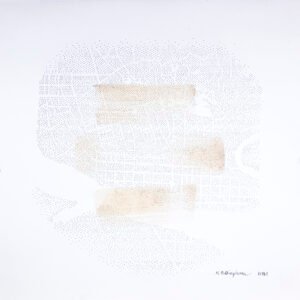
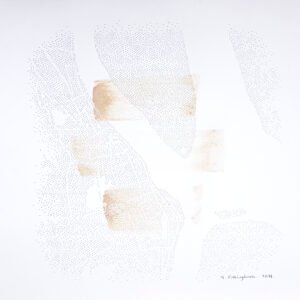
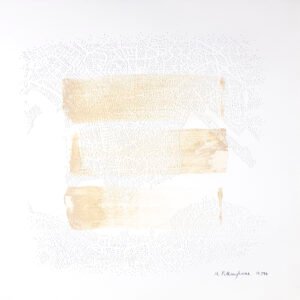
Phnom Penh 1885
map with 9,876 pin points
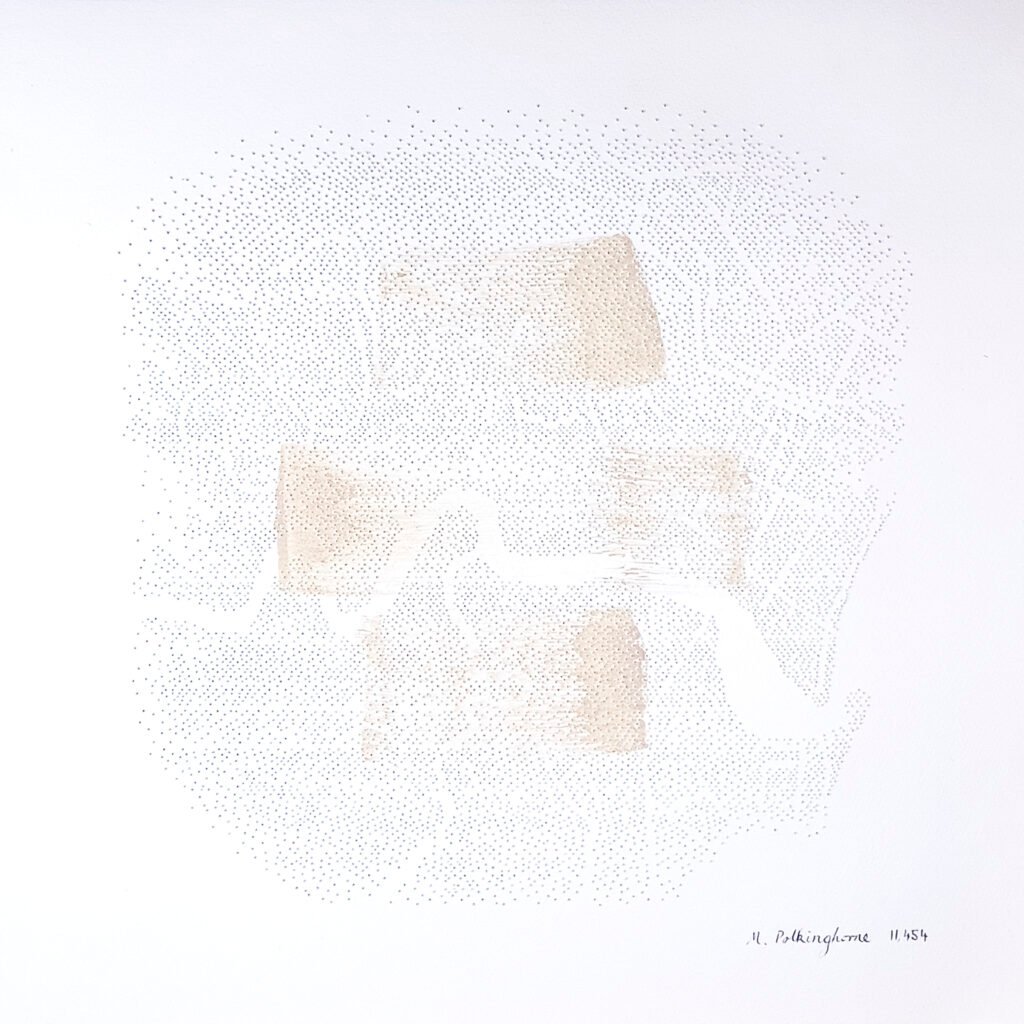
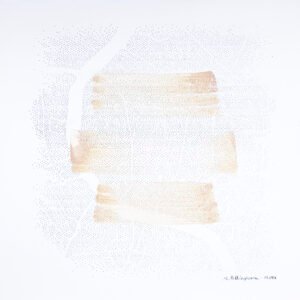
Singapore 1825 map map 11,454 pin points
Rangoon 1912 map with 11,691 pin points
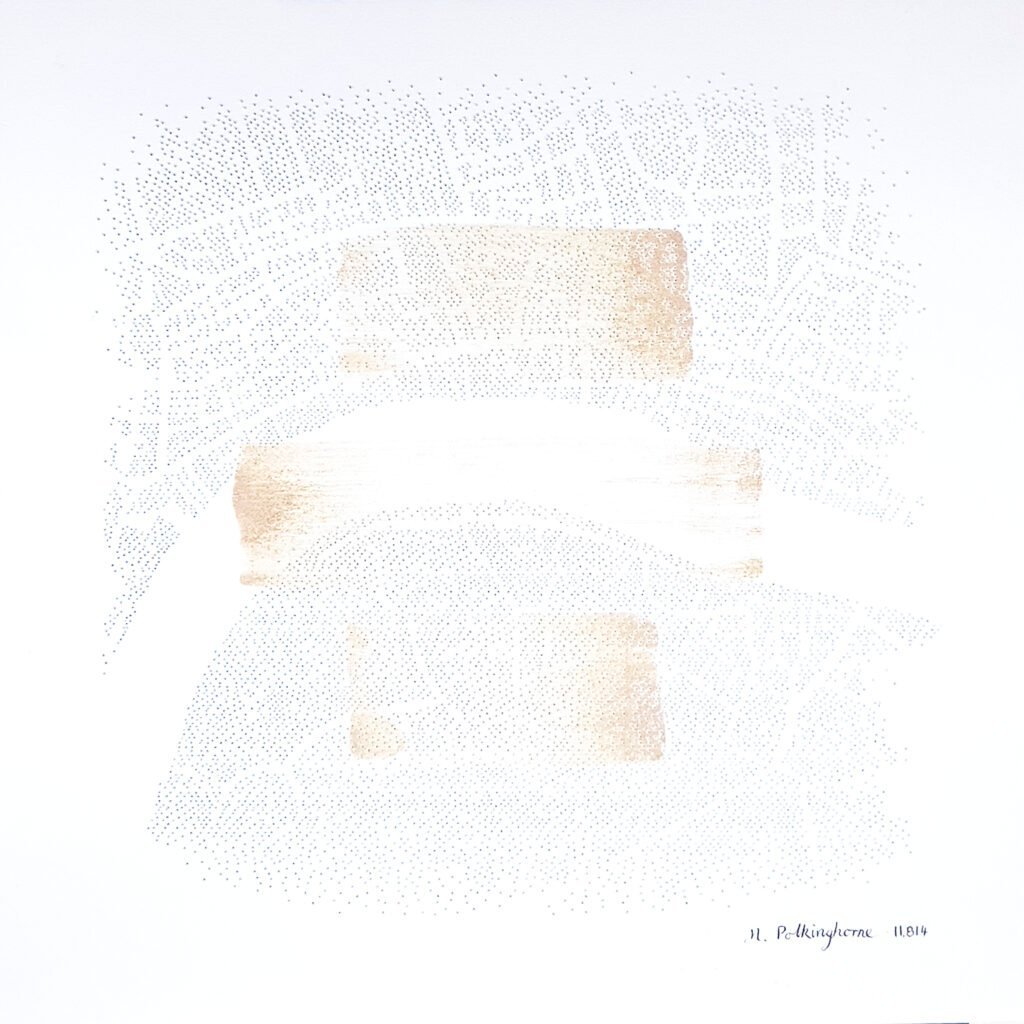
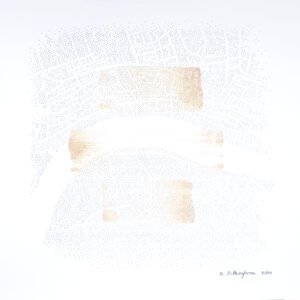
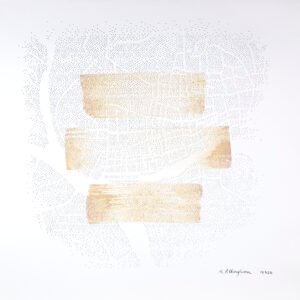
London 1688 map with 11,814 pin points
Saigon 1790 map pin points12,329
Paris 1900 map pin points13,157
Bangkok 1914 map pin points13,394
Canton 1942 map pin points14,420
Hong Kong 1997 map pin points14,296

total count 112,431

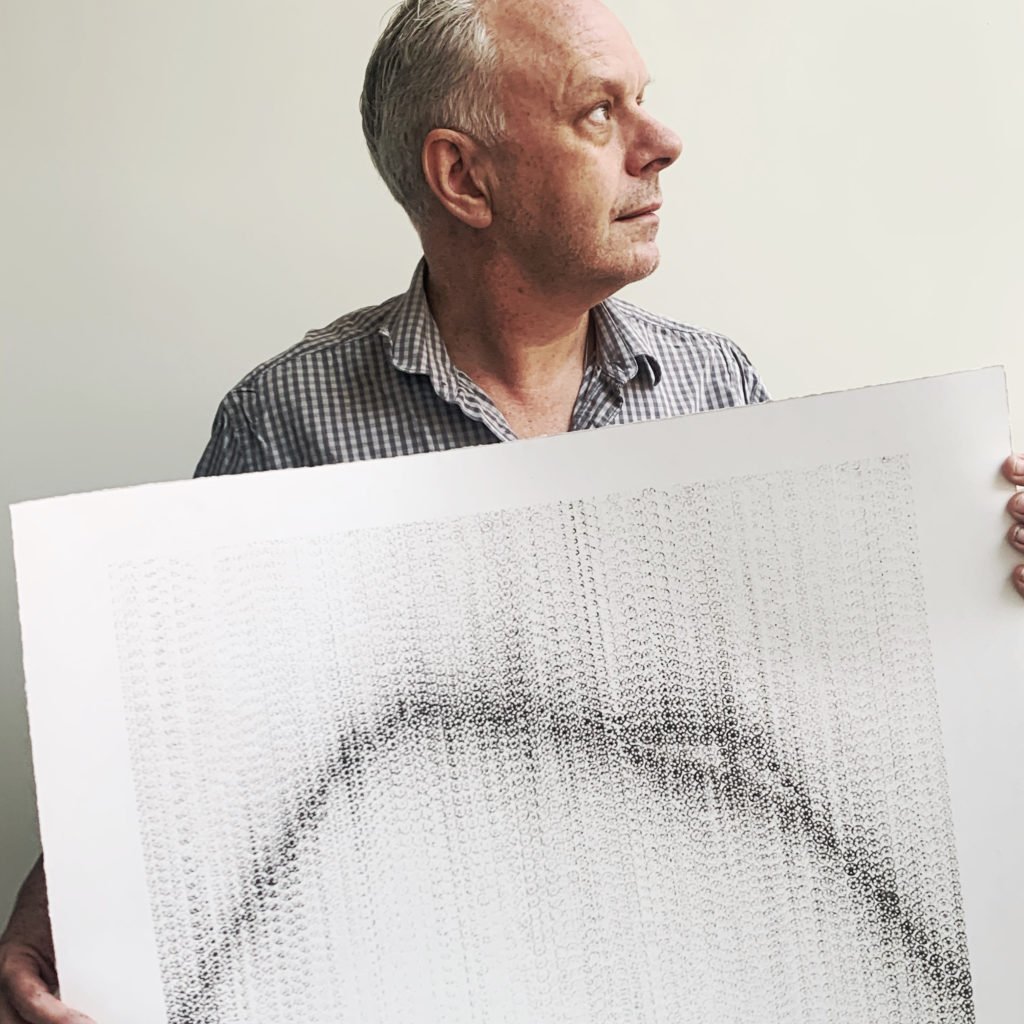
Morrison Polkinghorne premiers new works this week at Rosewood hotel, Phnom Penh. The exhibition, “Ikhon”, is a collaborative show, along with eight other Khmer and expat artists in Cambodia the kingdom.  

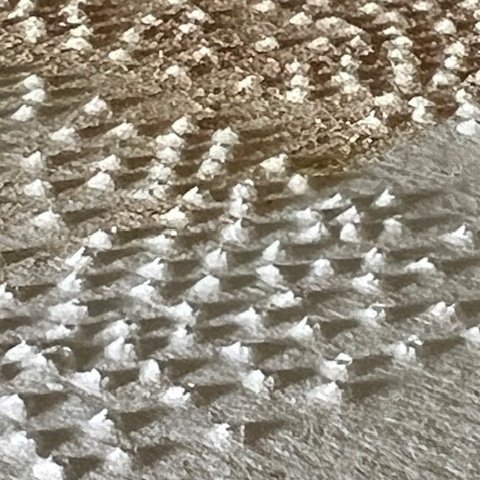
In his earlier works Polkinghorne lived in Battambang, Cambodia for almost a decade, owned and ran an award winning lodging and art space called Bric-a-Brac. While there he collected discarded offered lotus flowers at temples and turned them into an ink. This was  a year’s process even before painting with his elixir. He then printed or stamped etchings using fresh lotus stems. Conversely, now living in Murrayville along the Victoria and South Australia border in Outback Australia he turns local gypsum into a painted gouache., then adorned with pin point, or pin-prick, patterns to create images. Nine of these latest artworks just arrived in Cambodia, turning his artistry full circle.

Now showing in Phnom Penh, nine new works are impressions of historical maps surveying rivers and cities, cities that nurtured him in his travels and autistic life. Some of the maps date dating back to 1688. Rivers and waterways have long been themes in his pieces. His largest individual lotus artwork of a delta, 1.7m square with 20,184 lotus impressions sold to a private collector in New York.

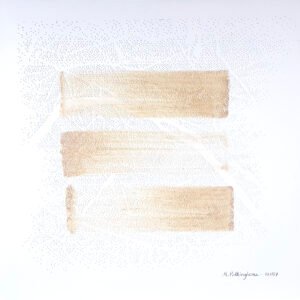
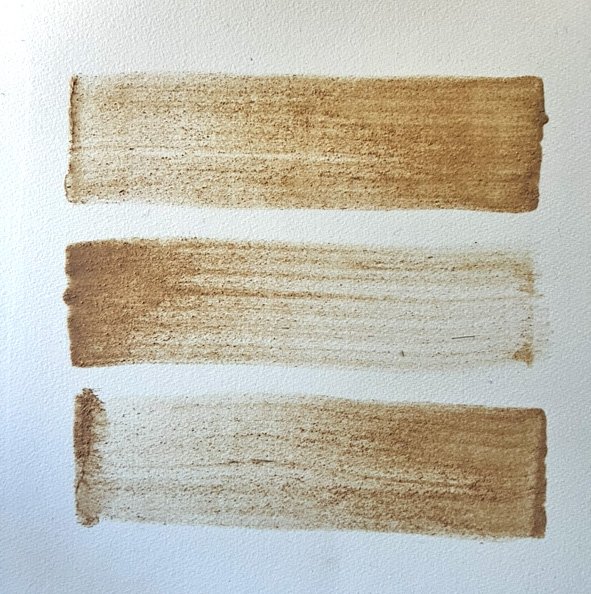
“I am a holistic artist, incorporating elements of nature in my pieces,’ says Morrison. “In Cambodia, I made artisanal ink distilled from local lotus; in this exhibition my brush strokes are an Australian outback pigment ground from a local gypsum stone. I crush, grin and mull the stone into a stabilised fine powder gouache brushed onto paper.”

London 1688 with 11,814 pin points

All these three-dimensional maps are formed with a gold tip needle sourced decades ago in Yangon, Myanmar or Burma. For a handle he attaches a whittled branch from Jacaranda that the artist planted some 30 years ago in Sydney.

Numerology is also an important component in his works, the the stroke or point sums totalled on every piece. His art numerology originates from his weaving, as there is something both sacred and comforting to counting for Morrison – from shuttles going side to side on a loom, to tallying warps and wefts. Conversely, here he pin prick, or point-ilism, to create these 3-D designs. It is his natural for him to mentally count the impressions on these works which are then noted in his artists journal. All the artworks are then both autographed and signed with the total count of pin points in every work.

Singapore 1825 map map 11,454 pin points

Posted on

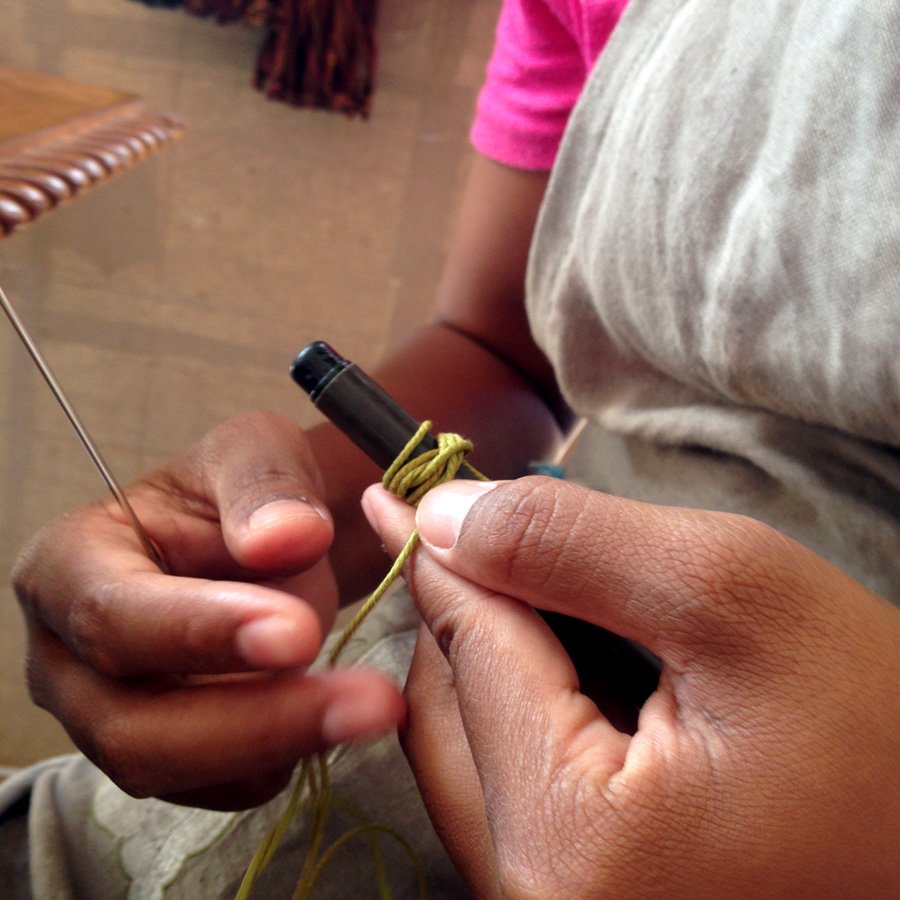
How to make a turks head

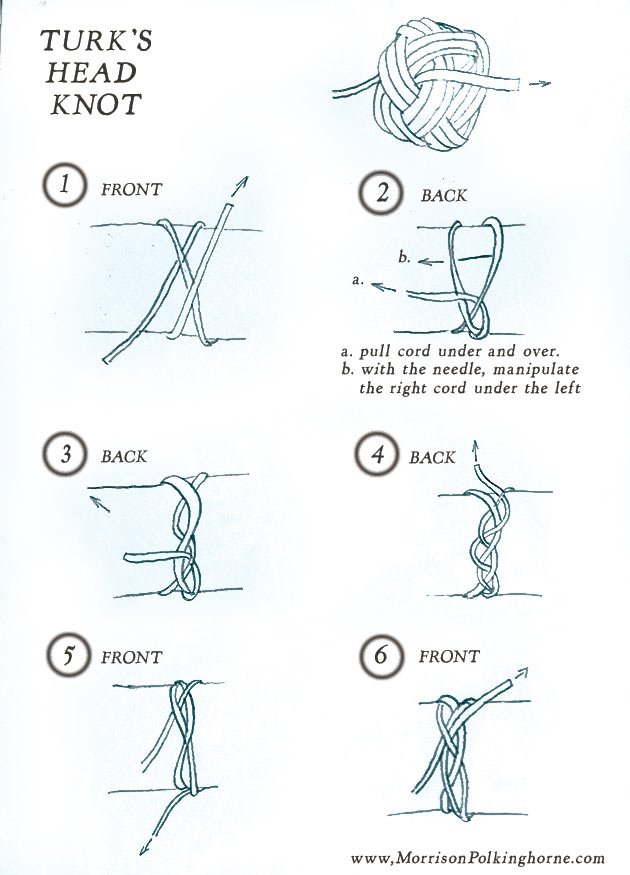
How to make a turks head knot

I have made thousands of these knots over the years. I have made them into buttons, have tied them around the ends of curtain poles and have used them to make the heed of a tassel. Here are my directions on how to make a Turks head knot.

Give it a try, and let me know how you go.

To make a turk’s head, you need a cylinder or dowel base to form it on, such as a pen — about 1-1.5m / 3 – 4ft of cord and a needle with a huge eye to thread thick cord.
When you make a turks head you will create layers, the first being the basis of it all,  as well as being the most important layer and its most difficult. If this first layer is wrong, then your turk’s head knot will not work out. A turk’s head is made up of two to many layers that all follow the first layer.

Follow these steps, and you cannot go wrong.

TIPS: After you have mastered the first layer, follow with the same cord to create the second layer, then the third, etc.

When completed, if your turk’s head is not tight, go back to the beginning and just pull every individual section and layer to make it tight.

Posted on

Making a pigment from a rock

Making a pigment from a rock

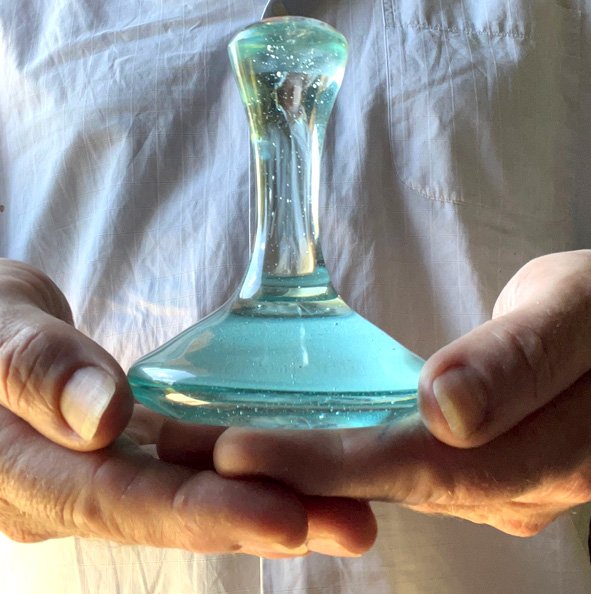
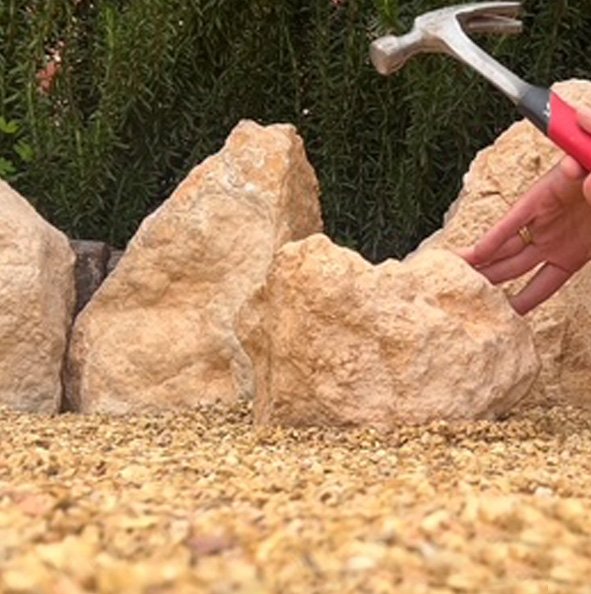
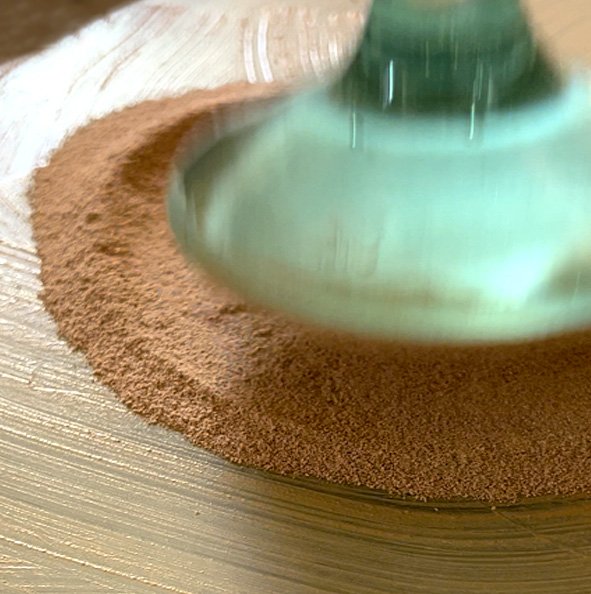
Crushing, grinding, sieving and mulling is how I commence my artwork.  For my new series paper is painted with a brush stroke made from a gypsum stone. I crush rock into a pebble and then with a mortar and pestle grind it into a powder, and later a glass muller.

The next step is to sieve this powder, however it is still too large to turn into a paint or a pigment. Pouring a small amount of it onto a sheet of glass, and with a muller I grind it with a small amount of rain water. After minutes of mulling the feel of the grind changes from gritty to smooth. It now a pigment that I store it in a jar.  I repeat the mulling process until all the fine powder has become a pigment. For this series it took two days to complete this process. 

As with any pigment it needs other ingredients to become a paint.  I add gum arabic and egg yolk for a binder, honey for viscosity, and finally rain water to make it ready to brush onto paper.

This is the first step to create my new style of art, Point-illism. 

Posted on

Paris Exhibition

Paris Exhibition

Cambodia, off the beaten track
Galerie Lee
December 2-22 2020

Australian artist Morrison Polkinghorne’s latest series of artwork is exhibited at Galleria Lee. Entitled “Cambodia Off the Beaten Tracks”, the exhibition covers the local artist’s seven years living in that Southeast Asian country before returning to his homeland iAustralia earlier this year.  The exhibition s jointly hosted by Batia Sarem gallery in Siem Reap Cambodia.  

During Morrison’s eight year sojourn in the kingdom, he while living in Cambodia Morrison developed his artwork and technique, mastering ink making using local distillations, which he uses to craft his drawings.  In Cambodia his ink derives from lotus flowers, ever plentiful in the kingdom and symbolic of Buddhism — Sacred Ink so to speak. Likewise, in the Mallee, Morrison uses local flowers, barks and soils to paint his pieces.

While the local artist’s Aussie works focus on monochromatic landscapes, his pieces also incorporate aspects Chinese and Japanese calligraphy. Likewise, his current Paris works exhibit a form of Pointillism, pressing lotus stalks into the ink then onto paper, creating visual impressions filling a page with its markings. Fittingly, Morrison, who originally hails from outback Australia, incorporates elements reminiscent of Aboriginal dot paintings. A single work may total up to 20, 000 impressions. 

Morrison’s love of handmade items remain his forte, as he was previously  known for artisan passementeries decorative arts, hand-trimmings and tassels. His textiles grace Kirribilli House and Vaucluse House in Sydney, and other Historic Homes in the country.

Likewise, numerology has an important element in his art.  Having a background in weaving, Morrison taught himself to repetitively count. Any weaver knows the importance of tallying the number threads and the amount of times the shuttles passing through warp. Consequently, each and every artwork records the actual number of impressions on each. This Paris exhibition has a grand total 23,930 lotus impressions.

Morrison recently left Cambodia for his native Australia due to Covid, and is now renovating a the former St John’s Anglican church in Murrayville  for both home and studio.

Morrison’s  art is holistic and regenerative, while his message is universal.
Posted on

Vaucluse house tassels and trimmings

Vaucluse House tassels and trimmings

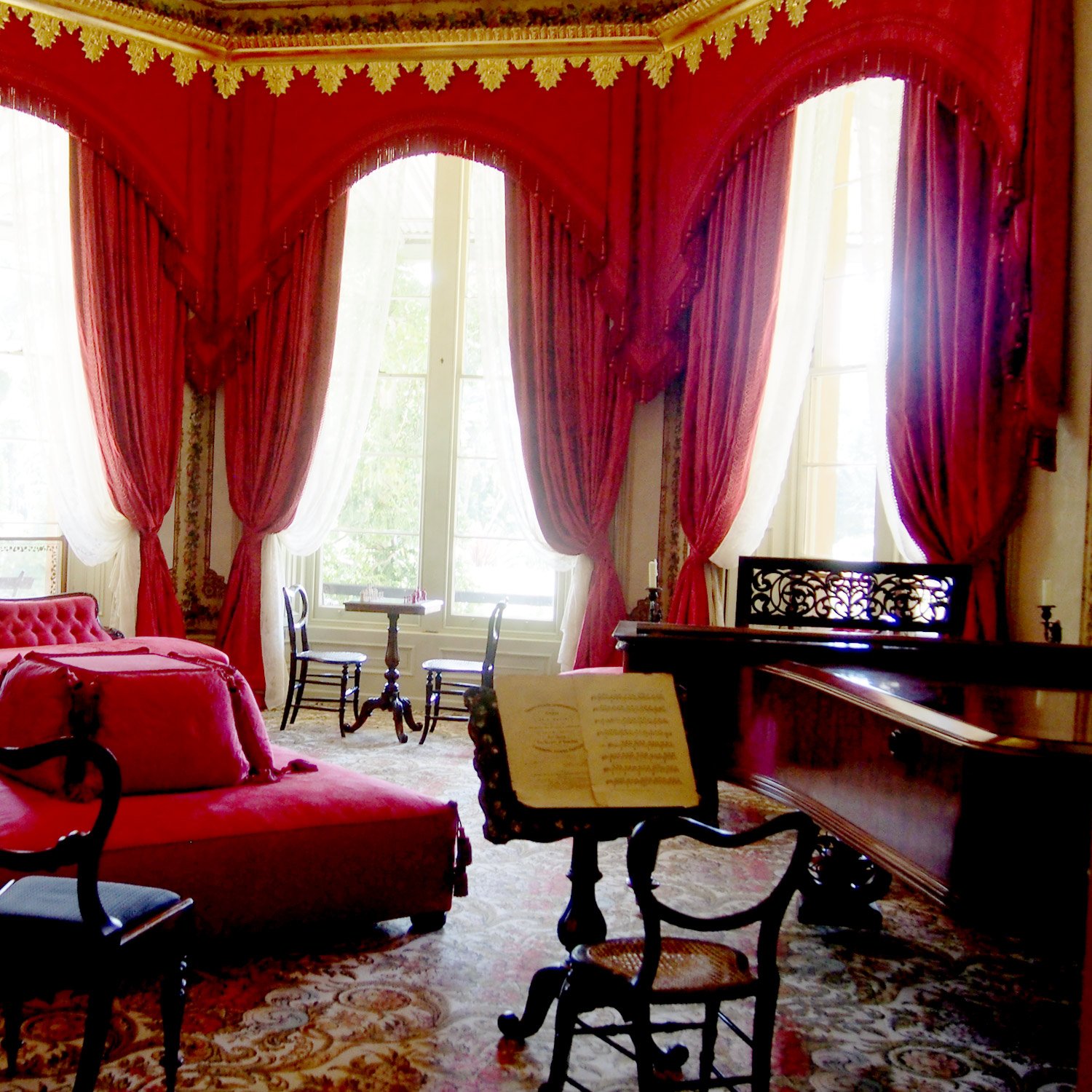
Essential to any historical furnishings project are the passementeries, or trimmings – bullion fringes, ropes, gimp, hangers and tassels. Some of the trimmings for this project were imported from France, while many others were custom-made for us by artisan Morrison Polkinghorne in Cambodia. The tassels for the box ottomans were meticulously copied from an example in the Caroline Simpson Library & Research Collection. Our Soft Furnishings Group of volunteers painstakingly hand-stitched silk hangers into the wool bullion fringe for the window furnishings.

Vaucluse House tassels and trimmings took us a good half of 2016 to create. Here is a short interview of our wonderful staff.

Posted on

Workshop and Artist talk

Workshop and Artist talk

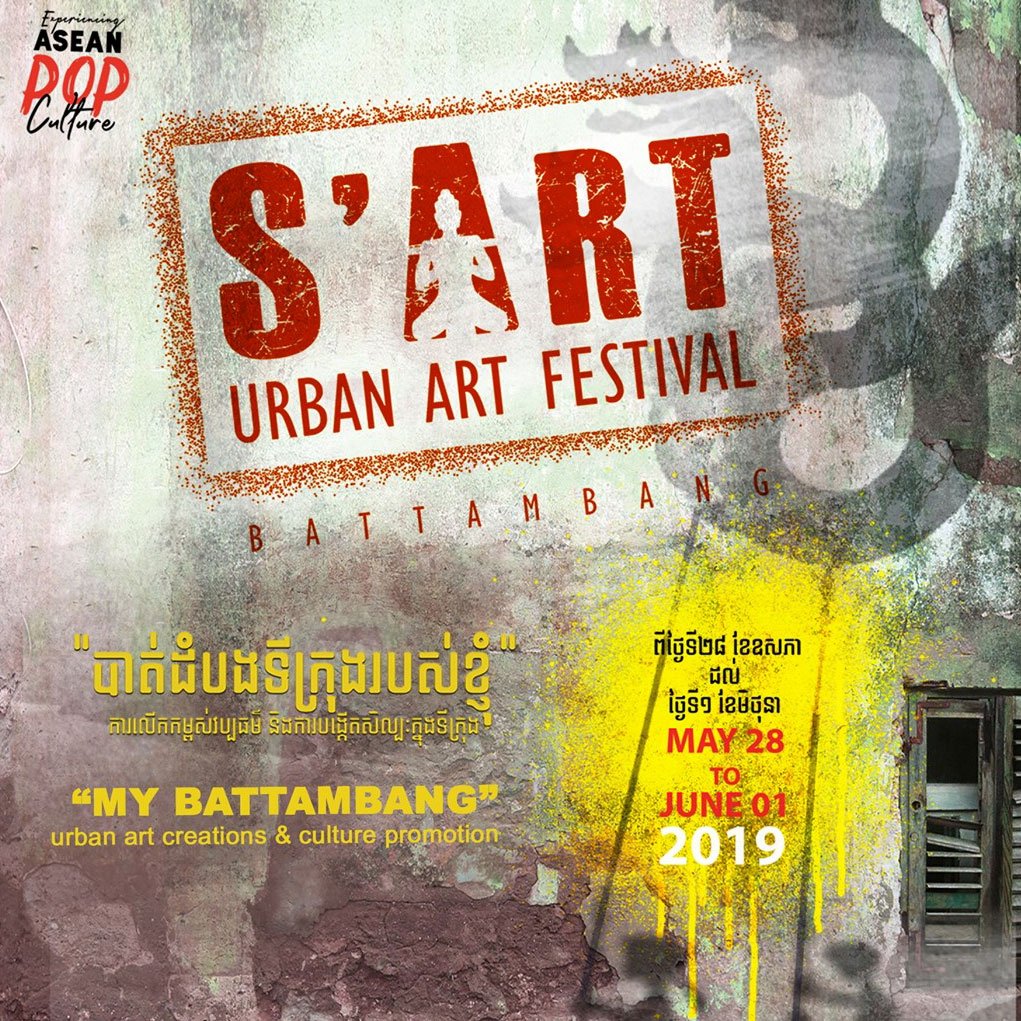
The S’Art Urban Art Festival runs now in Battambang, and I am conducting two workshops at Bric-a-Brac during the week-long event. Attendance is free and no reservaitons required… just rock up!


Friday 31 May
1:30-3pm
I explain classic European tassels, fringe and cord making.  

Saturday 1 June from
5-6:30pm
It’s all about  my lotus ink and art (and my exhibition currently showing at Serindia Gallery in Bangkok).  Immediately afterwards, join us that Saturday evening at Bric-a-Brac Libations Bar to watch the S’Art Phare puppet parade pass by on St. 2.  All of our bar proceeds that night will go to Phare Ponleu Selpak.  

Morrison Polkinghorne @ Bric-a-Brac 
2 Street @ 119, in the city’s colonial heart
(one block south of Psar Nat, and 1 block west of Sangkae river)
www.Bric-a-Brac.Asia
077 531 562

facebook.com

Posted on — Leave a comment

148913: Paths of the Lotus Ink

Bangkok Exhibition
with 29 works of art and 148913 lotus impressions

from 6pm, 16 May-30 June 2019
Serindia Gallery Bangkok

My path to creating art alludes to both the practice of making of artworks, and equally the symbolism of the materials used. My themes are indirect allusions to deeper messages without spelling out literally what is going on. The lotus is a symbol of Buddhism precisely because it is an allusion to the life cycle; to the path of enlightenment and to the ephemerality of humanity and all life. It points the way in terms of approach, not telling you what to think or do.

Read more:

Posted on

tassels and embellishments
for Vaucluse house

Tassels and embellishments for Vacluse House

One of Australia’s most prestigious colonial properties, Vaucluse house in Sydney, has  a revamp! We at Passementeries were asked to help in the reconstruction, specifically crafting sixty tassels and three hundred embellishments for the drawing room , all based on original 19th century designs. We reproduced the tassels from original prototypes at Sydney Living Museums archives of their Caroline Simpson Library and Research Collection.  read more

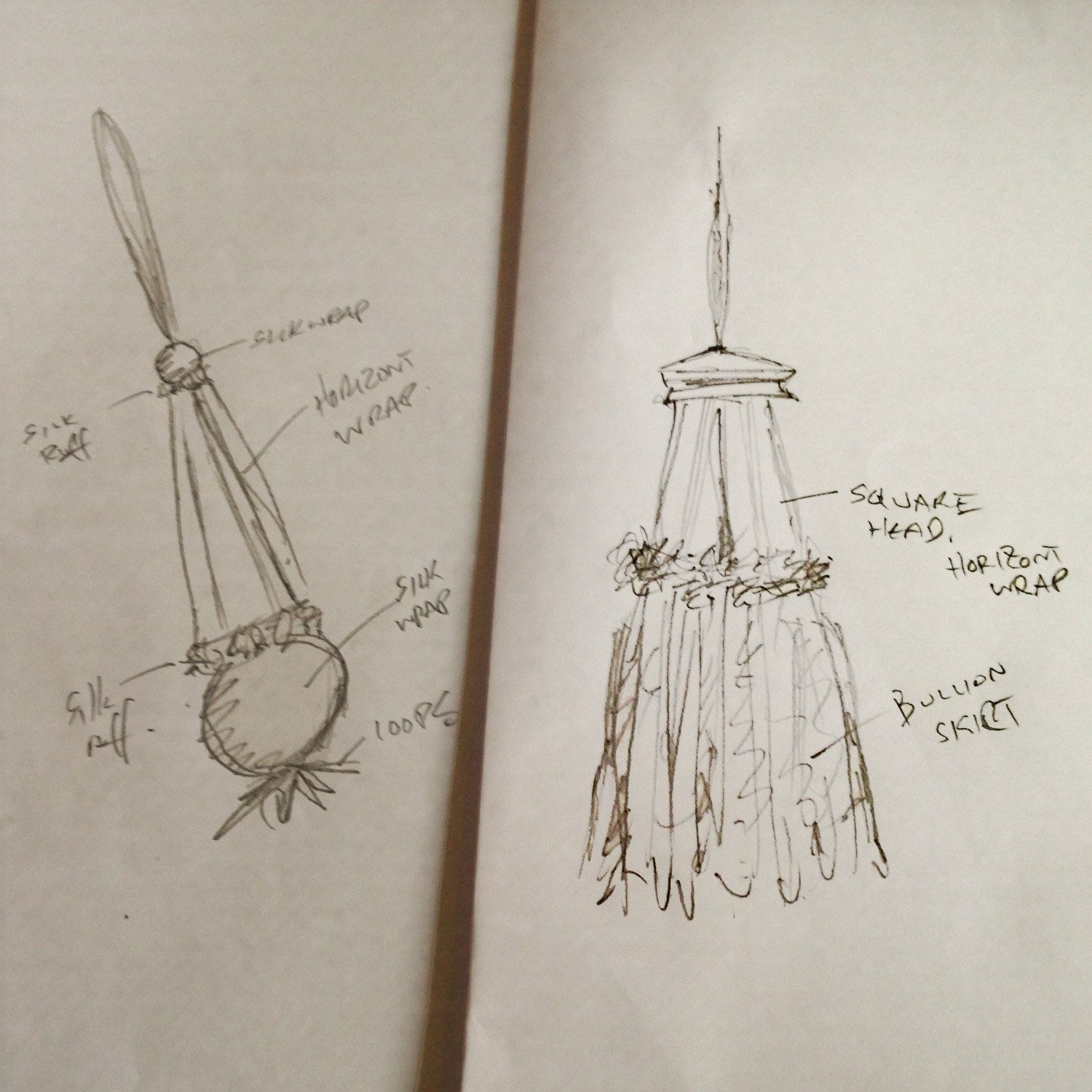
Photos of the original tassel were sent through, and we made some quick sketches to get an understanding of the design construction and for reproduction of the wooden moulds. To put it in modern usage, it resembled a UFO sitting atop a pyramid mould, classically, trimmed with an S and Z twist cords brimming with a silk velvet ruff, finally hanging below a sumptuous silk twisted tassel skirting.

Similar historic embellishments I have been making for decades, but some alterations were required for this commission. This embellishment called for the addition of velvet instead of loops between the beads, and this velvet ruff itself was the most time consuming part of the project. A fine narrow fringe was hand woven, wound into a donut shape and then hand cut around precisely to size.

We commissioned a local wood turner using rare hardwoods. (Anecdotally, he had had never heard of a tassel before!)  We were delighted he  reproduced them so well. Mr Pon produced the shapes and moulds we required, all hand chiseled and turned. His eye to consistency is remarkable. Normally these would be made on an automatic lathe, as hand turning would produce items with an inconsistent shape and size. Mr Pon lathes each by hand, and his results are perfect.

The colours of our threads used were  matched to a piece of century year old fabric, from a historical building in Tasmania. The silk threads we used were dyed for us by a French silk scarf company working out of Banteay Chhmar in Cambodia’s northwest. We tried a few color matches, then three different shades of red were used to enhance the quality of the blend and shade. The covered beads using a lighter shade, and the cords and the velvets using a combination of the other two colours.

Bespoke at its best! All the parts were crafted individually by skilled artisans trained by us to do this intricate work. This commission would have taken one person three years to complete, if she/he had been working on their own.


Posted on

new tools for Vaucluse House: part2

A new tools for Vaucluse House: part 2

The spool/mould spinning machine works wonderfully, but an initial problem was that the motor smokes. The first sewing machine motor I bought was not strong enough. Thus I bought a another, and at more expense to replace it. However that smoked as well. Eventually, I was told of another guy who could possibly help — a specialist that actually rewires old motors. A few days a new motor was re-designed and it worked perfectly, no smoke. He told me he used a motor for a car windscreen wiper. How bizarre is that! But it suits, and we’ve used it for 2 months, five hours a day. Still ten months down the track it is performing perfectly.

For our Vaucluse House commission we ended up covering about 400 beads, individually wrapped in a fine silk thread.
All for the love of Vaucluse House tassels and embellishments.