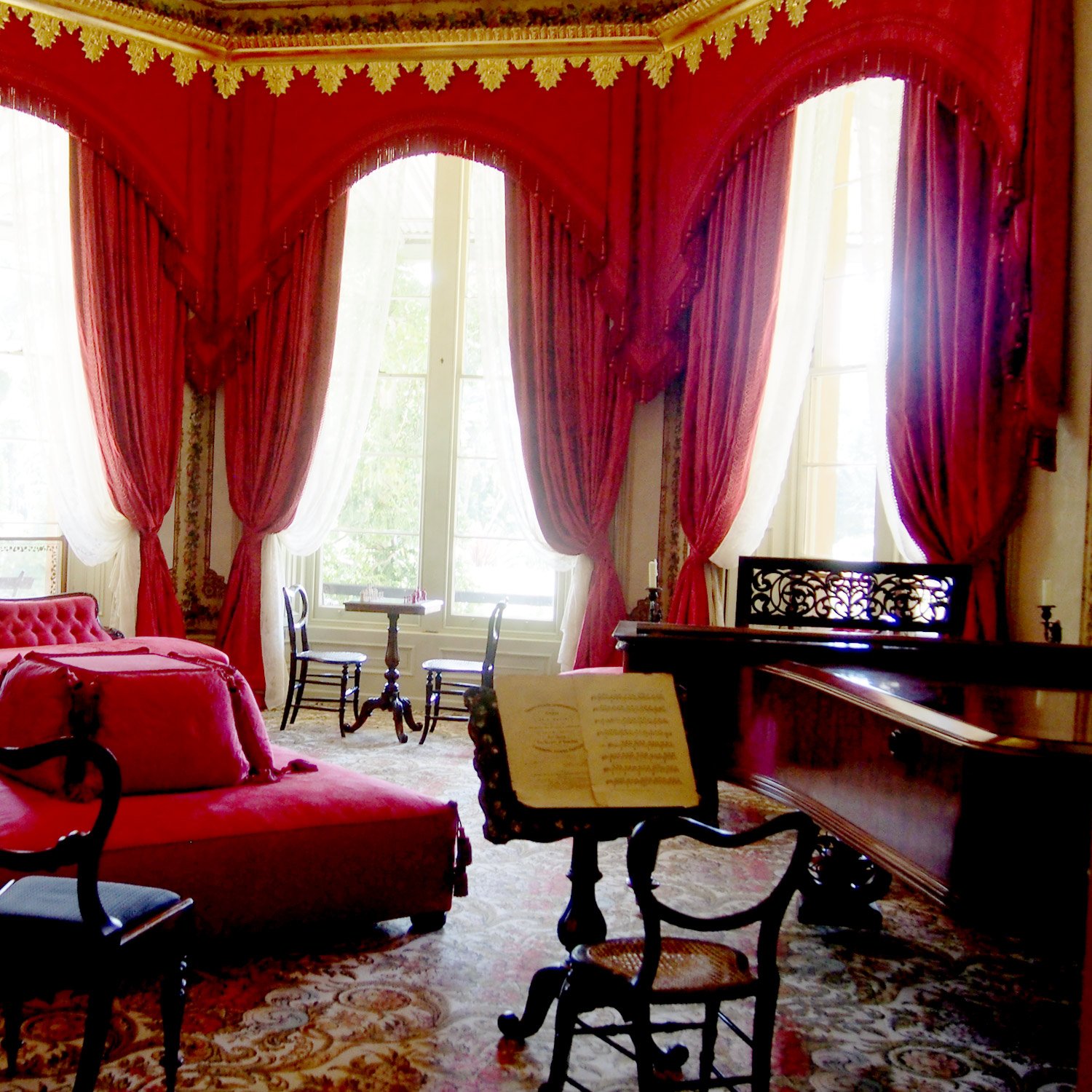
One of Australia’s most prestigious colonial properties, Vaucluse house in Sydney, has a revamp! We at Passementeries were asked to help in the reconstruction, specifically crafting sixty tassels and three hundred embellishments for the drawing room , all based on original 19th century designs. We reproduced the tassels from original prototypes at Sydney Living Museums archives of their Caroline Simpson Library and Research Collection. read more
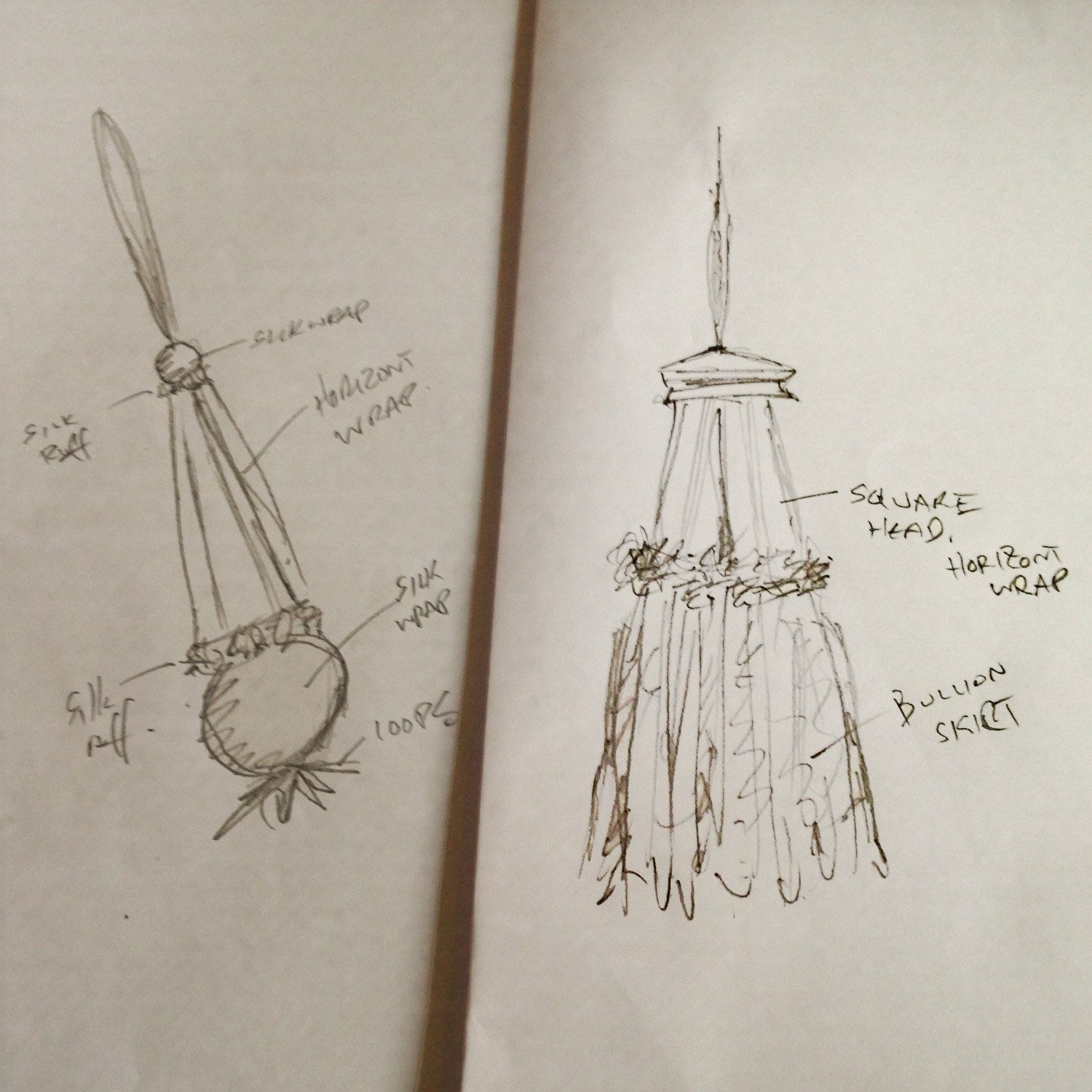
Photos of the original tassel were sent through, and we made some quick sketches to get an understanding of the design construction and for reproduction of the wooden moulds. To put it in modern usage, it resembled a UFO sitting atop a pyramid mould, classically, trimmed with an S and Z twist cords brimming with a silk velvet ruff, finally hanging below a sumptuous silk twisted tassel skirting.
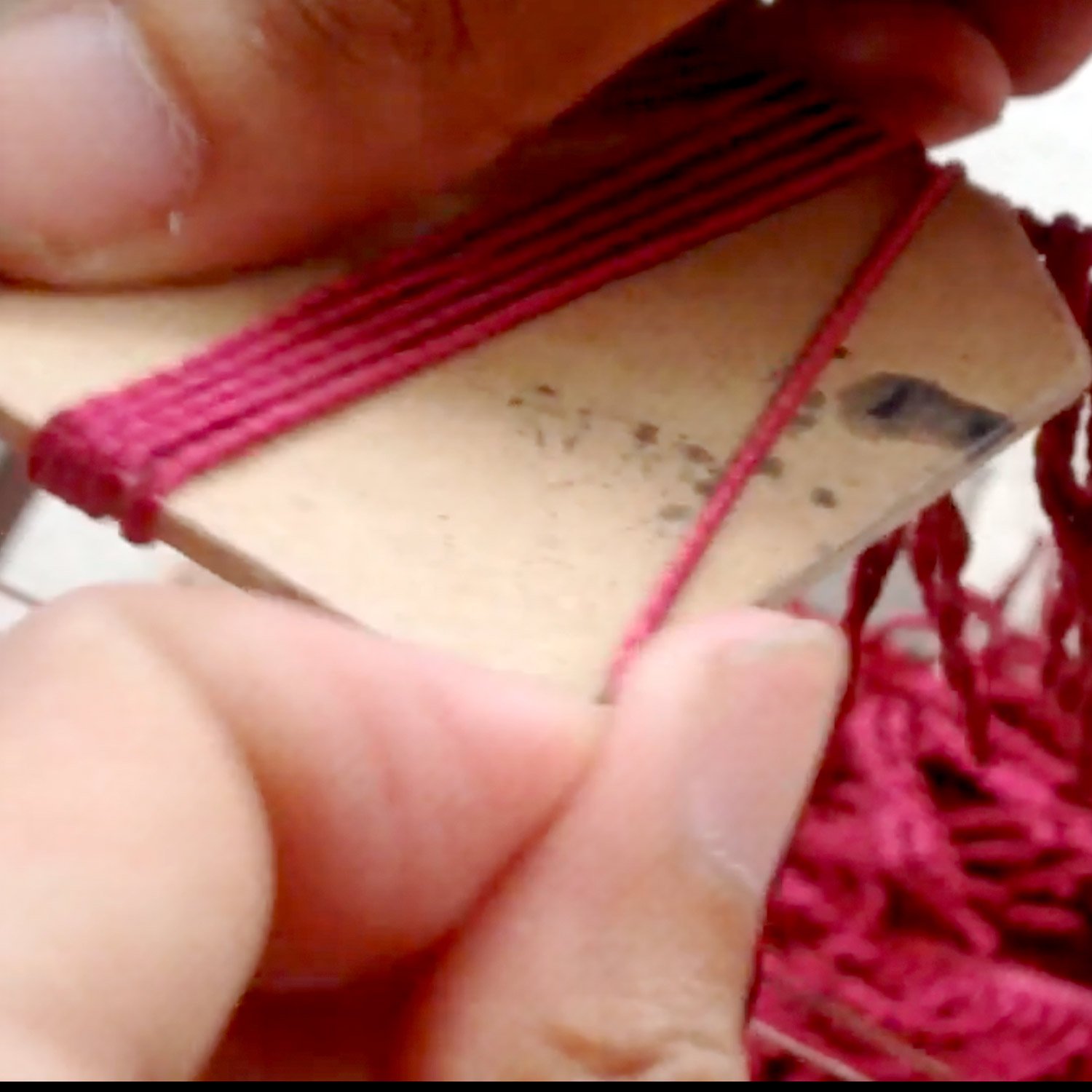
Similar historic embellishments I have been making for decades, but some alterations were required for this commission. This embellishment called for the addition of velvet instead of loops between the beads, and this velvet ruff itself was the most time consuming part of the project. A fine narrow fringe was hand woven, wound into a donut shape and then hand cut around precisely to size.
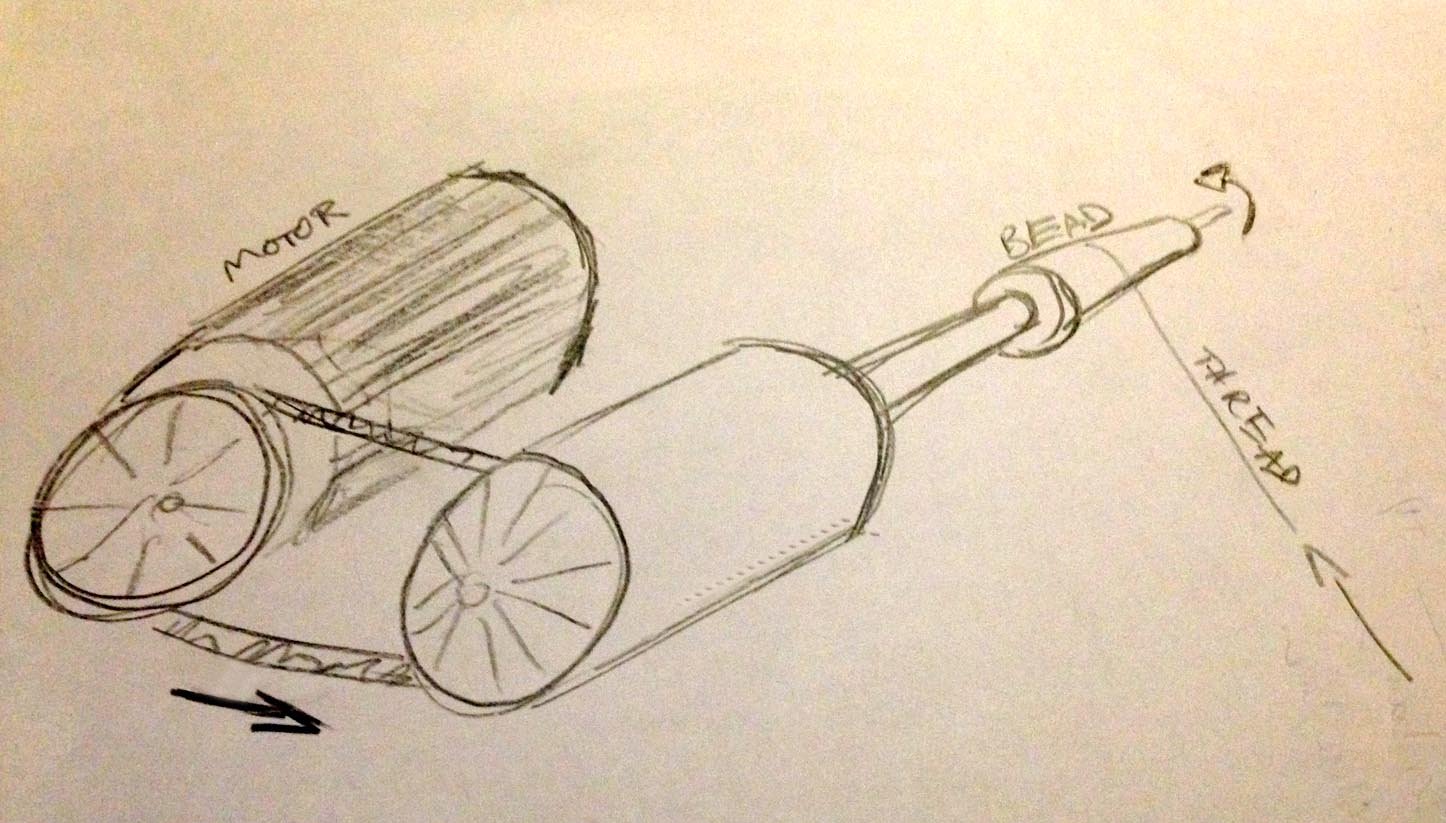
We commissioned a local wood turner using rare hardwoods. (Anecdotally, he had had never heard of a tassel before!) We were delighted he reproduced them so well. Mr Pon produced the shapes and moulds we required, all hand chiseled and turned. His eye to consistency is remarkable. Normally these would be made on an automatic lathe, as hand turning would produce items with an inconsistent shape and size. Mr Pon lathes each by hand, and his results are perfect.
The colours of our threads used were matched to a piece of century year old fabric, from a historical building in Tasmania. The silk threads we used were dyed for us by a French silk scarf company working out of Banteay Chhmar in Cambodia’s northwest. We tried a few color matches, then three different shades of red were used to enhance the quality of the blend and shade. The covered beads using a lighter shade, and the cords and the velvets using a combination of the other two colours.
Bespoke at its best! All the parts were crafted individually by skilled artisans trained by us to do this intricate work. This commission would have taken one person three years to complete, if she/he had been working on their own.