Posted on

revamping jute trimmings

revamping jute trimmings

In the early 90’s I started my tassel career making trendy, contemporary jute trimmings, tassels braids fringes and cords. Then the fad faded, but not totally. This past year Passementeries has been approached to create new and exciting contemporary jute projects. In the process we’ve developed stunningly new creations. Natural fiber has always had a special love, not just jute: I’ve been “m orgigamically” wrapping packages in newspaper, making chandeliers from cardboard and working with metal forgers to produce heads of tassels. Here are a few images to wet your appetite.

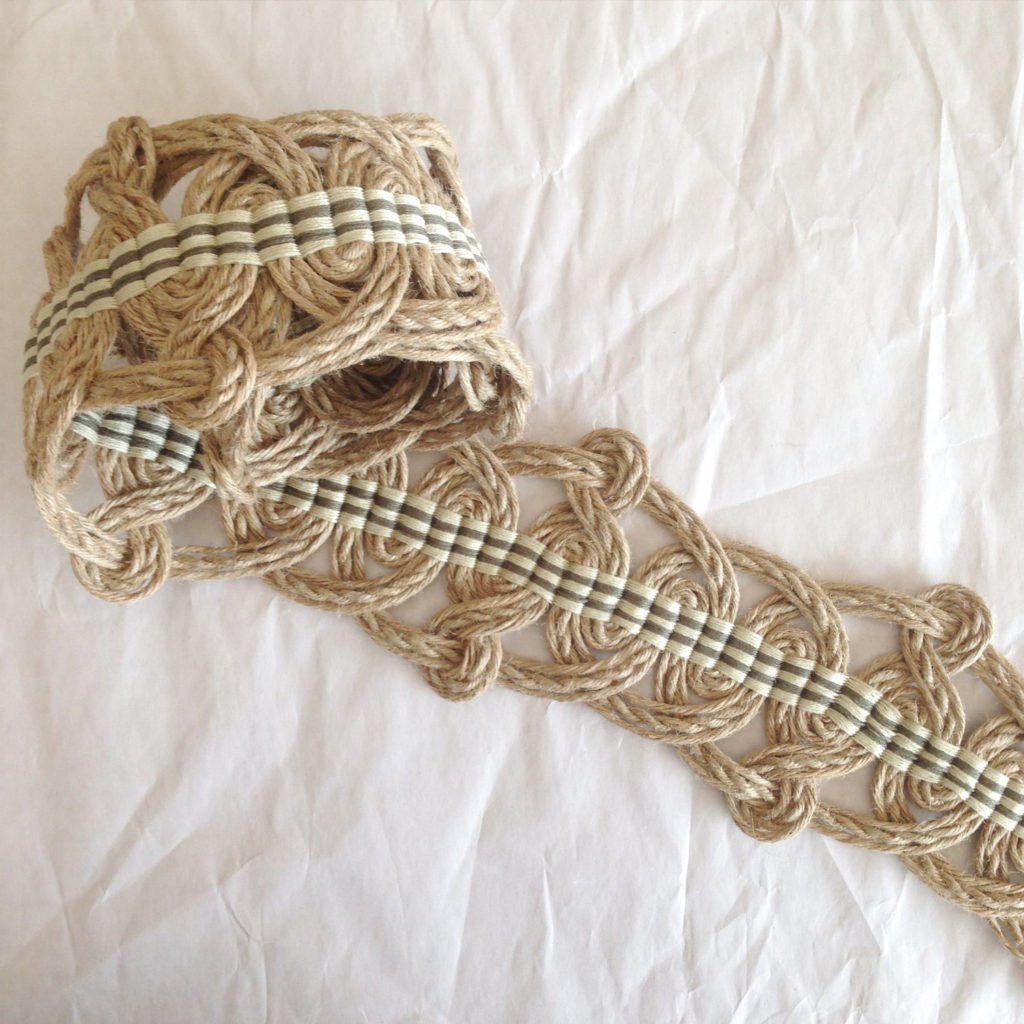
A classic 18th century woven crete. This border suits being attached to the leading edge of a curtain, Four shuttles with three cords are hand woven, lopped an ties to create the intricate braid. This is impossible to machine make, thus only skilled artisanal weavers can create this. A cotton warp is chosen from 600 colours.

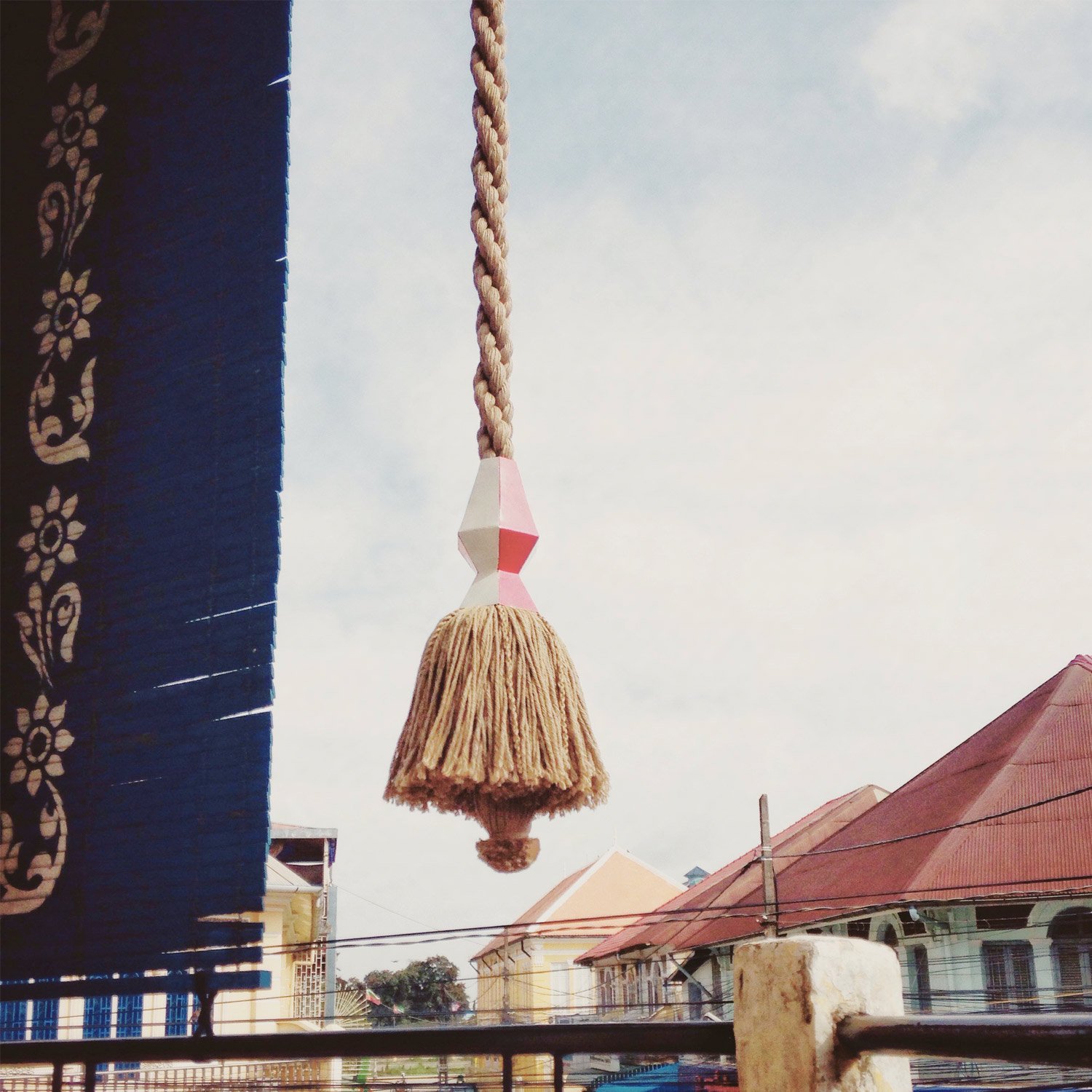
A metal frame is made to create the head of this tassel. The jute cord is hand twisted and the skirt is embellished with a bullion twisted fringe.

A simple jute fringe. This fringe can be adorned many ways, small tassels, embellished with jute pom pons or a simple cord relief woven into the warp. There are 600 colours that you can choose from the create the warp.

A simple jute fringe. This fringe can be adorned many ways, small tassels, embellished with jute pom pons or a simple cord relief woven into the warp. There are 600 colours that you can choose from the create the warp.

Posted on

how we make 350 identical Pom Pon’s

how we make 350 identical Pom Pon's

It’s very easy to make a pom pon, or so I thought when I was taught by my mother at an early age. She began by cutting two donut shaped pieces of cardboard, then had me wrap them with threads. Wool was the easiest textile to use, as as it effortlessly made the pom pons more voluptuous.

The difficulty arises when one makes 350 pom pons — each one identical.  With this donut cardboard technique it is virtually impossible to make a second pom pon exactly the same as the first. One needs to wrap the exact same number of threads around the donut while maintaining the same taught consistency,  and you pray it ends up the same size as the first exemplar made. If the threads or variegated, it’s even harder to achieve color consistency. 

Forget this technique when making 350 pom pons!

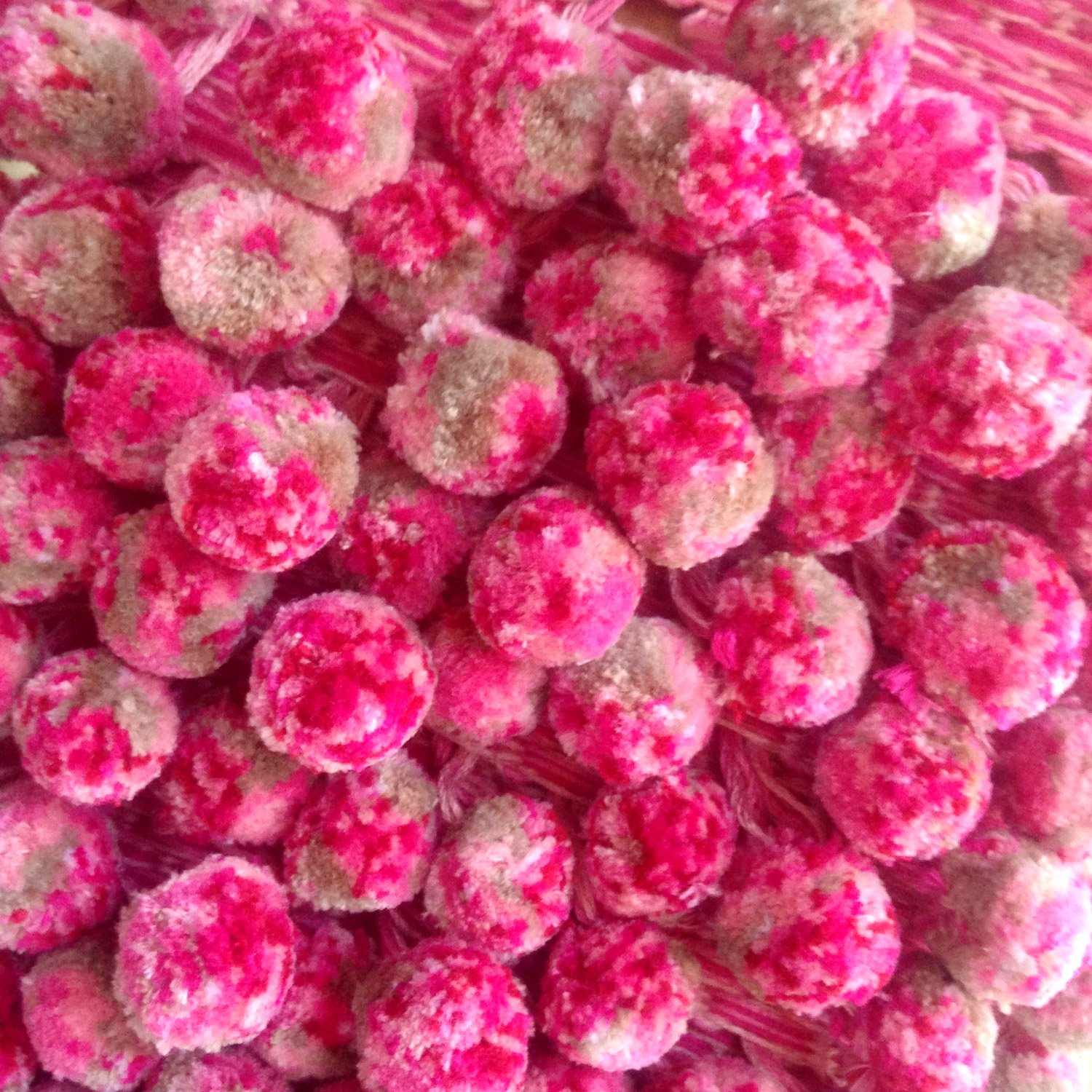
Nowadays when I ask my staff to make pom pons for a fringe, or for the ends of embellishments or tassels, we start by pulling out hundreds of threads in a variety of colours, bunching  them into an inconsistent rainbow. For 350 pom pons one requires about 3.5 meters bunched variegated threads.

The trick to making the pom pons is to tie this bunch of threads very tightly, and at a consistence distance apart. Once tied and cut, trim them into the perfect pom pon shaped ball, consistent balls in size and shape. Sharp scissors are essential, but even more so, this tour de main is a hard-learned skill.

After a fringe is woven on the loom, we attach a pom pon to each individual loop. Alternatively, use pom pons at the base of a beaded tassel.

Pompon vs.pompon
The term for a decorative tuft of material such as wool or ribbon was originally pompon, which came to English from French in the 19th century, but the misheard form pompom has gradually gained ground. Today, the two are used about equally in English. Two-word spellings such as pom pom and pom pon have never been standard, though they appear in informal contexts, and hyphenated forms such as pom-pom are likewise nonstandard. There’s no reason for the word to have a hyphen.

grammarist.com

Posted on

Custom cushion fringe – Bullion Fringe

Custom cushion fringe - Bullion Fringe

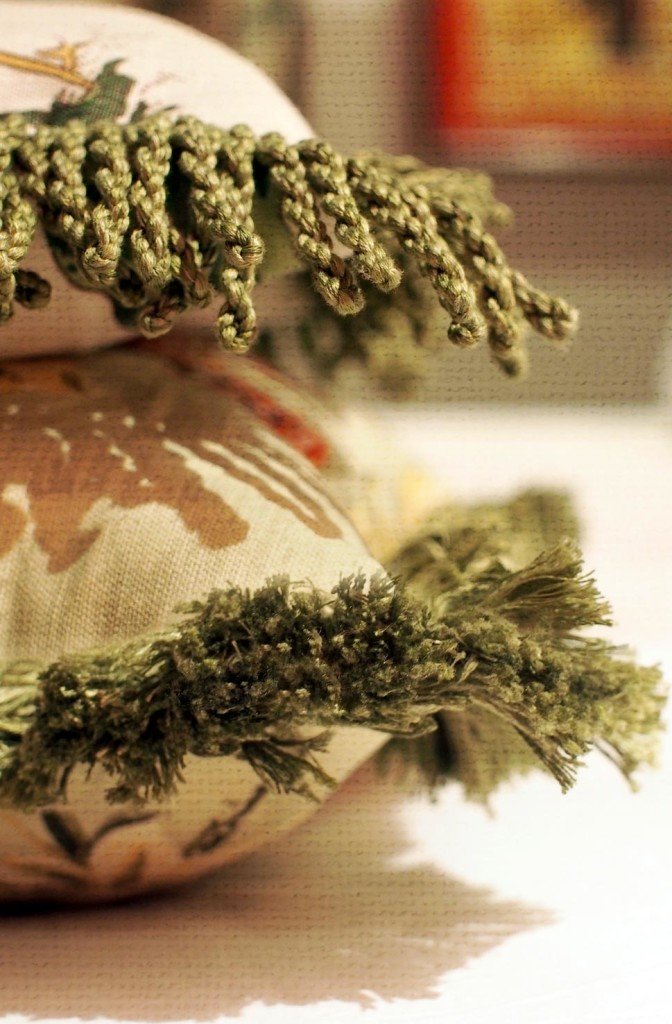
Weaving twisted threads with a loom turns into bullion fringe. The term originates from the thick metallic gold or silver fringe epaulettes and cording used on military uniforms.

Here at Passementeries® we make our bullion fringe with  high-grade mercerised cotton from a collection of some 600 colors.

The Bullion Fringe featured on this page is typically made for use in, say,  cushions or along the edge of curtains. Greater depth fringe, or tags, is  appropriate to furniture, such as along upholstered chairs or on the base of a sofa. The latter can be made longer and also fatter in girth, akin to cigars.  Ask us for more bespoke creations….

With two people working on the same fringe,
we are able to make 5 – 7 meters / 5.5 – 7.5 yards a day.