In the early 90’s I started my tassel career making trendy, contemporary jute trimmings, tassels braids fringes and cords. Then the fad faded, but not totally. This past year Passementeries has been approached to create new and exciting contemporary jute projects. In the process we’ve developed stunningly new creations. Natural fiber has always had a special love, not just jute: I’ve been “m orgigamically” wrapping packages in newspaper, making chandeliers from cardboard and working with metal forgers to produce heads of tassels. Here are a few images to wet your appetite.
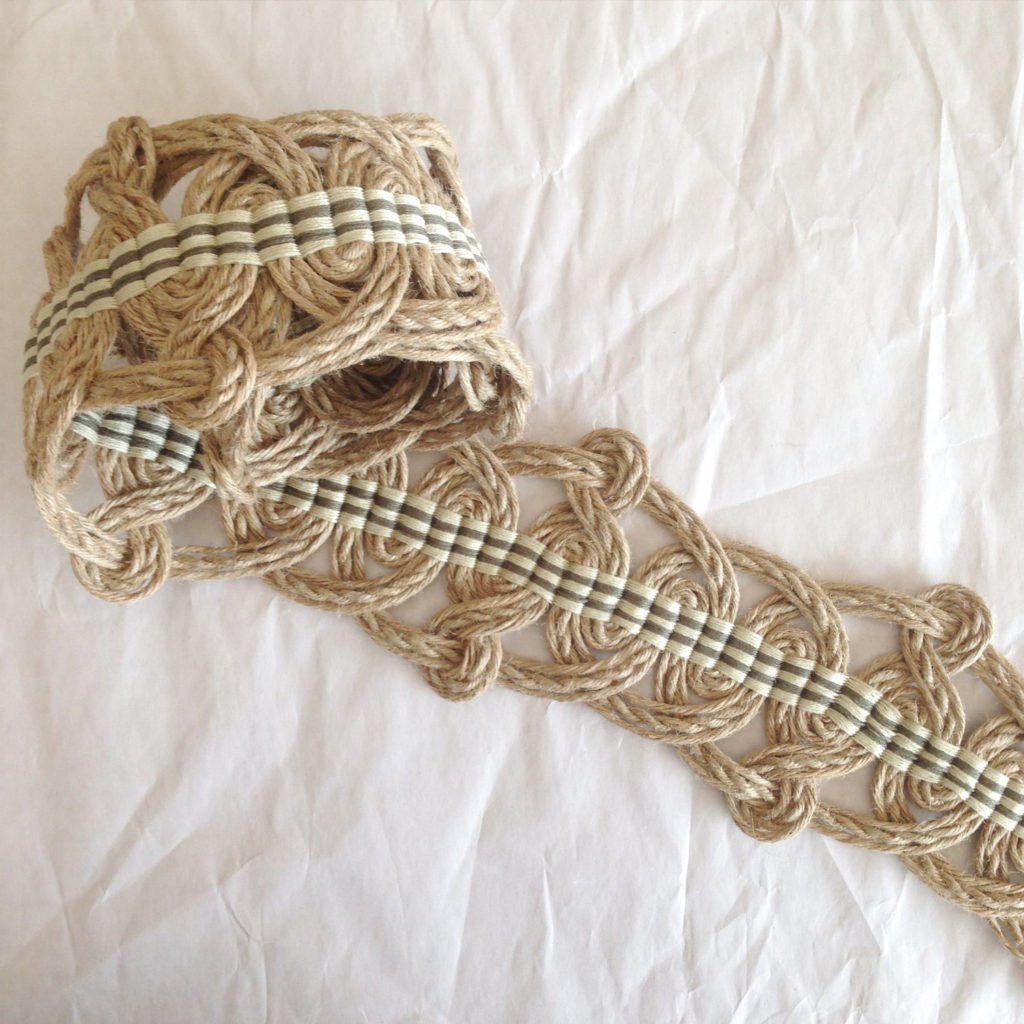
A classic 18th century woven crete. This border suits being attached to the leading edge of a curtain, Four shuttles with three cords are hand woven, lopped an ties to create the intricate braid. This is impossible to machine make, thus only skilled artisanal weavers can create this. A cotton warp is chosen from 600 colours.
A metal frame is made to create the head of this tassel. The jute cord is hand twisted and the skirt is embellished with a bullion twisted fringe.
A simple jute fringe. This fringe can be adorned many ways, small tassels, embellished with jute pom pons or a simple cord relief woven into the warp. There are 600 colours that you can choose from the create the warp.
A simple jute fringe. This fringe can be adorned many ways, small tassels, embellished with jute pom pons or a simple cord relief woven into the warp. There are 600 colours that you can choose from the create the warp.
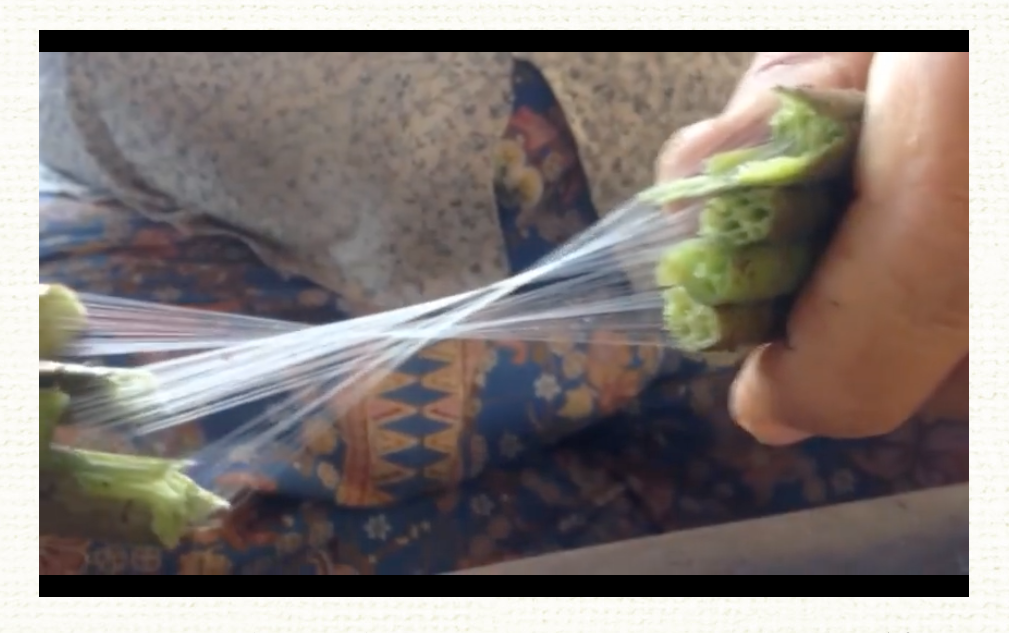
Lotus weaving on Inle lake in Myanmar. Fabrics derived from lotus fibre are strong, soft and to put it succinctly, it takes a long long time to make one simple scarf.
The fabric is a simple weave, either a plane or a twill weave. But it is the thread that is the time consuming aspect of this fabric. The actual thread is made from the slimy stalk of the lotus leaf. It is is broken and then pulled, the fiber is then hand twisted into a thread. One simple scarf will take about 20 days to produce enough thread and will set you back about US$100.
Lotus weaving is just one of many delightfully unexpected experiences to encounter on Inle lake. in Myanmar/s Shan State..
I have always loved natural fibres such as jute, linen, sisal, cottons and silks and when I started making tassels three decades ago they were orignally made from these same rustic materials. My latest overseas commission project is for over-sized tassels, ropes and large light shades for a faithfully restored Edwardian commercial building in downtown Rangoon,Yangon. Can’t wait to see the actual installation going in next week!
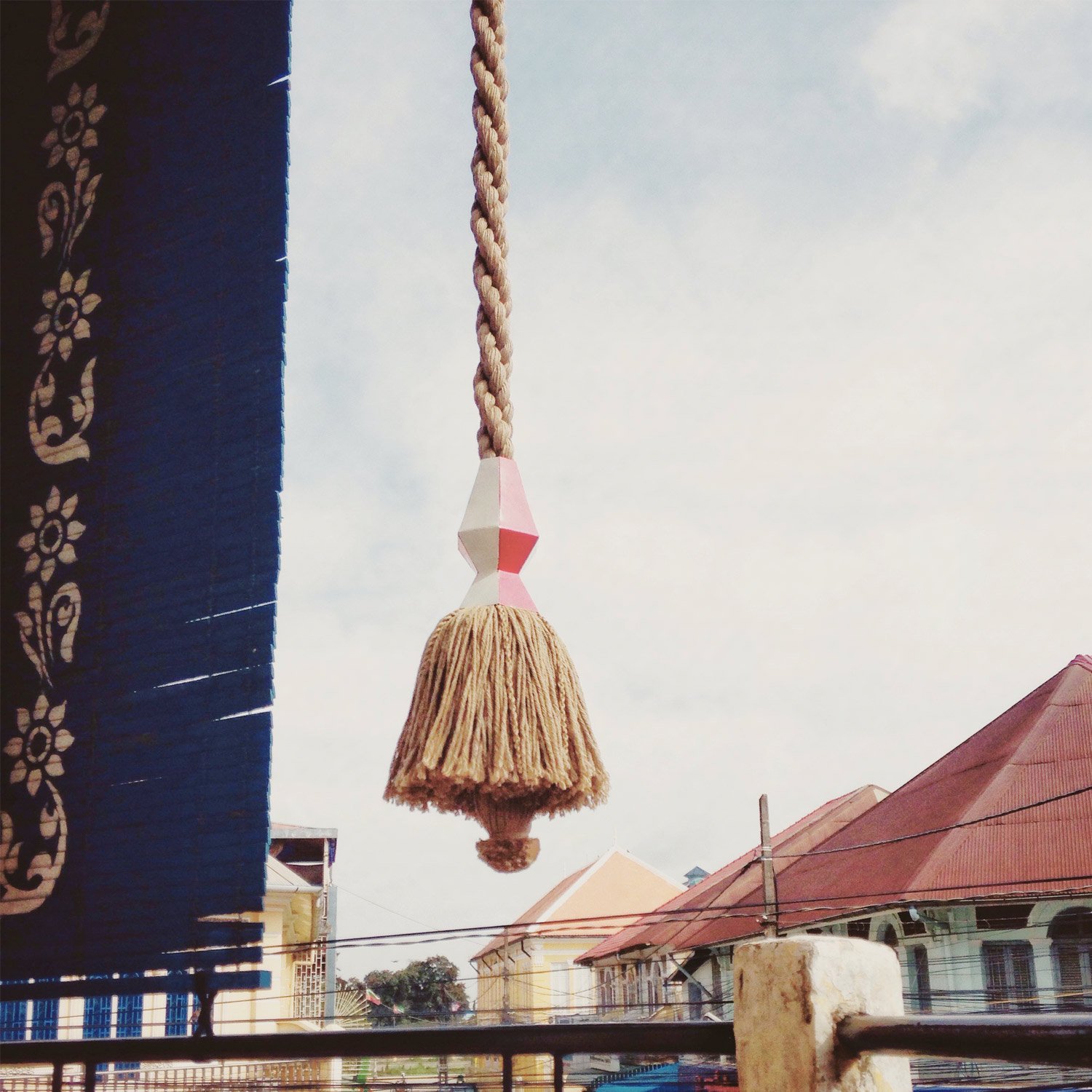
I was designing a new tassel, first by commissioning a local blacksmith to make the metal head of the tassel. But the design needs to be oversized, plus painted red and white to incorporate the logo colours of the client. The rope was exhausting to make.
Thankfully I had a new staff member, Mr Channa, who was a god-send. I taught him how to make rope using by Captain Cook rope twister installed on our roof, and he excelled in twisting the threads.
When I teach a workshop, I have people make a thin simple cord about a few millimetres thick (fraction of an inch) and that takes just a few minutes to make. By contrast, this 14 metre/18 yard rope weighs in at 20kg, is about 10 cm/4 inch diameter and took 4 hours to pull out all the threads and an entire day to complete one rope. We needed to make four ropes for the job.
Here, Miss Channa (no relation) is carefully trimming the tassels, while painstakingly attaching decorative embellished cable cords.
Now they are all completed and hanging in Bric-à-Brac Battambang, waiting to be installed next week in Myanmar. So for 2 days only, we’re having our own art installation hanging from our 3 storey atrium.