Posted on

Elliott Award 2025

Elliott Award 2025

In the far reaches of Victoria’s Mallee, where vast horizons stretch, one artist has been quietly reshaping the role of creativity in community life.

Those who have worked alongside Murrayville resident Morrison Polkinghorne describe him as a figure deeply invested in people and place, generous with his time, ideas, and energy. His approach to art is not confined to galleries or studios, but extends into lived experience, connection, and wellbeing.  

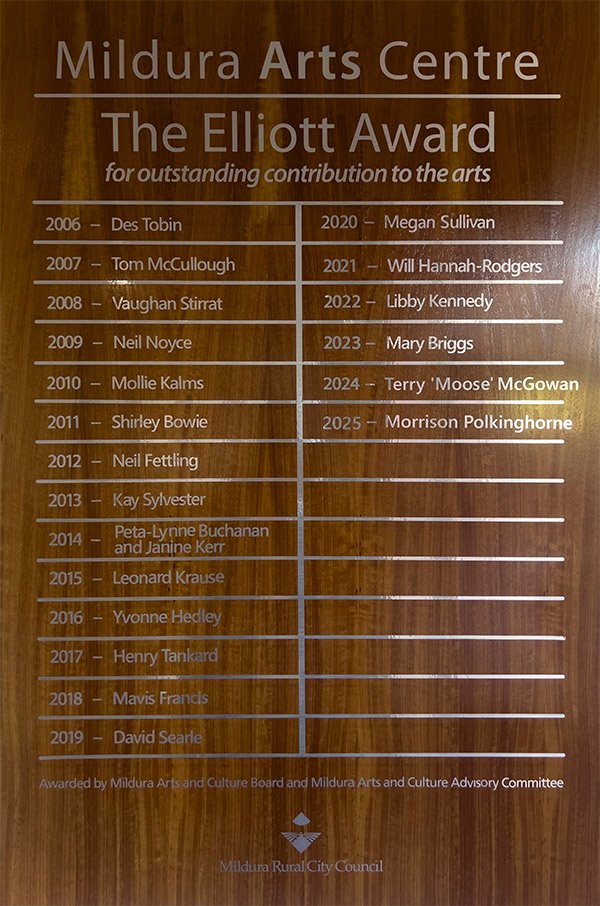
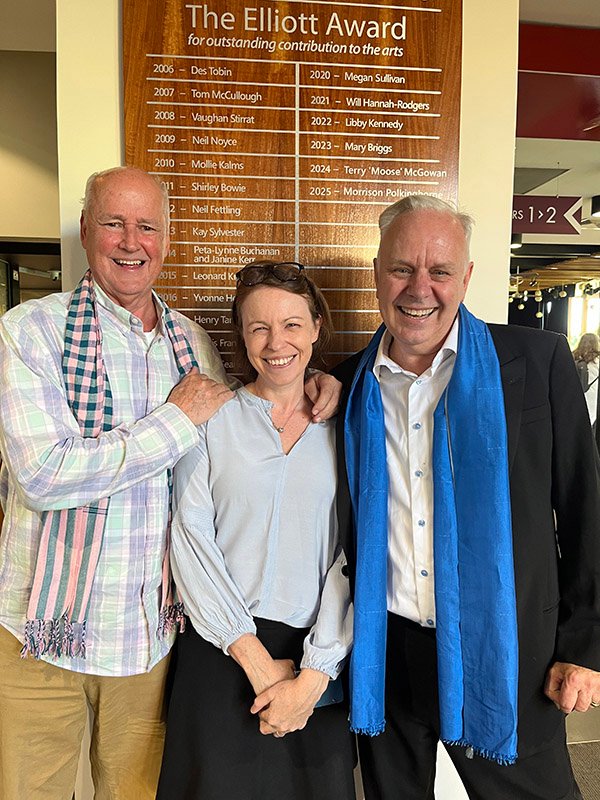
It is this combination of artistry and community contribution that led to this week’s (26 April) recognition through the Elliott Award in Mildura, an honour celebrating rural Victorian individuals whose significant impact on the arts might otherwise go unacknowledged. Established in 2004, the Elliott Award acknowledges those who have strengthened cultural life through dedication, leadership, and the nurturing of creative practice across generations. Past recipients have been recognised not only for their artistic achievements, but for their role in building a lasting community legacy.

Morrison Polkinghorne’s journey to Murrayville is anything but conventional. Born in Tasmania and raised in Alice Springs, his path led him across continents, from Sydney to Battambang Cambodia, where he spent a decade living and working. It was there that his artistic practice took on its most distinctive form, grounded not just in aesthetics, but in ritual, material, and spiritual meaning.

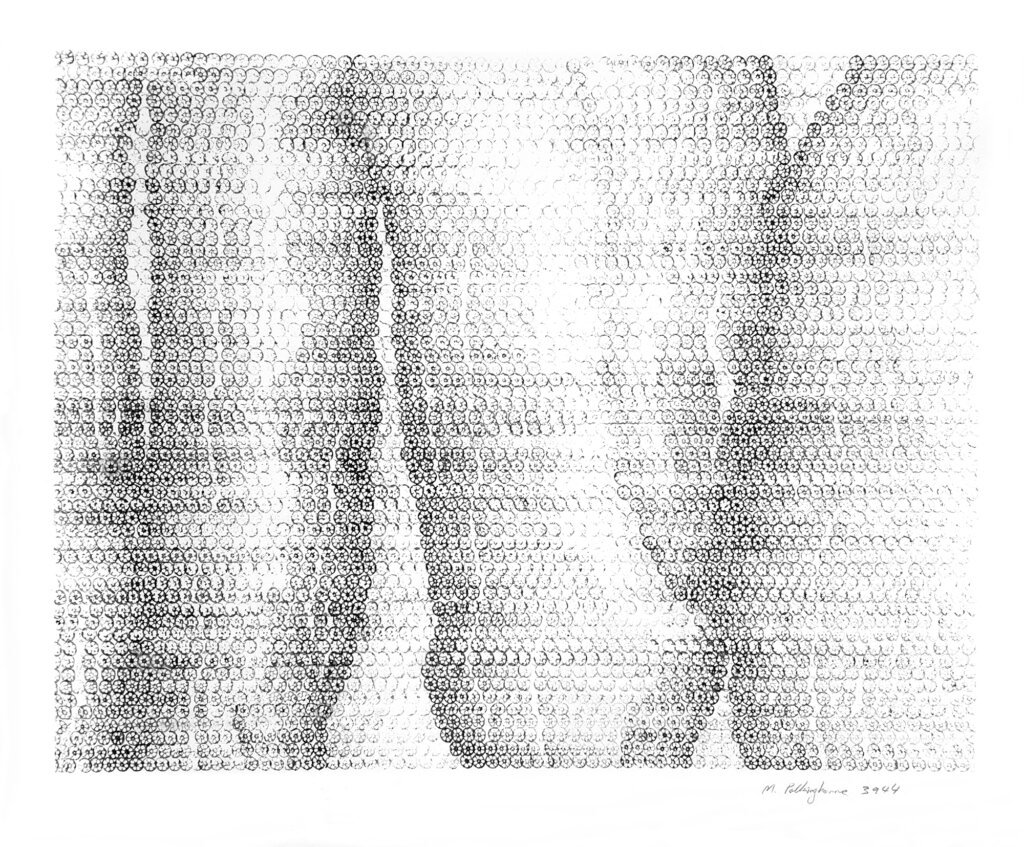
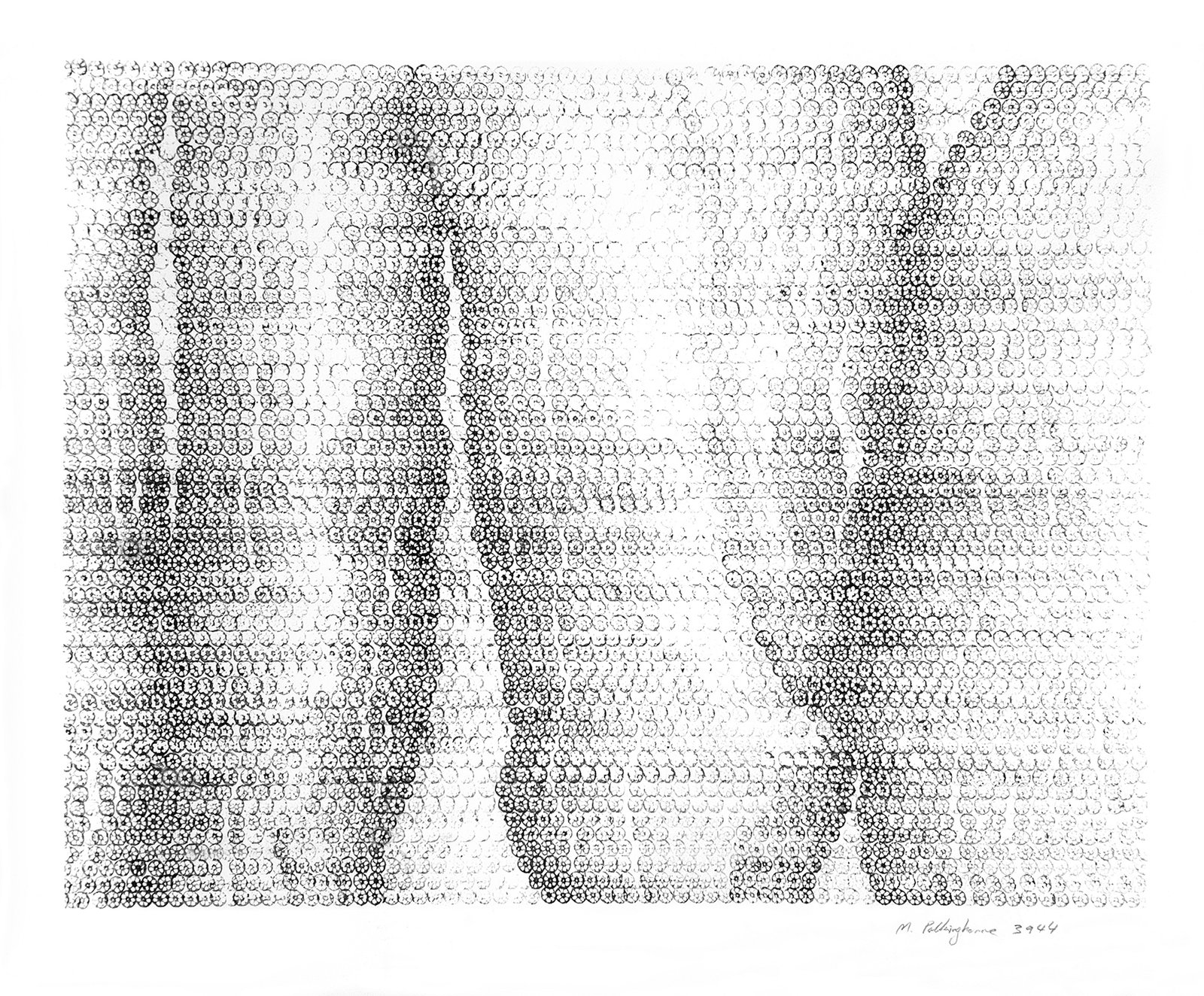
Working almost exclusively in black ink that he produces himself, distilled from charred lotus petals collected at Cambodian temples, Polkinghorne’s art explores a space between simplicity and depth. His work is defined by restraint, yet carries a quiet intensity that has seen his works exhibited both internationally and locally, Alongside his artistic career, he previously built another creative businesses, looming historic decorative passementier (tassels) for Historic Houses Trust,  with feature articles in publications including Vogue Living Australia, Belle, and Country Living

But it is his Mallee contributions since arriving back in Australia in 2021 that most lately defines his legacy.

Settling in Murrayville, along the Vic-SA border and neighbouring Pinnaroo, Polkinghorne transformed the town’s century-old  Anglican Church into both home and studio, a symbolic merging of place, creativity, and purpose. From that base he has become a central figure in arts-led community wellbeing across the border community and further afield.

For the past four years, Morrison played a pivotal role in the Pinnaroo Project, delivering arts and crafts programs supporting mental health in rural communities. These studies collaborated with Flinders University to demonstrate the tangible benefits of creative practice on community wellbeing.

“Working with the community gives me great joy. From teaching pigment making at Phare school with its thousand students in Cambodia, to a local lady here who told me these projects have added years to her life.  That is more precious than selling a painting.”

Now serving as Murrayville Neighbourhood House Coordinator with Mallee Track Health & Community Services, Polkinghorne continues to expand access to creativity across the Mallee. Through workshops and community engagement he helps bring artistic opportunity to towns where such access is often limited.

His vision also extends into innovative storytelling. In November 2025, he launched A.R.M. Murrayville, an augmented reality project that reanimates the town’s historic streetscapes, allowing visitors and locals alike to uncover hidden narratives layered within contemporary spaces. It is a project bridging past and present, technology and heritage.

Morrison is currently working with around 30 members of the Murrayville community on a collaborative project titled Woven History Murrayville. The project brings together historic photographs that are reprinted, cut, and finally rewoven by hand. Through this process, fragments of the past are physically interlaced with the present, creating new interpretations of shared history while strengthening community connection through the act of making. He is also leading an ambitious initiative with the Murrayville Liaison Group to transform the town’s historic courthouse into a dedicated art gallery. That project reflects his ongoing commitment to embedding the arts within the fabric of the community.

Polkinghorne’s creative life has long been multifaceted. He is designer and co-author of the award-winning The Burma Cookbook, and during his earlier years in Sydney, his textile company Passementeries received national recognition, winning “Most Innovative Product” at the National Interior Design Show.

Yet accolades alone do not capture the full scope of his impact, and Polkinghorne’s work embodies that very spirit. In a region defined by its remoteness, he has demonstrated how art can become a point of connection between people and legacies. His practice, grounded in a single shade of black ink, continues to reveal unexpected depth, not just on paper, but across an entire community.

Posted on

A.R.M. Augmented Reality Murrayville

A.R.M. Augmented Reality Murrayville

There is so much history and beauty in rural Australia. Murrayville, where I live, has the old Reed Street shops. They are a beautiful reminder of the history of the town, with such varied stories of each shop. Nowadays there is no café, no newsagents, no butchers or blacksmiths — nothing. Only a chemist that opens two and a half days a week. It would be really sad to see these buildings go, as I know they are the only things really left for the history of the town I call home. Once they are gone, there is no way of getting them back.

The old hairdresser’s shop has a wonderful display of memorabilia curated by the Yard family. This was my initial inspiration. So I set out to see if it was possible to revamp the other shops, and I was ecstatic that the owners agreed and let me do this.
With items from the old Murrayville hospital, the local theatre director Dr. Finn, and I started by revamping the Chemist window. We got the keys, and we raided it from the local museum — old crates, medicines, pans, syringes, dishes, and crutches. Even an old saw, which I’d hate to ask what it was used for. After completing this store front, that’s when I decided to extend the project to the other shops as well. I do a lot of work in reality for my artwork, for almost a decade, so I knew how to create a 3D reality on a 2D device.

The museum had a lot of photos to choose from, and that was a great place to start to tell the town’s history. At first, the community had no idea what I meant by augmented reality, so I set about making a mock-up. Once they saw what it was about, people started bringing me old photos, letters, even family handwritten stories. Currently, I’m recording some stories about the good old days by the vibrant elderly. It became a shared act of remembering — a collaboration between the past and present. The AR may be digital, but the heart of it is entirely local.

I’ve spent many hours down on this street with my laptop, tweaking and making small changes. One day, a couple pulled up, travelling through from Tasmania to WA. They told me they loved the old architecture and found it sad how many places are going by the wayside. They got stuck peering through the window at the various items in the chemist, joking about possibly needing the 50+ year old snake venom if they wandered into the bush. I asked them if they could try the AR. Mind blown, they wandered up and down the footpath of the shops for another 30 minutes. This was a great encouragement for me to seek even more local input and to continue the project.

History and restoration are an important part of my life. I previously worked with Historic Houses in Sydney, creating historical soft furnishings, so I know how important it is to document one’s surroundings, stories, and techniques. Now Murrayville is documented with one of the latest technologies, AR. It was a way to preserve what was once here, to let people see and feel the stories behind these façades.

Murrayville now has three AR start points — the Reed Street Shops, the Old Post Office, and opposite the Murrayville Pub on the Mallee Highway. Make your way and search for the QR codes to start your AR historical Murrayville journey. All you need is a charged smartphone.

Posted on

Morrison’s art goes full circle

Morrison's art goes full circle.

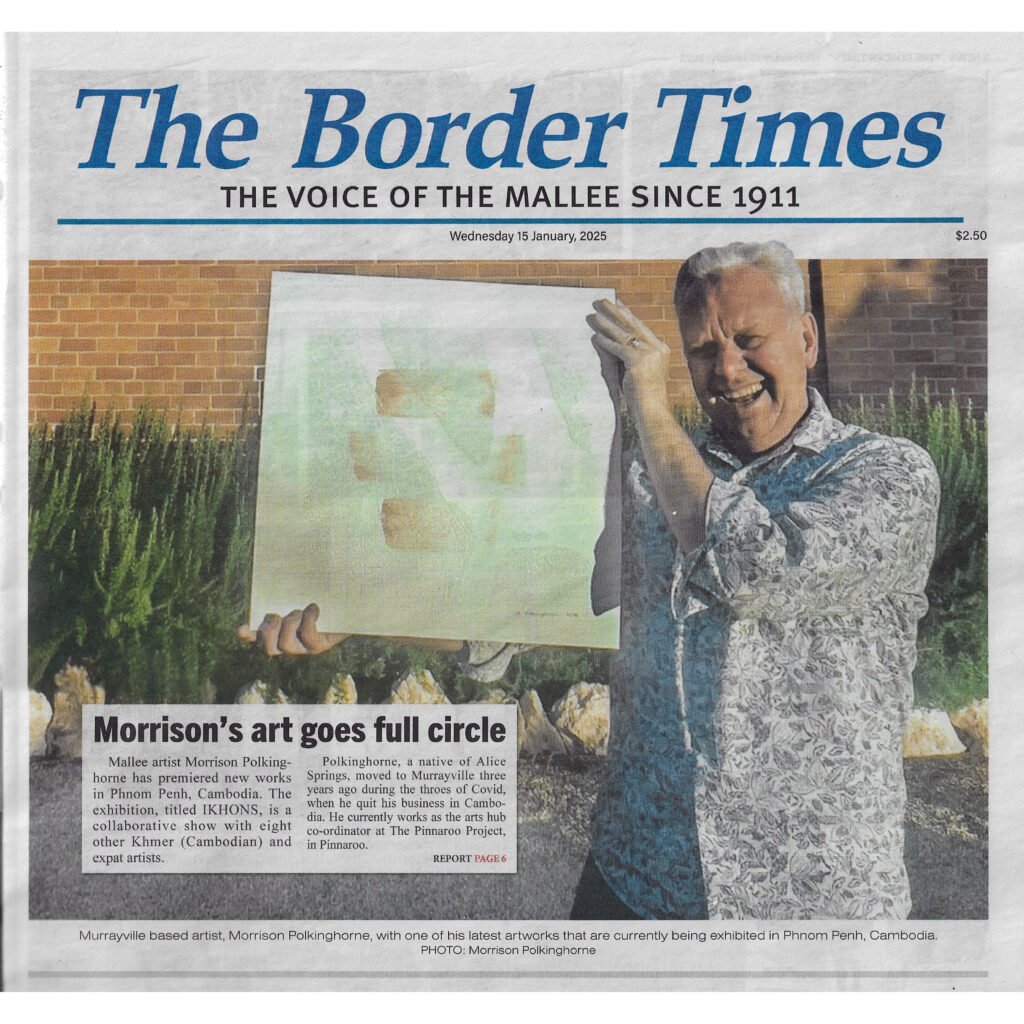
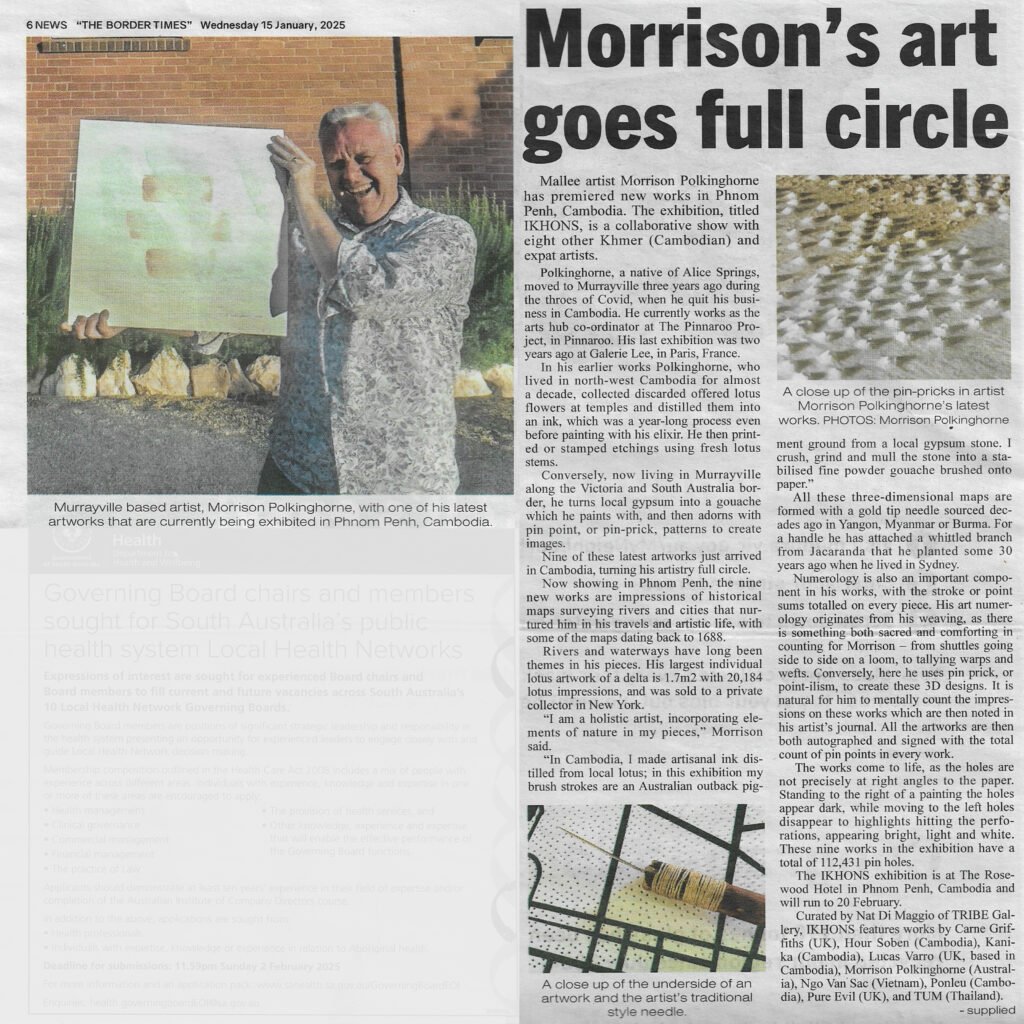
Morrison Polkinghorne premiers new works this week at Rosewood hotel, Phnom Penh. The exhibition, “Ikhon”, is a collaborative show, along with eight other Khmer and expat artists in Cambodia the kingdom.  

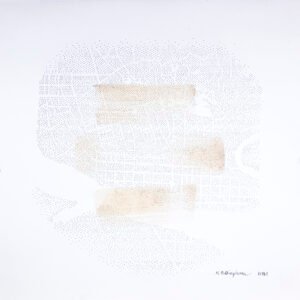
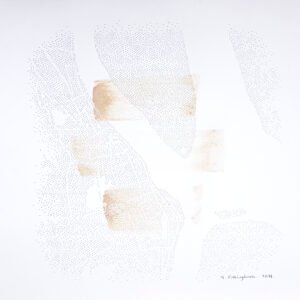
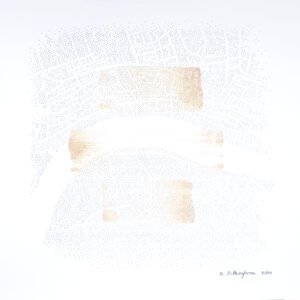
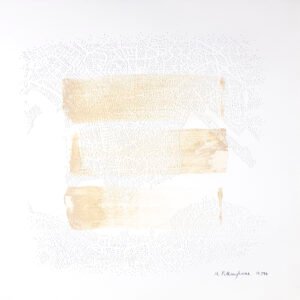
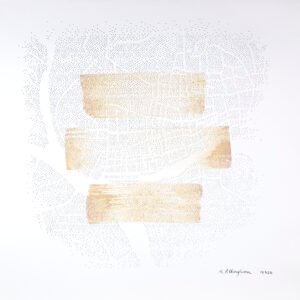
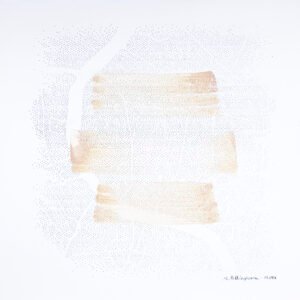
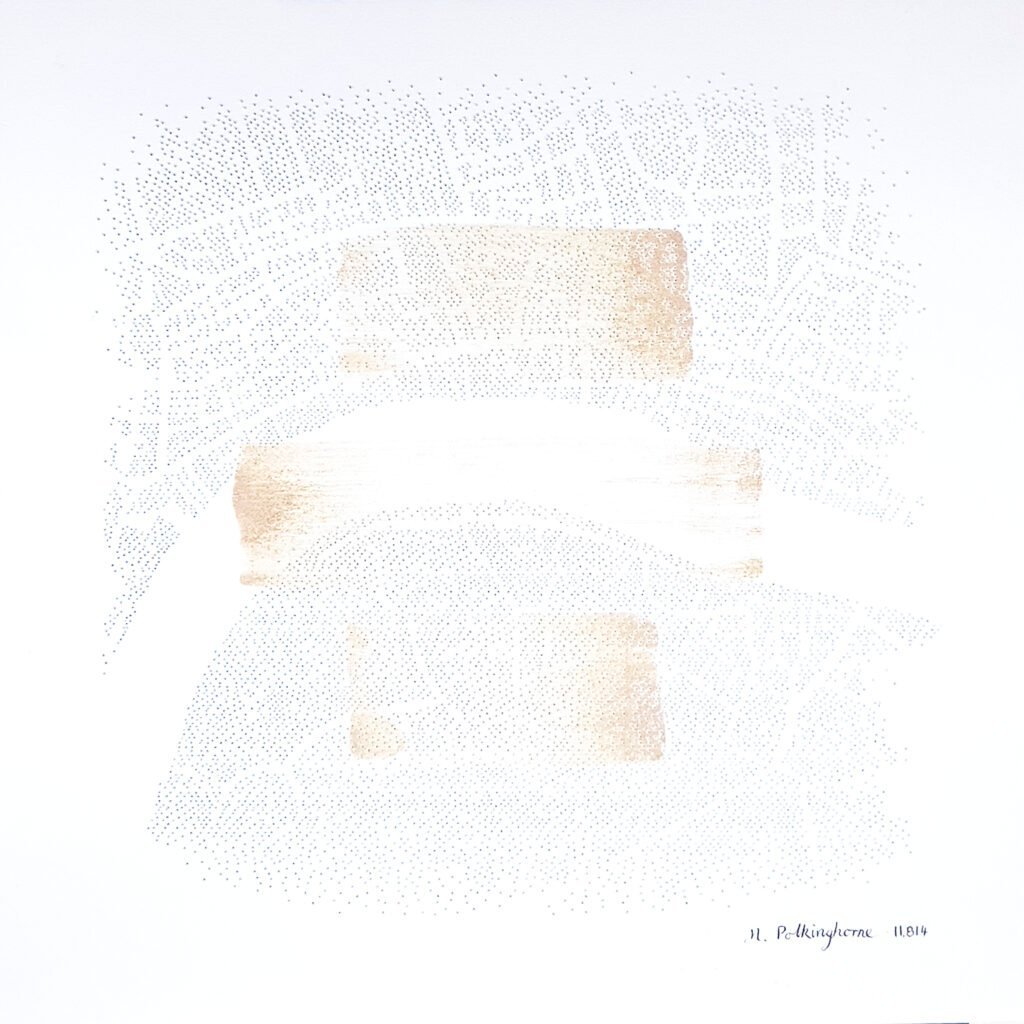
In his earlier works Polkinghorne lived in Battambang, Cambodia for almost a decade, owned and ran an award winning lodging and art space called Bric-a-Brac. While there he collected discarded offered lotus flowers at temples and turned them into an ink. This was  a year’s process even before painting with his elixir. He then printed or stamped etchings using fresh lotus stems. Conversely, now living in Murrayville along the Victoria and South Australia border in Outback Australia he turns local gypsum into a painted gouache., then adorned with pin point, or pin-prick, patterns to create images. Nine of these latest artworks just arrived in Cambodia, turning his artistry full circle. 

Now showing in Phnom Penh, nine new works are impressions of historical maps surveying rivers and cities, cities that nurtured him in his travels and autistic life. Some of the maps date dating back to 1688. Rivers and waterways have long been themes in his pieces. His largest individual lotus artwork of a delta, 1.7m square with 20,184 lotus impressions sold to a private collector in New York. 

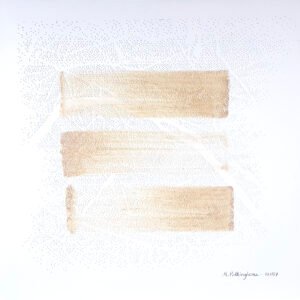
“I am a holistic artist, incorporating elements of nature in my pieces,’ says Morrison. “In Cambodia, I made artisanal ink distilled from local lotus; in this exhibition my brush strokes are an Australian outback pigment ground from a local gypsum stone. I crush, grin and mull the stone into a stabilised fine powder gouache brushed onto paper.”

All these three-dimensional maps are formed with a gold tip needle sourced decades ago in Yangon, Myanmar or Burma. For a handle he attaches a whittled branch from Jacaranda that the artist planted some 30 years ago in Sydney. 

Numerology is also an important component in his works, the the stroke or point sums totalled on every piece. His art numerology originates from his weaving, as there is something both sacred and comforting to counting for Morrison – from shuttles going side to side on a loom, to tallying warps and wefts. Conversely, here he pin prick, or point-ilism, to create these 3-D designs. It is his natural for him to mentally count the impressions on these works which are then noted in his artists journal. All the artworks are then both autographed and signed with the total count of pin points in every work.

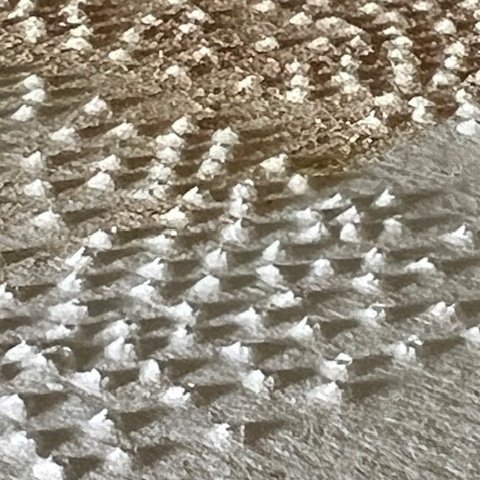
The works come to life, as the holes are not precisely at right angles to the paper. Standing, say, to the right of a painting one see through the holes and they appear dark, while moving to the left holes disappear to highlights hitting the perforations, appearing bright, light and white.

These nine works in the exhibition have a total of 112,431 pin holes. His work of Phnom Penh dates back to 1885 with 9876 pinholes.

IKHONS exhibition is at The Rosewood Hotel in Phnom Penh, Cambodia. 

Lever 35.  Vattanac Capital Tower, 66 Monivong Boulevard, Sangkat Wat Phnom, Khan Daun Penh, 120211, Phnom Penh, Kingdom of Cambodia
21 December – 20 February 2025

Curated by Nat Di Maggio of TRIBE Gallery, IKHONS features works by Carne Griffiths (UK), Hour Soben (Cambodia), Kanika (Cambodia), Lucas Varro (UK, based in Cambodia), Morrison Polkinghorne (Australia), Ngo Van Sac (Vietnam), Ponleu (Cambodia), Pure Evil (UK), and TUM (Thailand).

Posted on

Wallpaper – Studio Printworks

Wallpaper

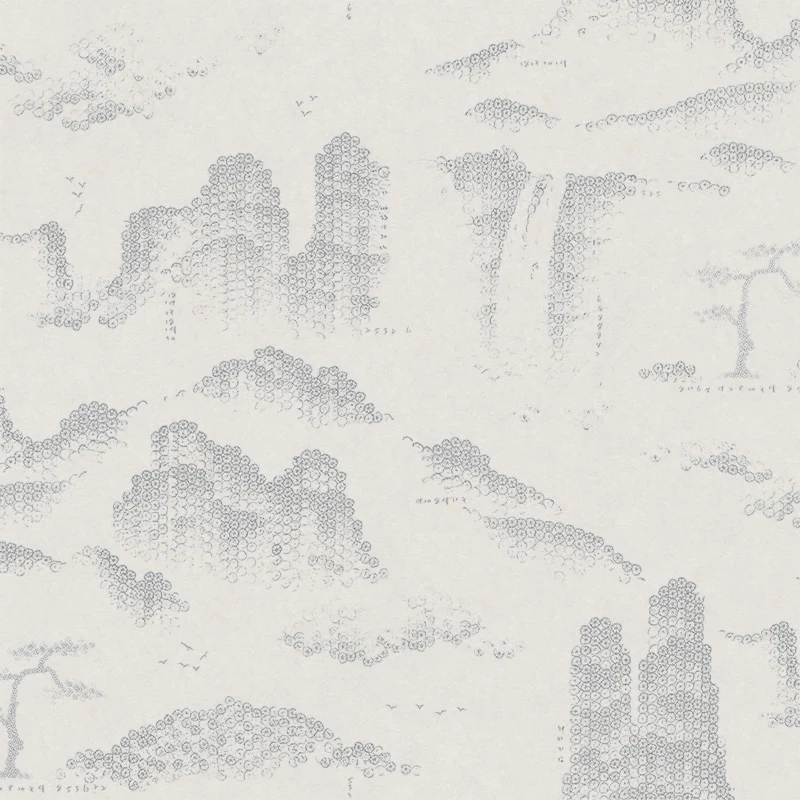
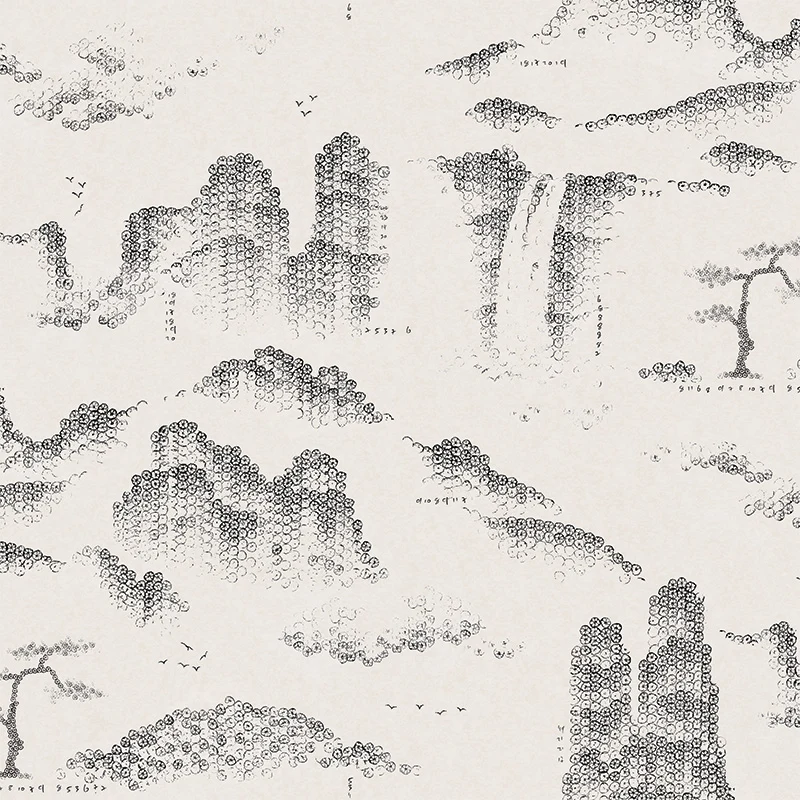
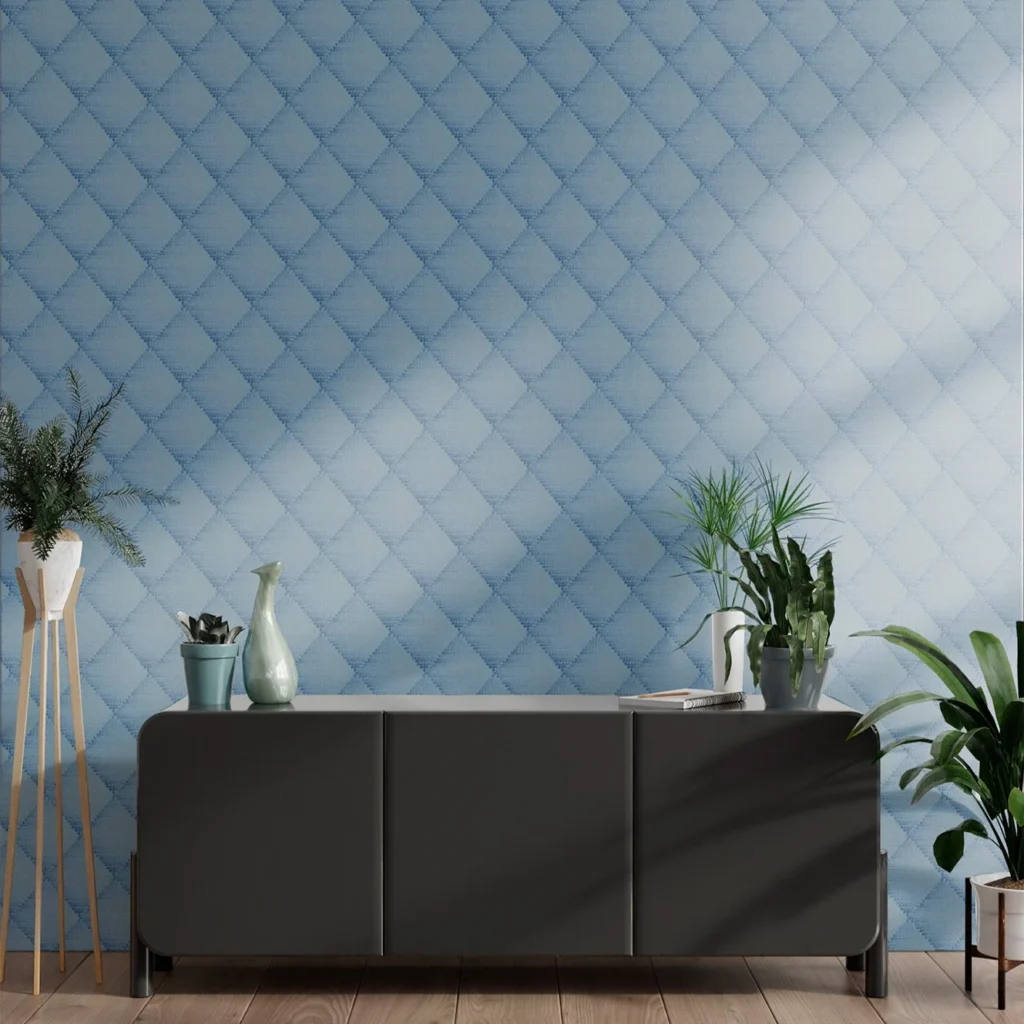
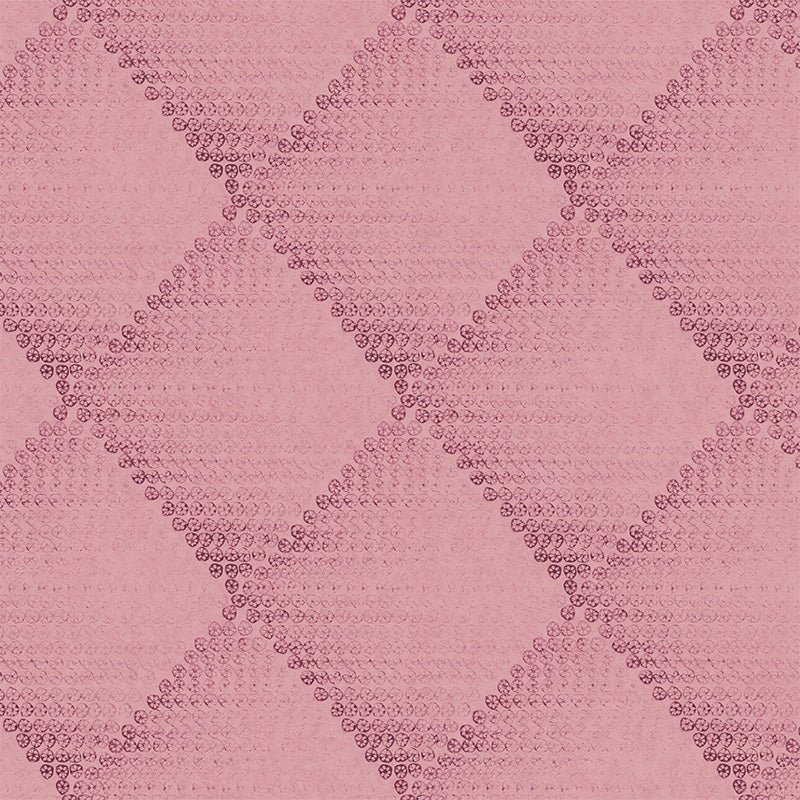
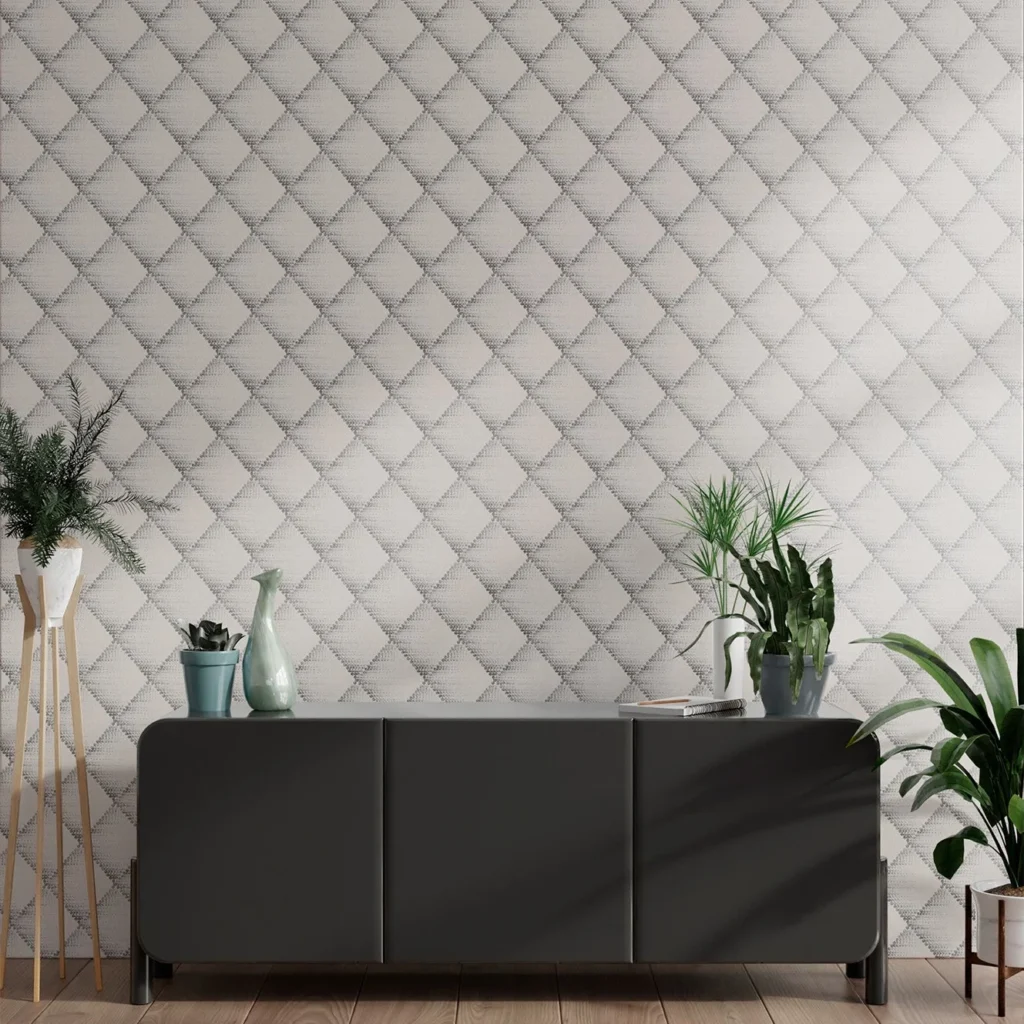
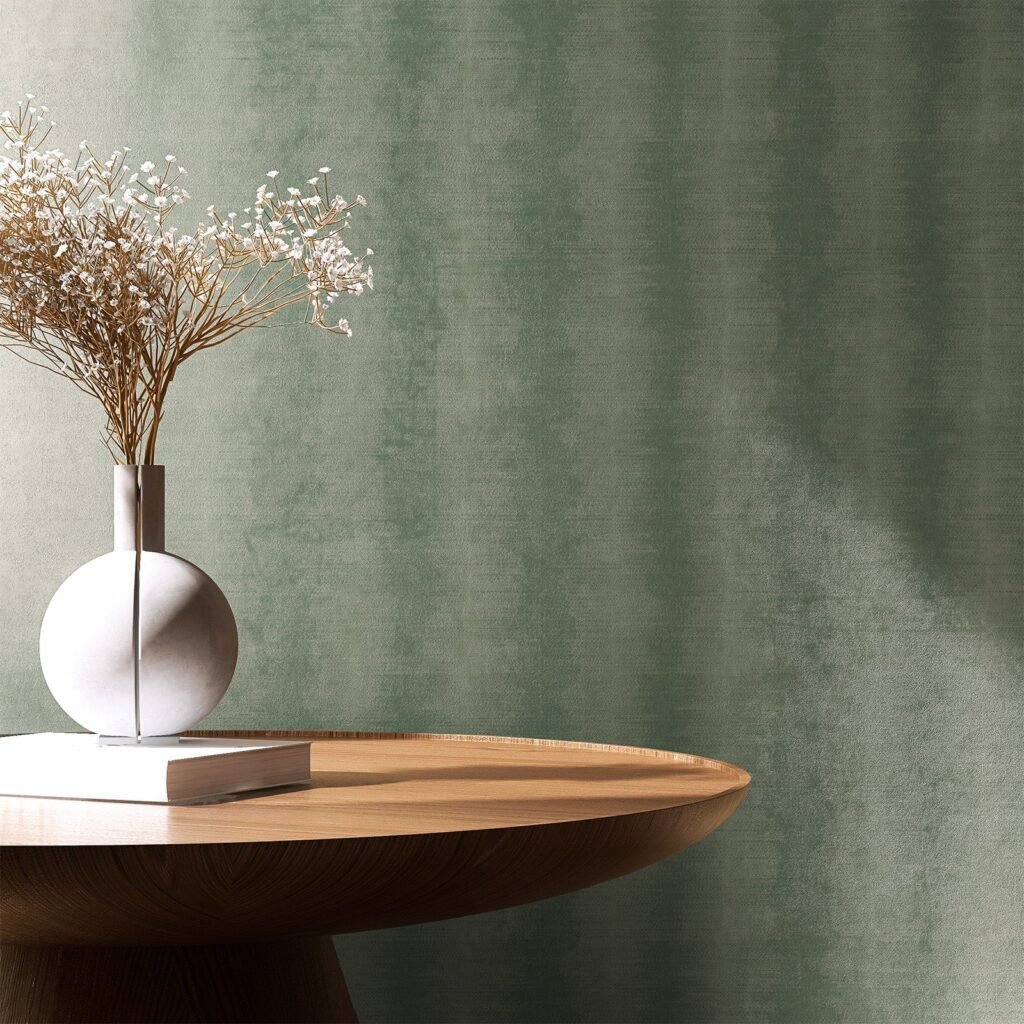
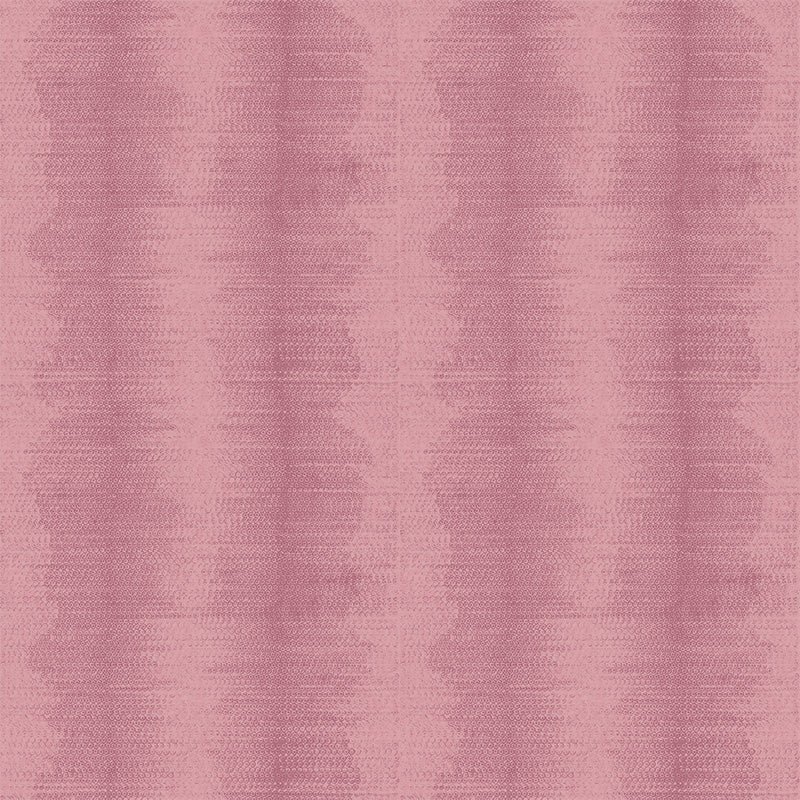
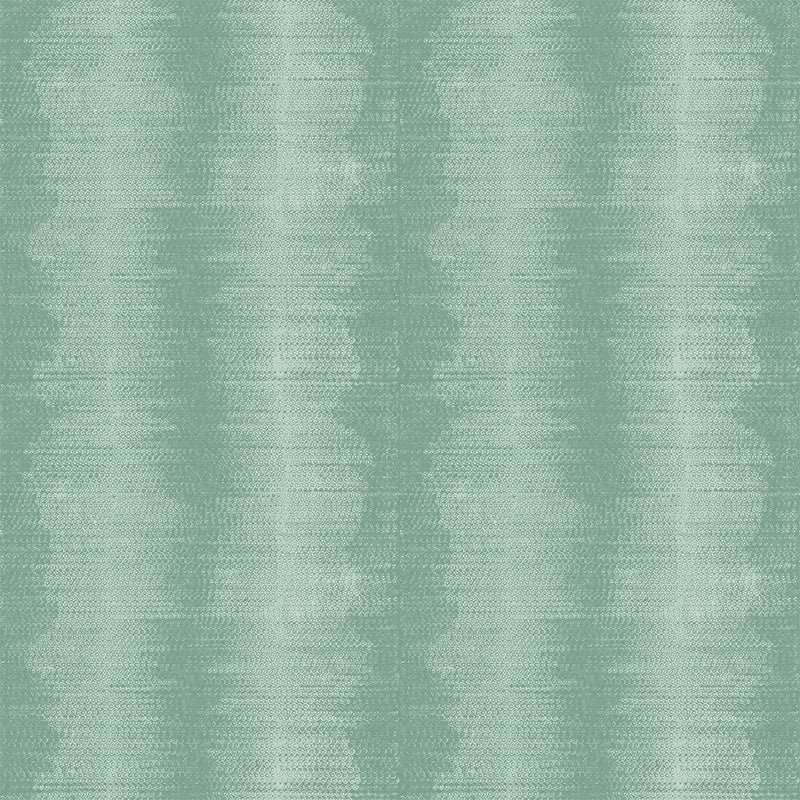
Three artworks by Morrison Polkinghorne are now available as wallpaper from Studio Printworks in New Your.

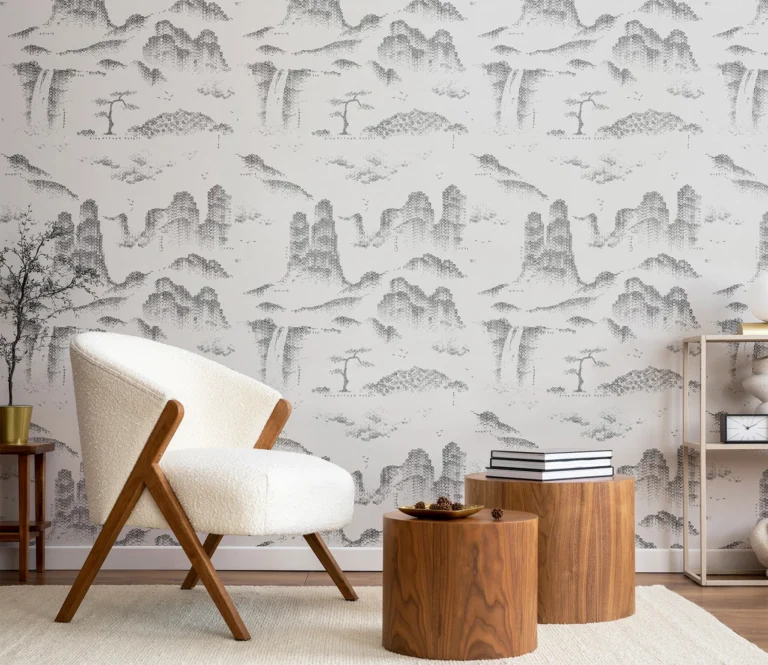
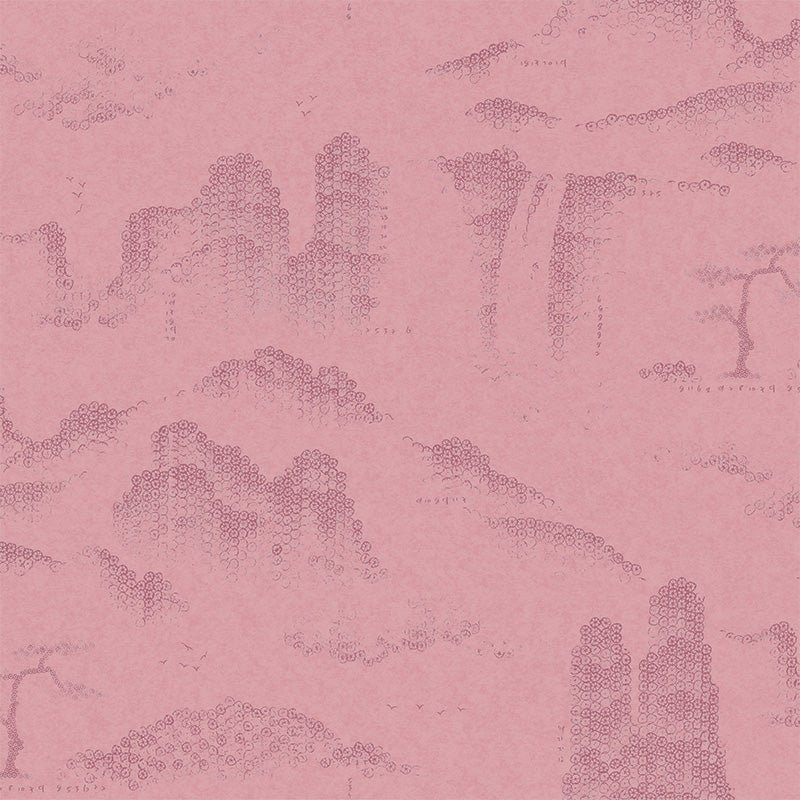
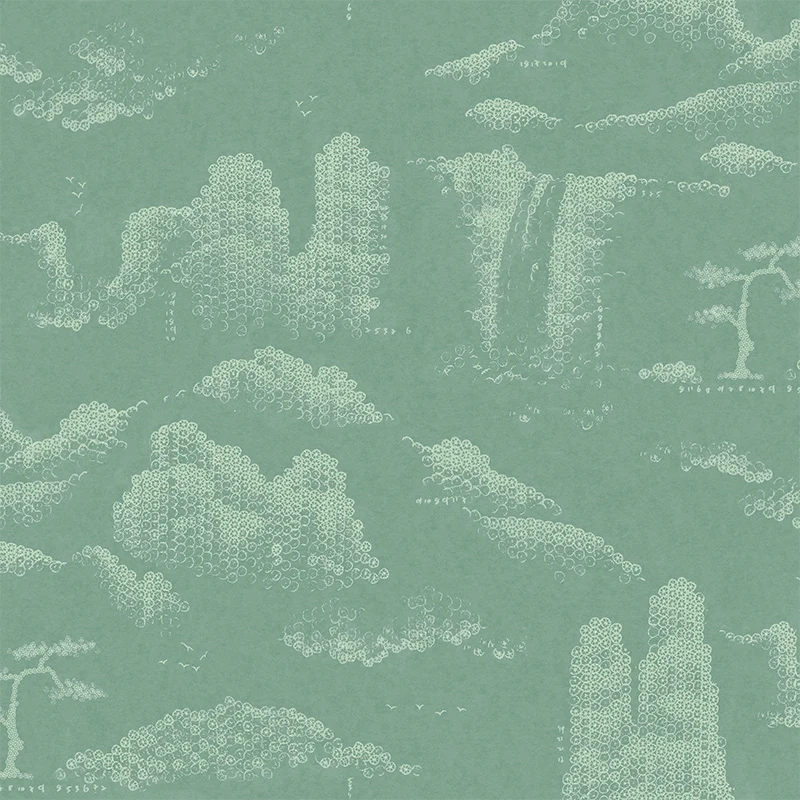
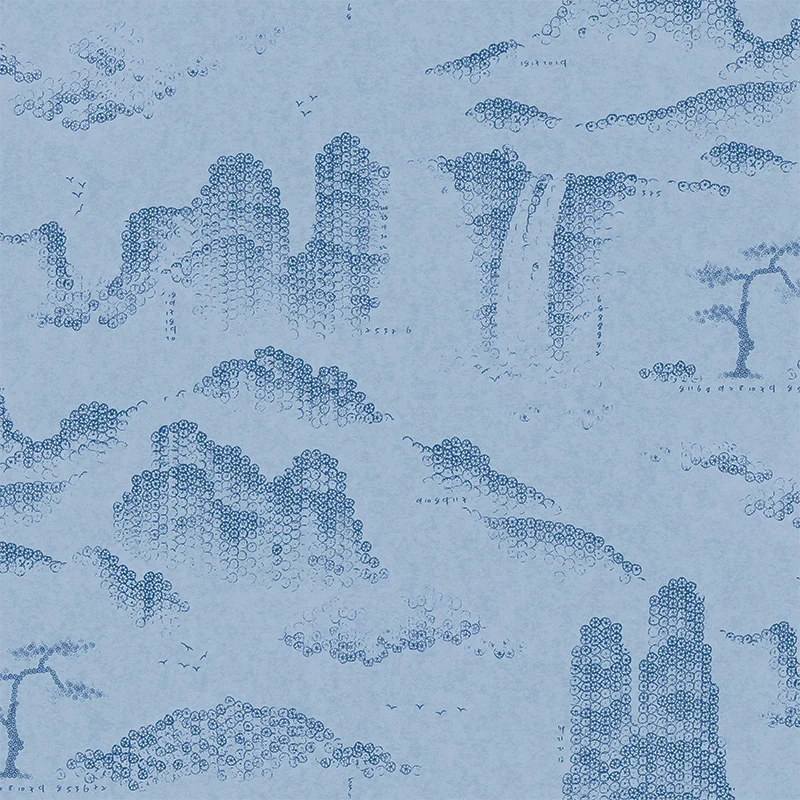
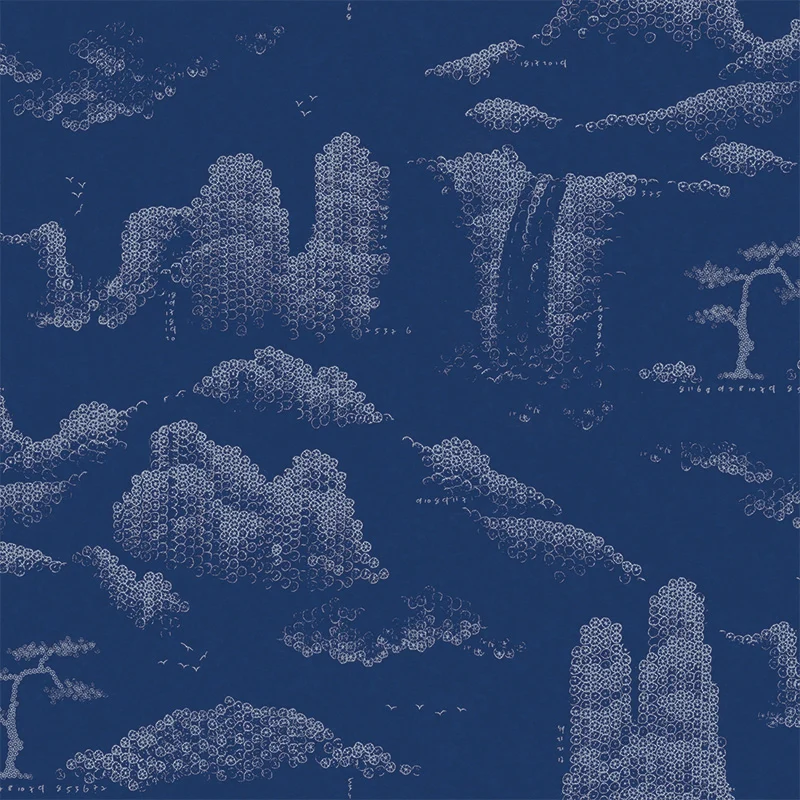
Shan Shui

available as paper or grasscloth

Mountains and Rivers, or Shan Shui, are reminiscent of classical Chinese and
Japanese brushed ink landscapes. This work is created not with the stroke of a
brush, rather with an inked impressions of a freshly-cut lotus stalk.

The distant mountains fading into the background, the clouds bringing the waters to the waterfall and the birds are all made with his lotus stalk “brush”.
The repeat has a total of 295 lotus impressions.

Quadrangle Penh

available as paper or grasscloth

Phnom Penh is on the confluence of the mighty Mekong, the Tonle Sap and the
Bassac rivers, merging solely as the Mekong, creating a quadrangle from from where
the capital springs forth.
Each quadrangle has a total of 297 lotus impressions.

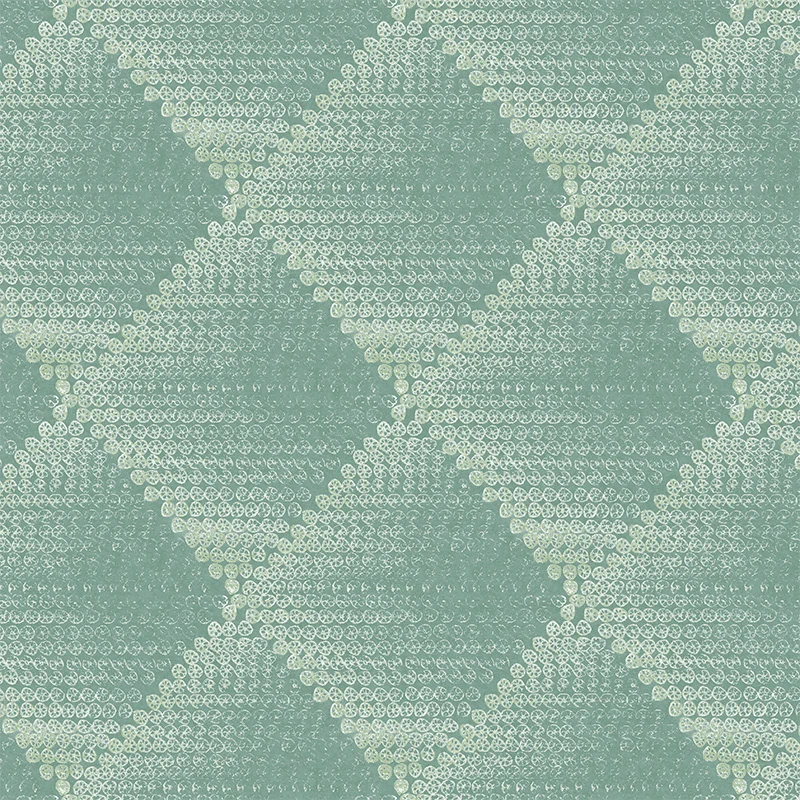
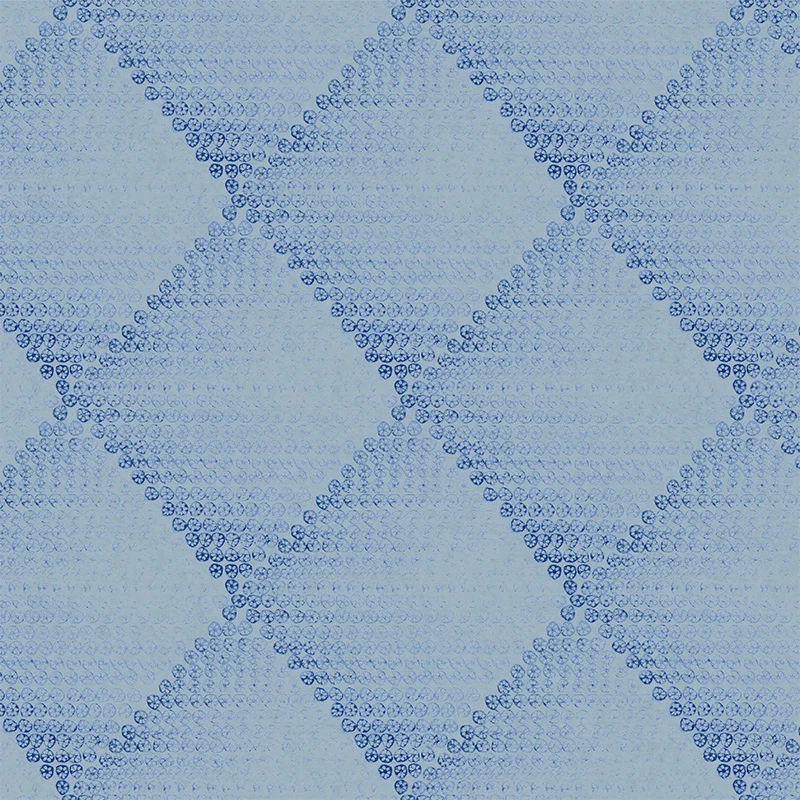
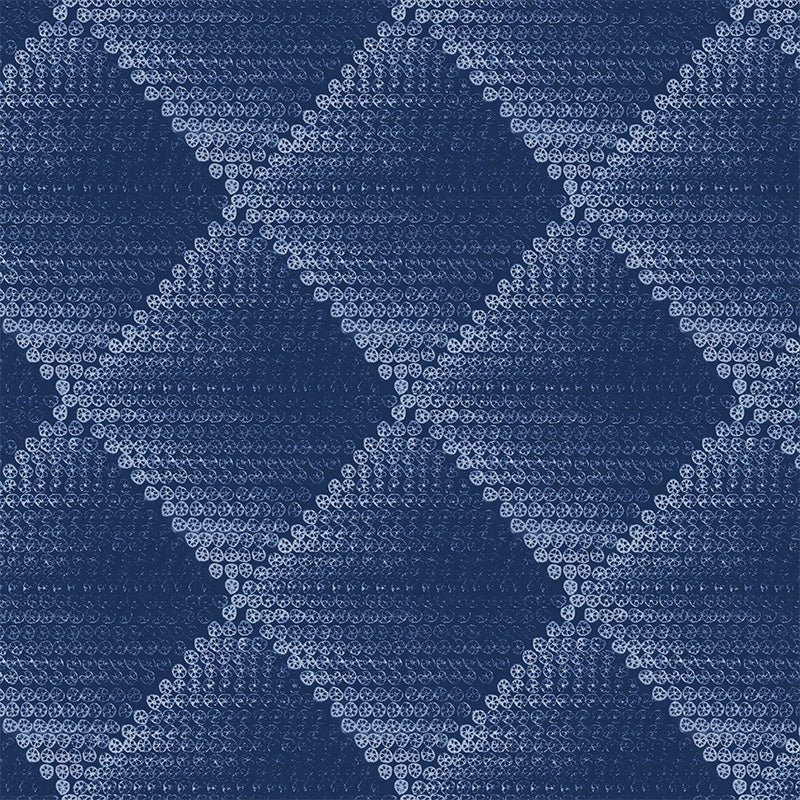
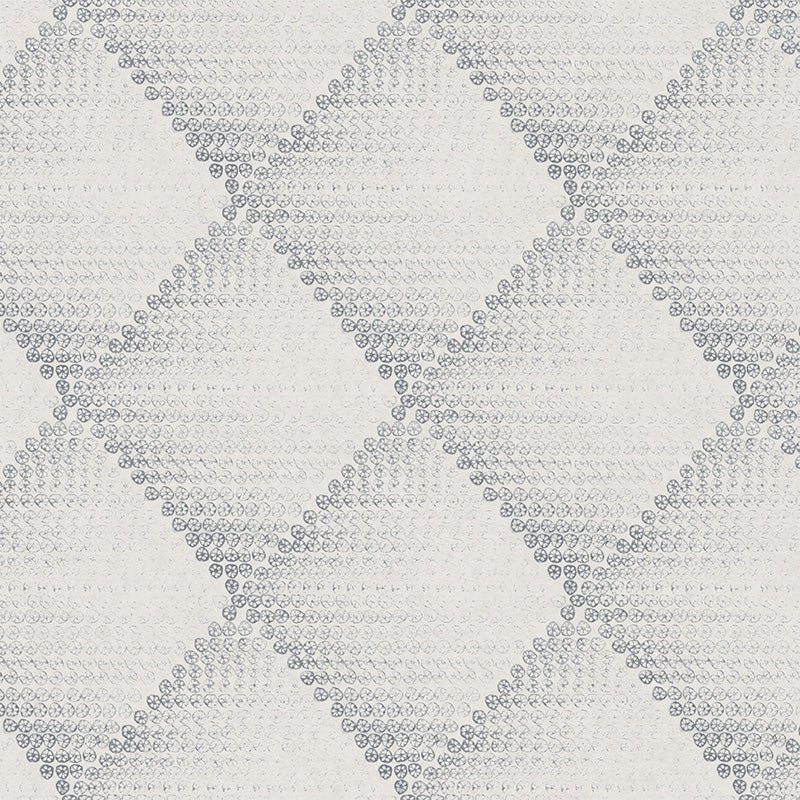
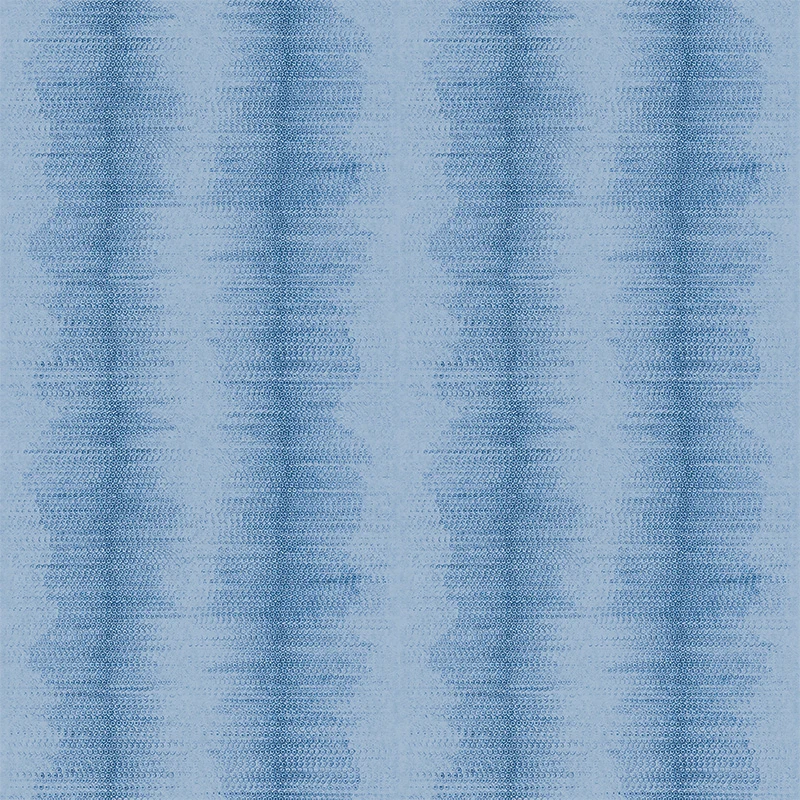
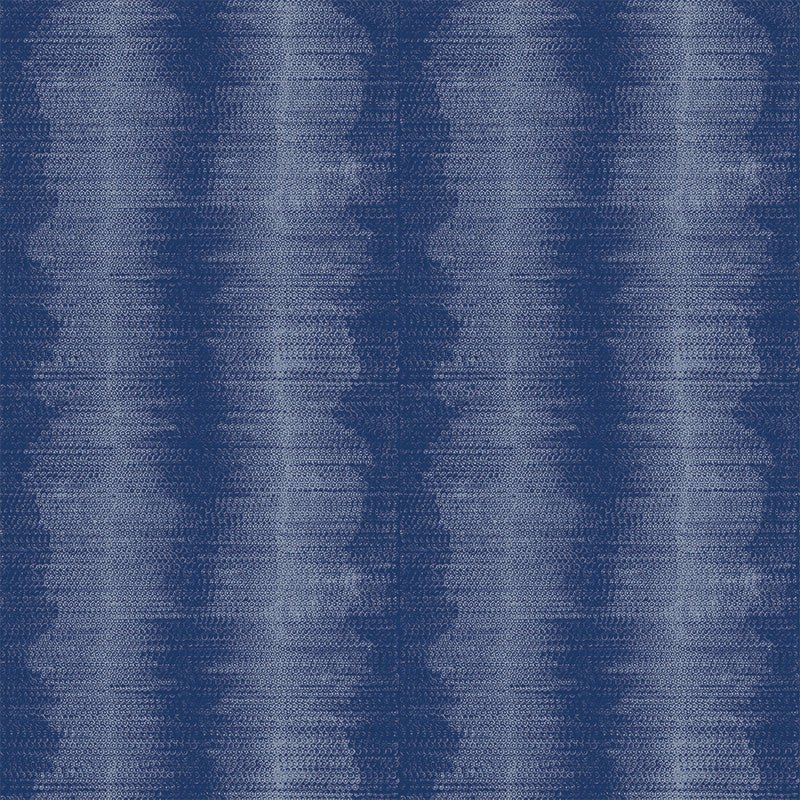
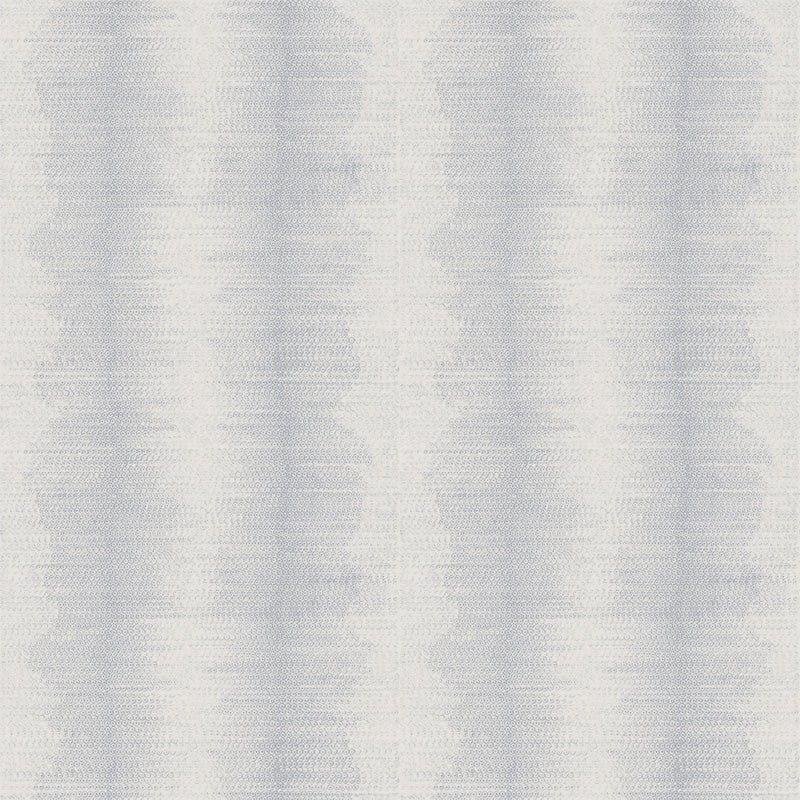
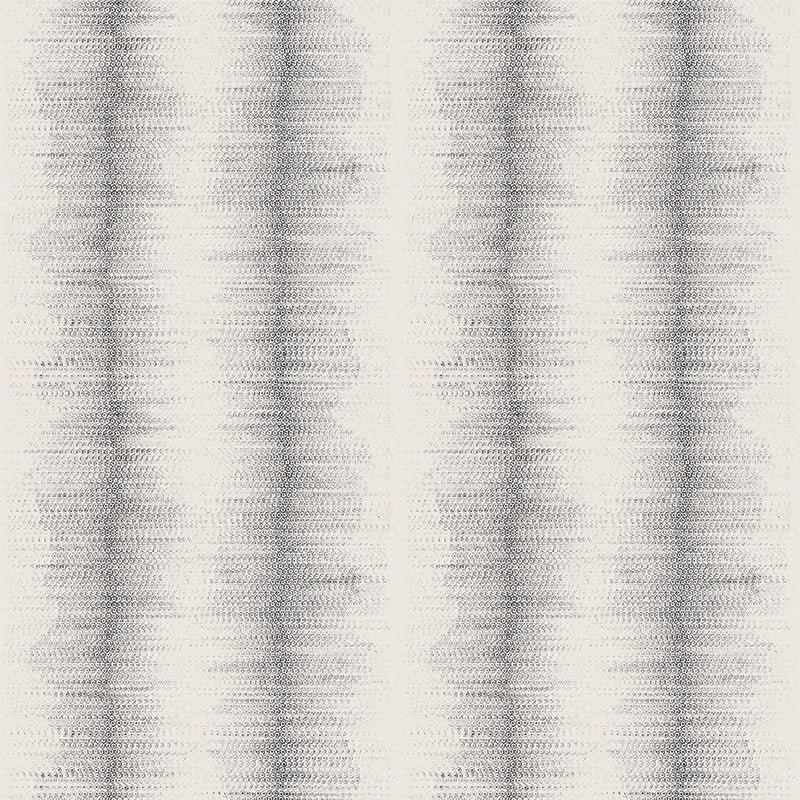
Phnom-enal Stripe

available as paper or grasscloth

With a fresh cut lotus stalk and an ink made from sacred lotus petals, artist
Morrison Polkinghorne impresses flowing rivers and deltas.
This stripe is an image from his decades of travels and life in Cambodia.
The repeat has a total of 4737 lotus impressions

Posted on

112,431 pin points

Ikhons Exhibition

IKHONS
21 December - 20 February 2025
Rosewood Art Gallery – Phnom Penh.
Curated by Tribe Gallery Siem Reap.

Artwork Title

Phnom Penh 1885
map with 9,876 pin points
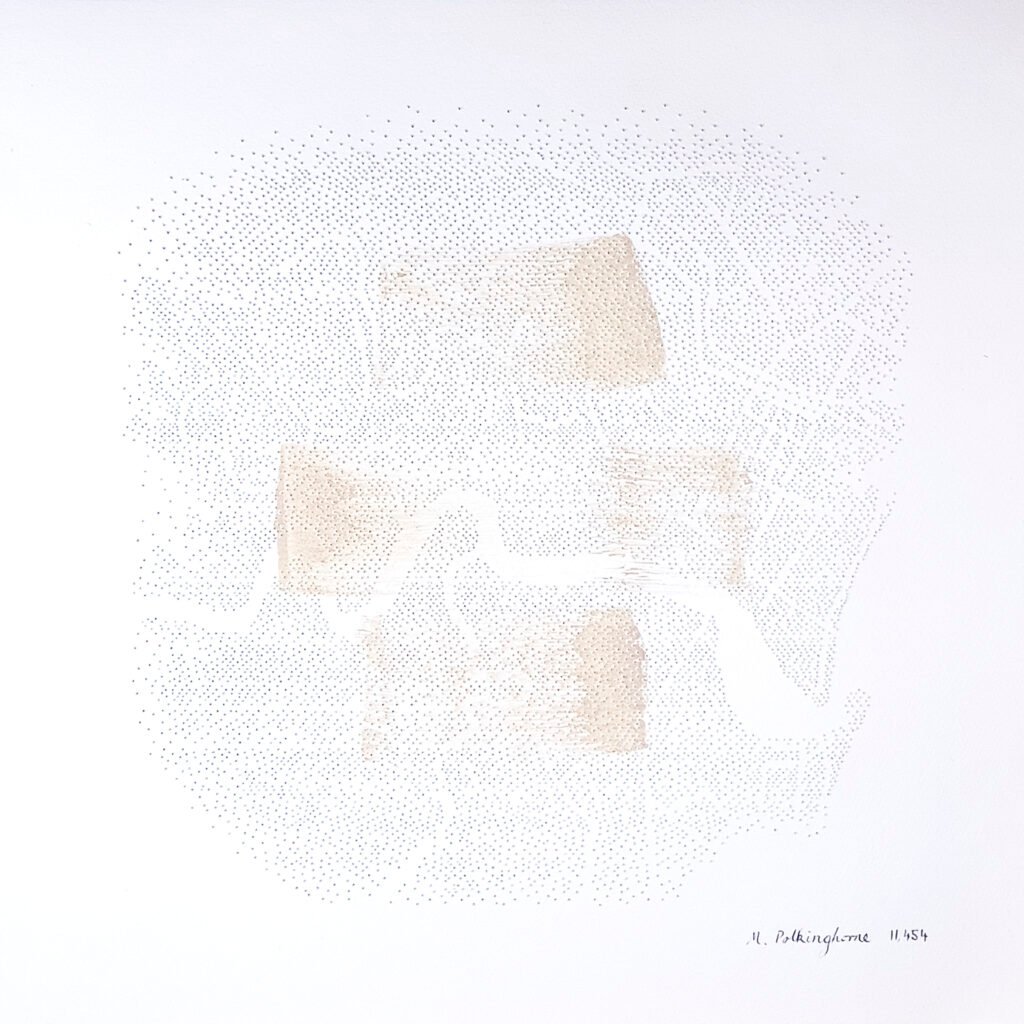
Singapore 1825 map map 11,454 pin points
Rangoon 1912 map with 11,691 pin points
London 1688 map with 11,814 pin points
Saigon 1790 map pin points12,329
Paris 1900 map pin points13,157
Bangkok 1914 map pin points13,394
Canton 1942 map pin points14,420
Hong Kong 1997 map pin points14,296

total count 112,431

Morrison Polkinghorne premiers new works this week at Rosewood hotel, Phnom Penh. The exhibition, “Ikhon”, is a collaborative show, along with eight other Khmer and expat artists in Cambodia the kingdom.  

In his earlier works Polkinghorne lived in Battambang, Cambodia for almost a decade, owned and ran an award winning lodging and art space called Bric-a-Brac. While there he collected discarded offered lotus flowers at temples and turned them into an ink. This was  a year’s process even before painting with his elixir. He then printed or stamped etchings using fresh lotus stems. Conversely, now living in Murrayville along the Victoria and South Australia border in Outback Australia he turns local gypsum into a painted gouache., then adorned with pin point, or pin-prick, patterns to create images. Nine of these latest artworks just arrived in Cambodia, turning his artistry full circle.

Now showing in Phnom Penh, nine new works are impressions of historical maps surveying rivers and cities, cities that nurtured him in his travels and autistic life. Some of the maps date dating back to 1688. Rivers and waterways have long been themes in his pieces. His largest individual lotus artwork of a delta, 1.7m square with 20,184 lotus impressions sold to a private collector in New York.

“I am a holistic artist, incorporating elements of nature in my pieces,’ says Morrison. “In Cambodia, I made artisanal ink distilled from local lotus; in this exhibition my brush strokes are an Australian outback pigment ground from a local gypsum stone. I crush, grin and mull the stone into a stabilised fine powder gouache brushed onto paper.”

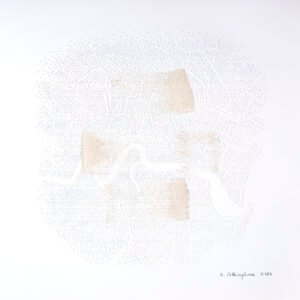
London 1688 with 11,814 pin points

All these three-dimensional maps are formed with a gold tip needle sourced decades ago in Yangon, Myanmar or Burma. For a handle he attaches a whittled branch from Jacaranda that the artist planted some 30 years ago in Sydney.

Numerology is also an important component in his works, the the stroke or point sums totalled on every piece. His art numerology originates from his weaving, as there is something both sacred and comforting to counting for Morrison – from shuttles going side to side on a loom, to tallying warps and wefts. Conversely, here he pin prick, or point-ilism, to create these 3-D designs. It is his natural for him to mentally count the impressions on these works which are then noted in his artists journal. All the artworks are then both autographed and signed with the total count of pin points in every work.

Singapore 1825 map map 11,454 pin points